PhD Defense: Perceptual Quality Assessment and Enhancement of Visual Media using Generative Priors

  1. PhD Defense: Perceptual Quality Assessment and Enhancement of Visual Media using Generative Priors
  2. Candidate and committee members
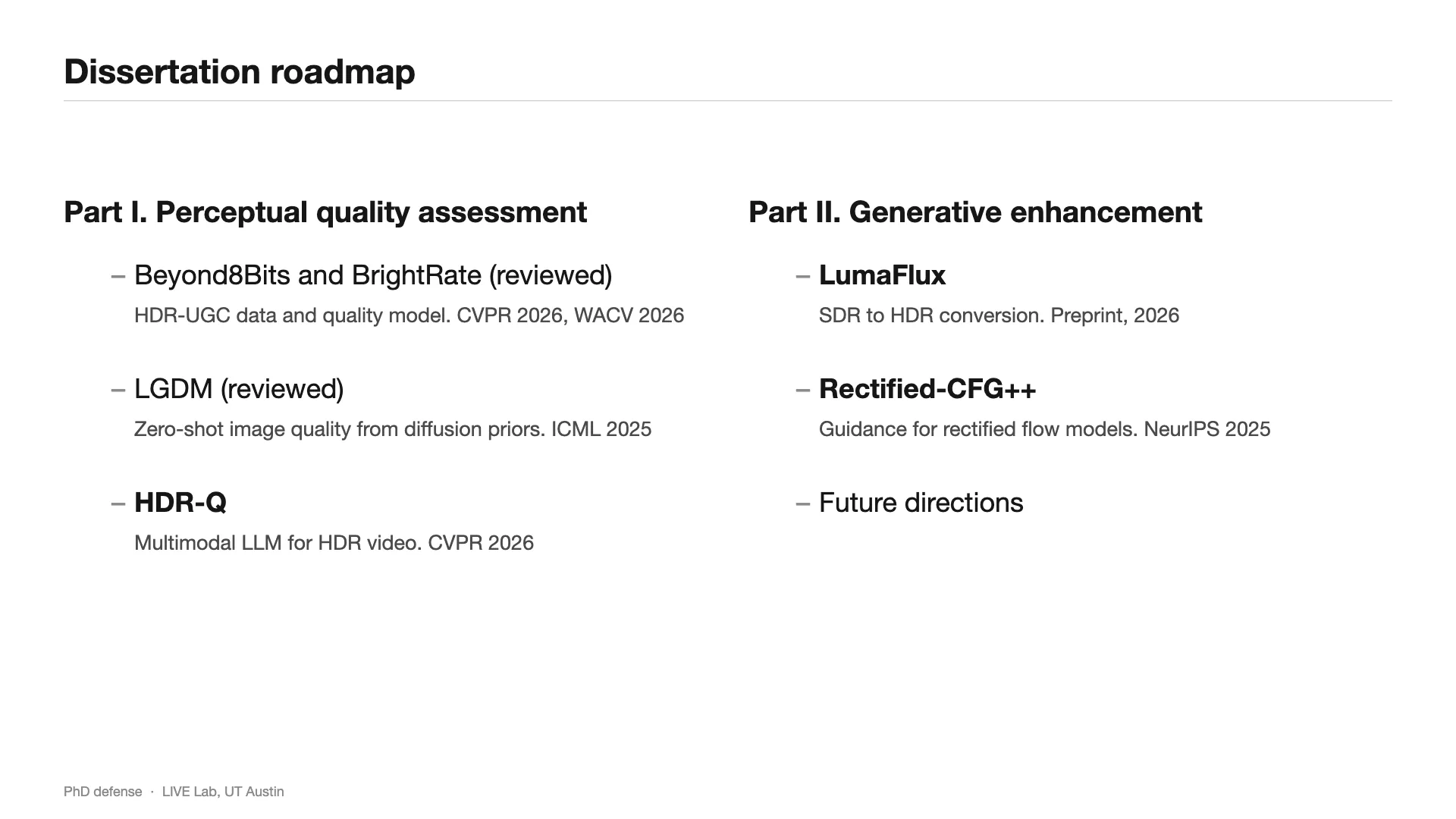
  3. Dissertation roadmap
  4. Beyond8Bits and LGDM
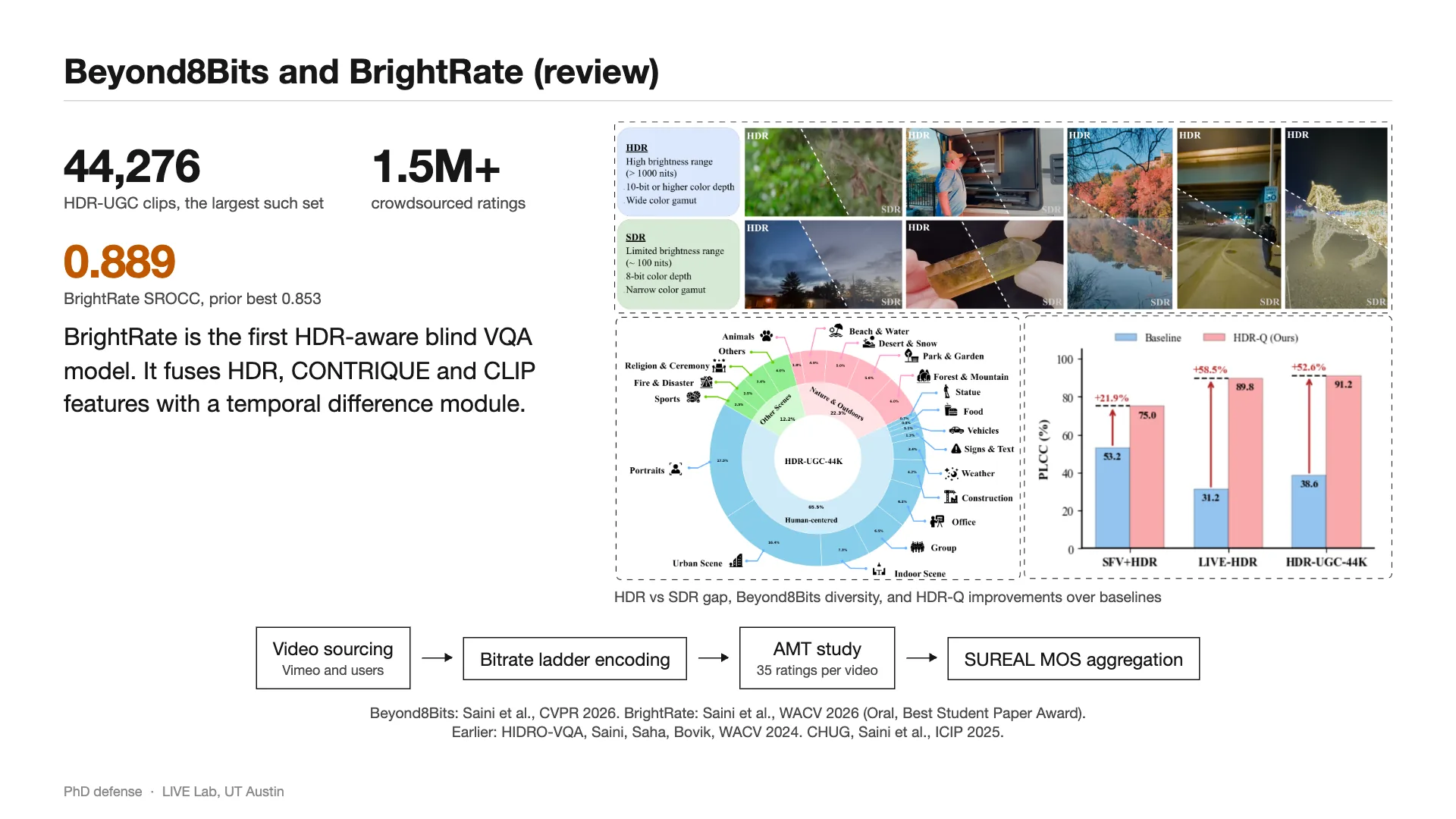
  5. Beyond8Bits and BrightRate (review)
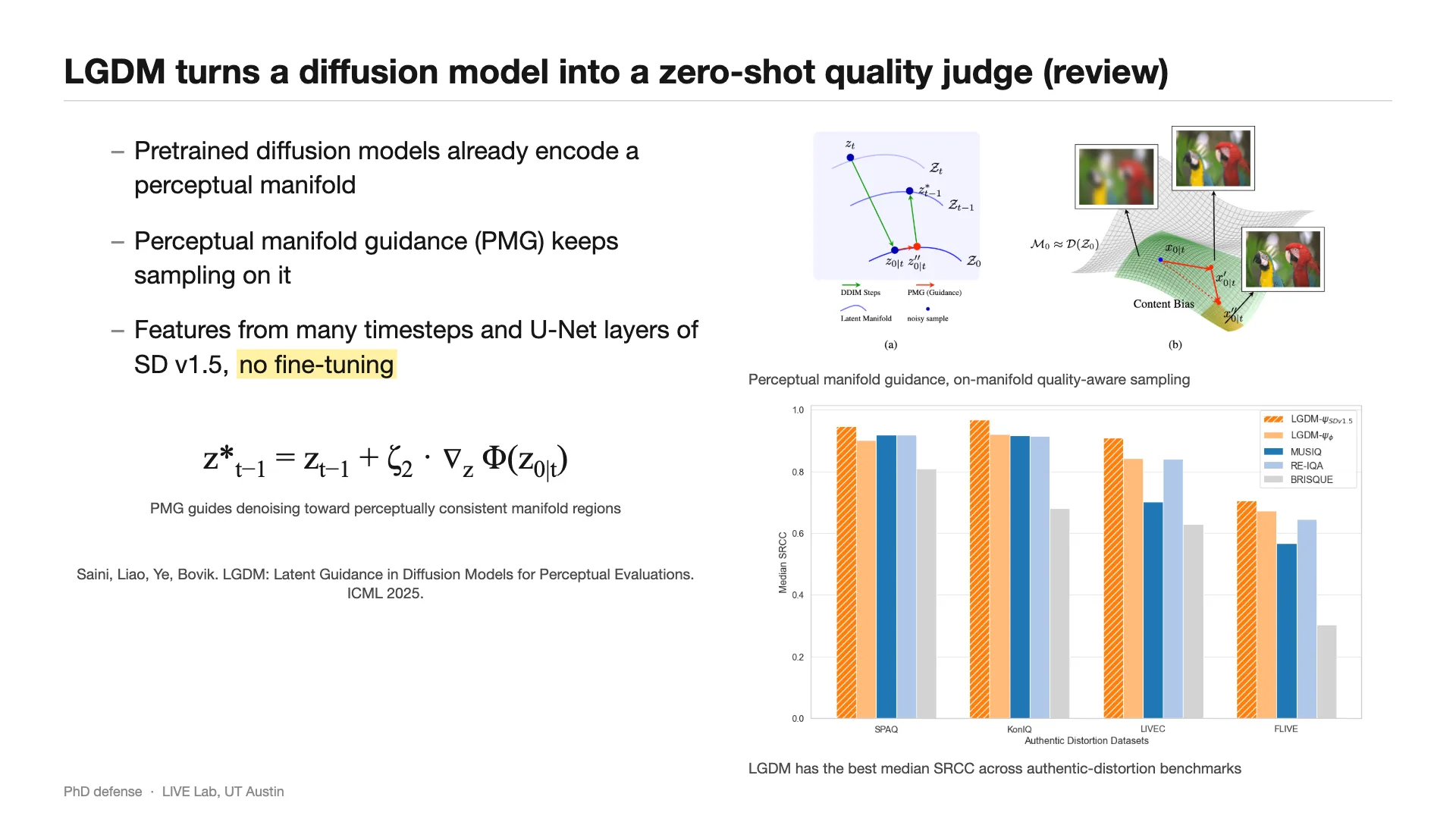
  6. LGDM turns a diffusion model into a zero-shot quality judge (review)
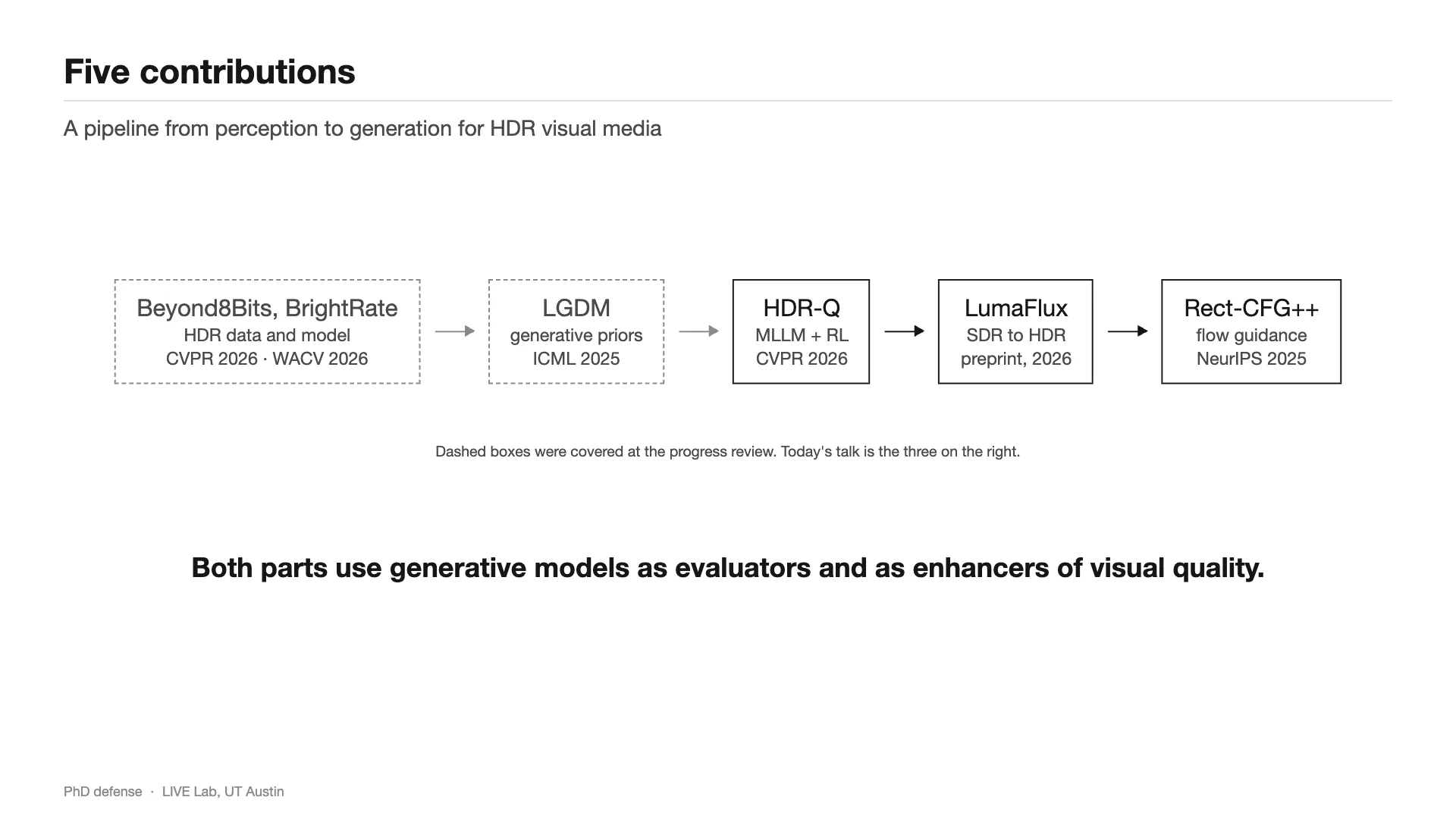
  7. Five contributions
  8. HDR-Q, a multimodal LLM for HDR video quality
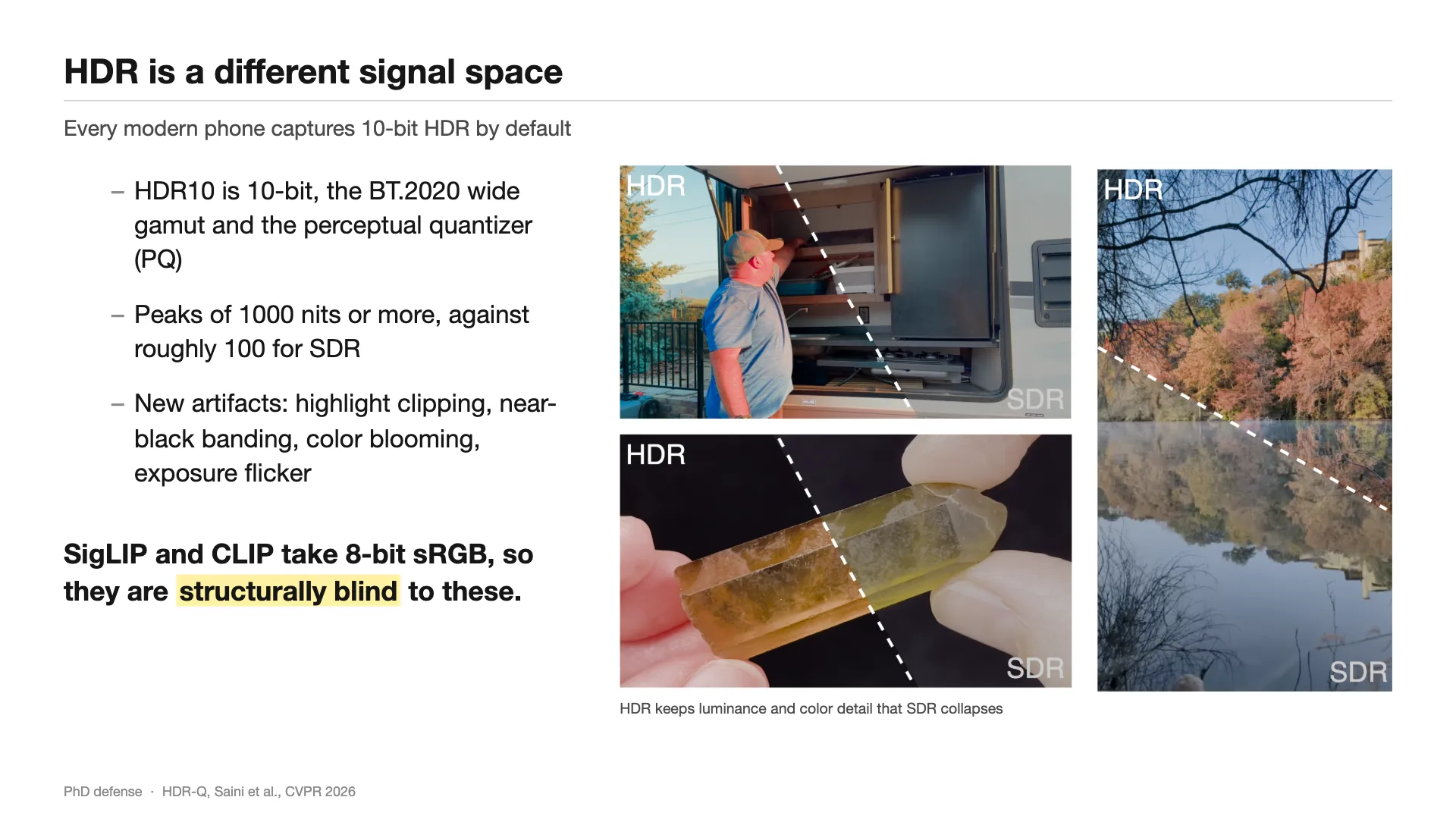
  9. HDR is a different signal space
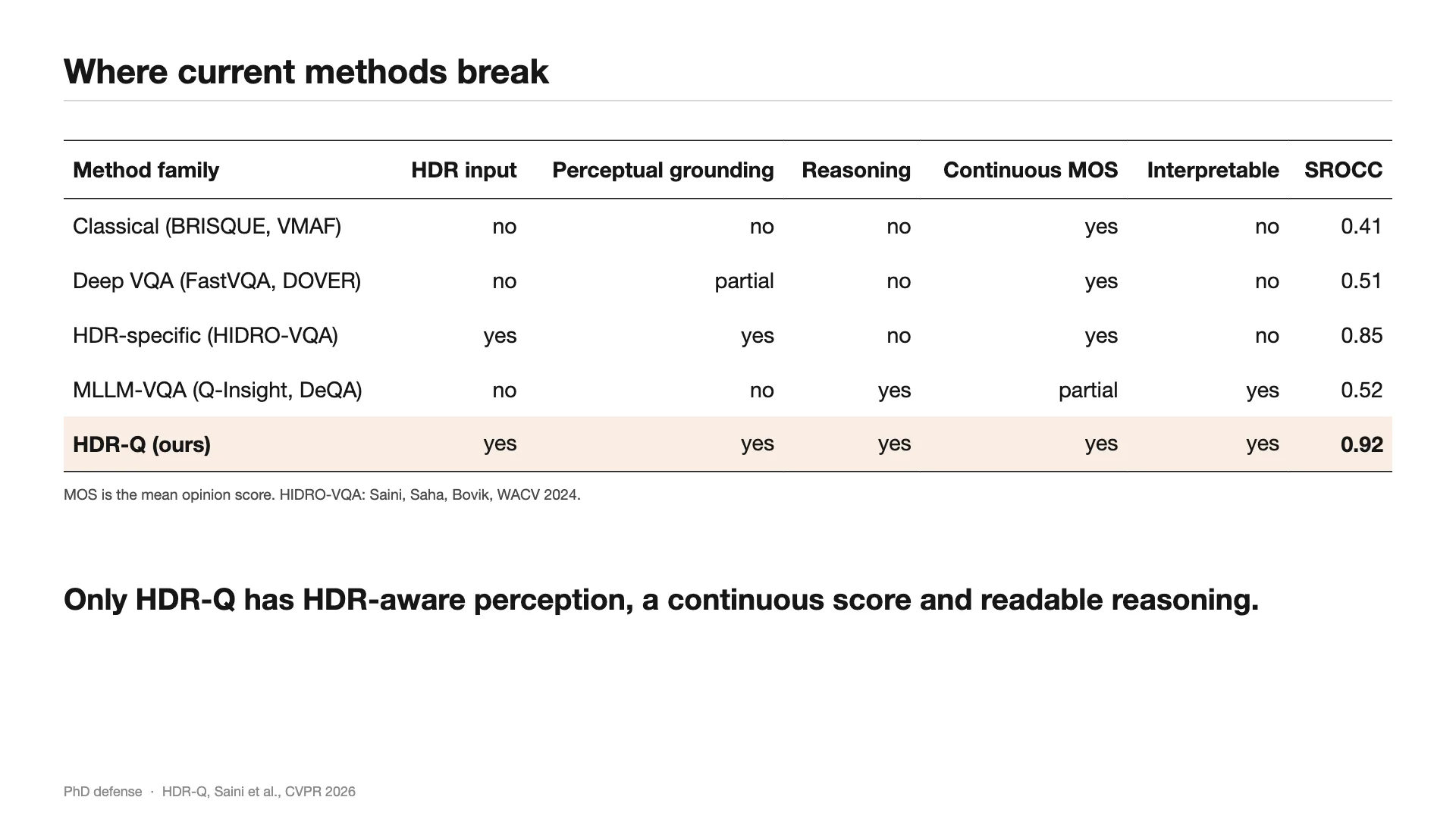
  10. Where current methods break
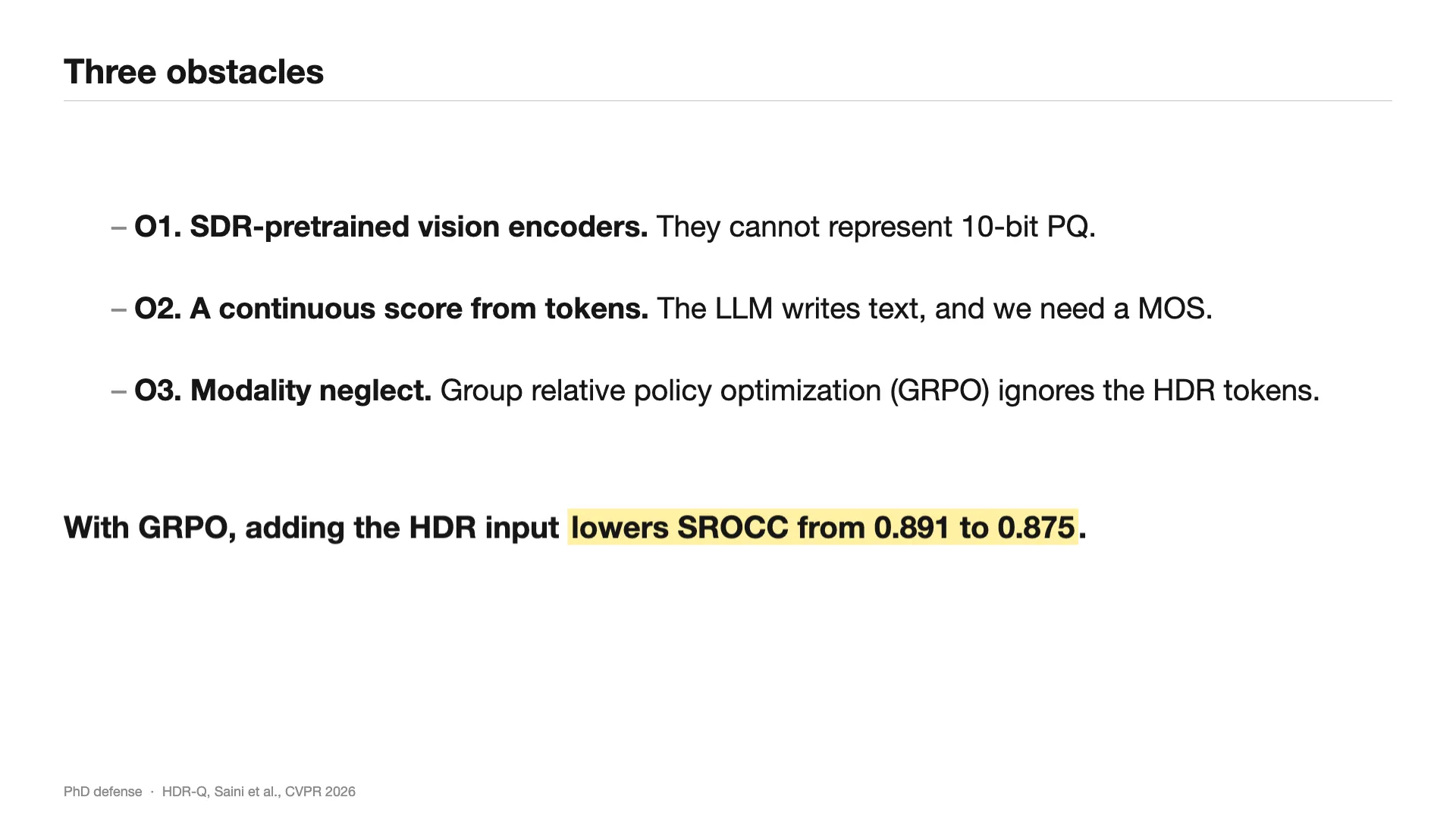
  11. Three obstacles
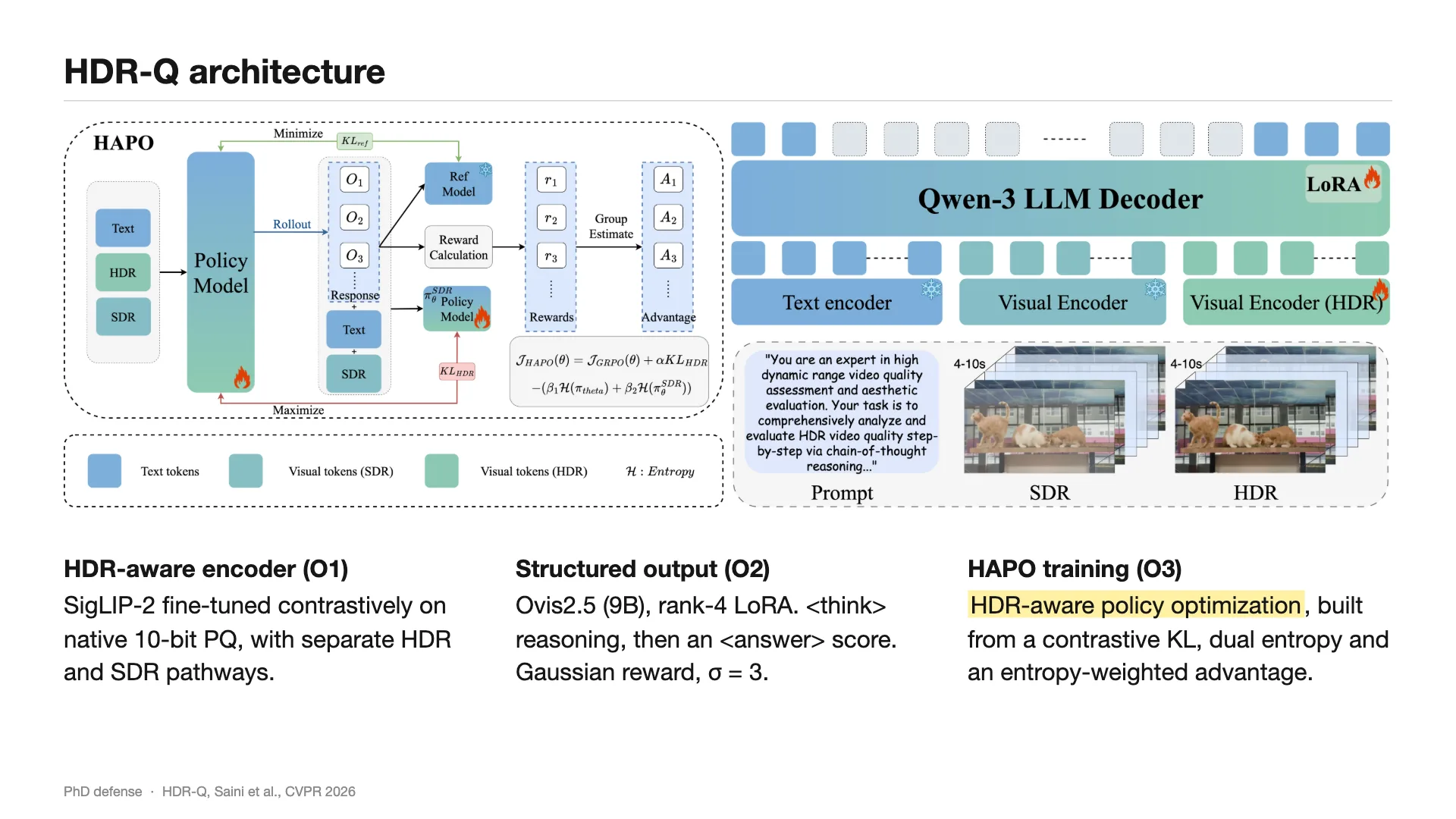
  12. HDR-Q architecture
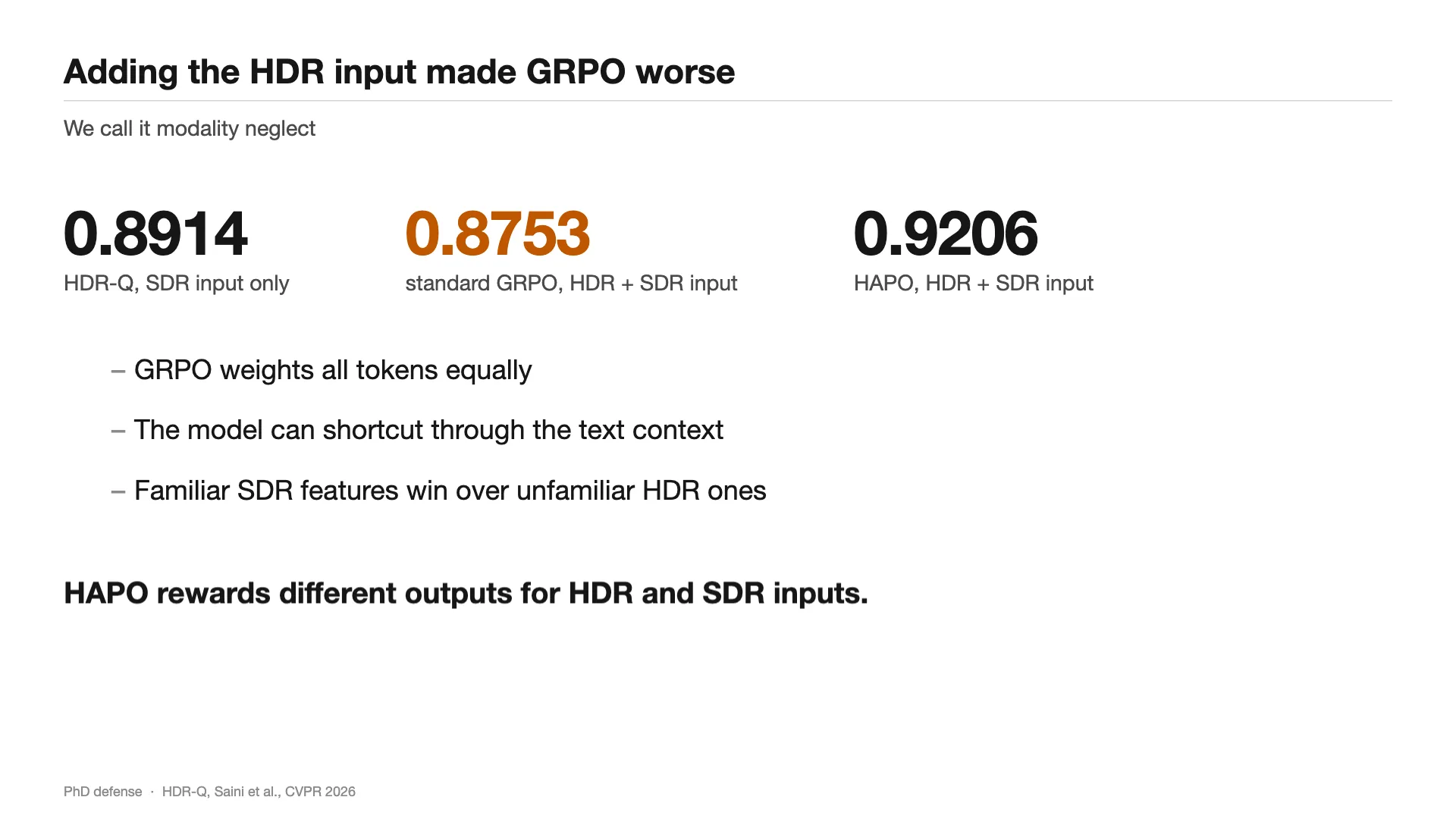
  13. Adding the HDR input made GRPO worse
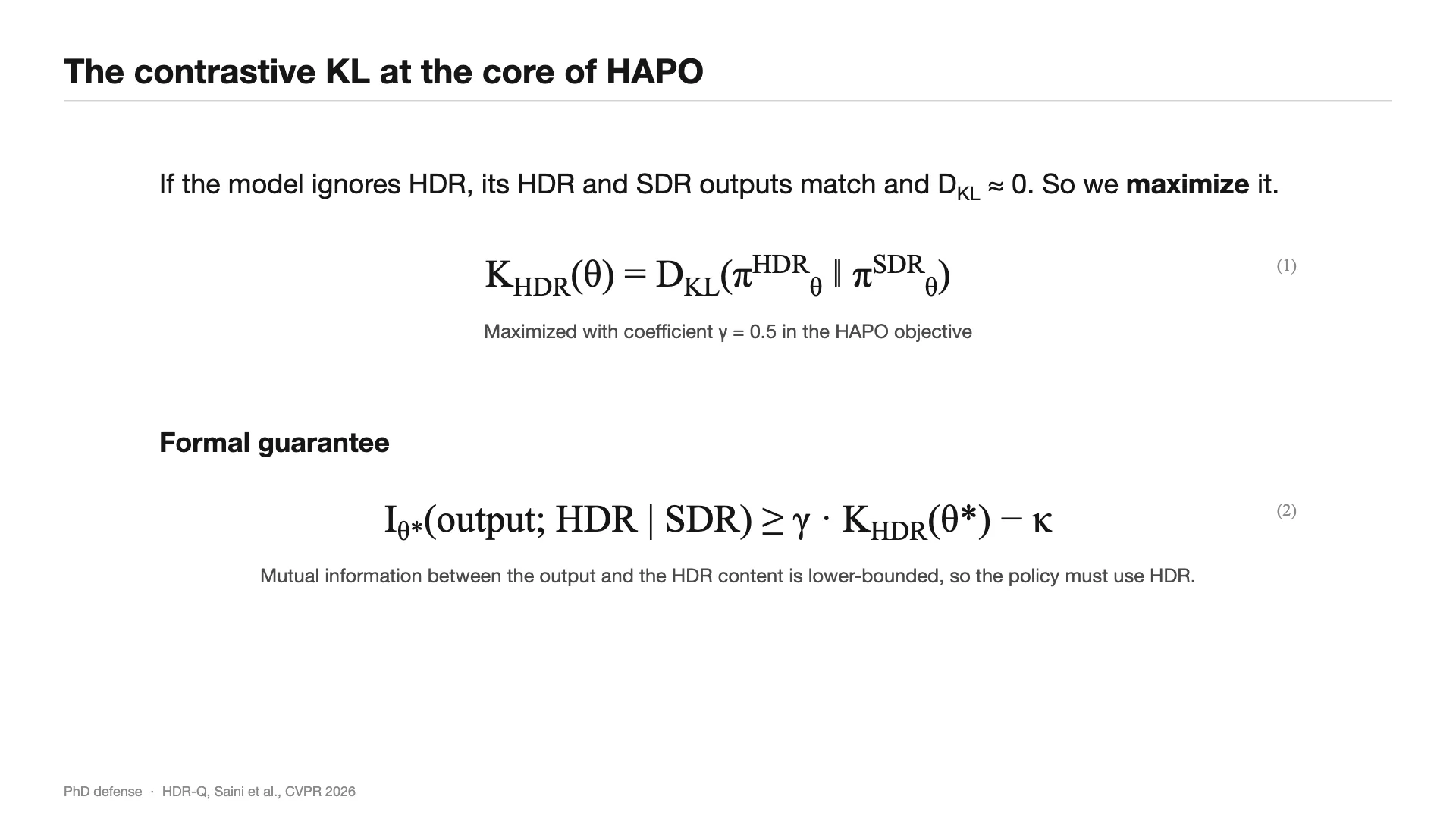
  14. The contrastive KL at the core of HAPO
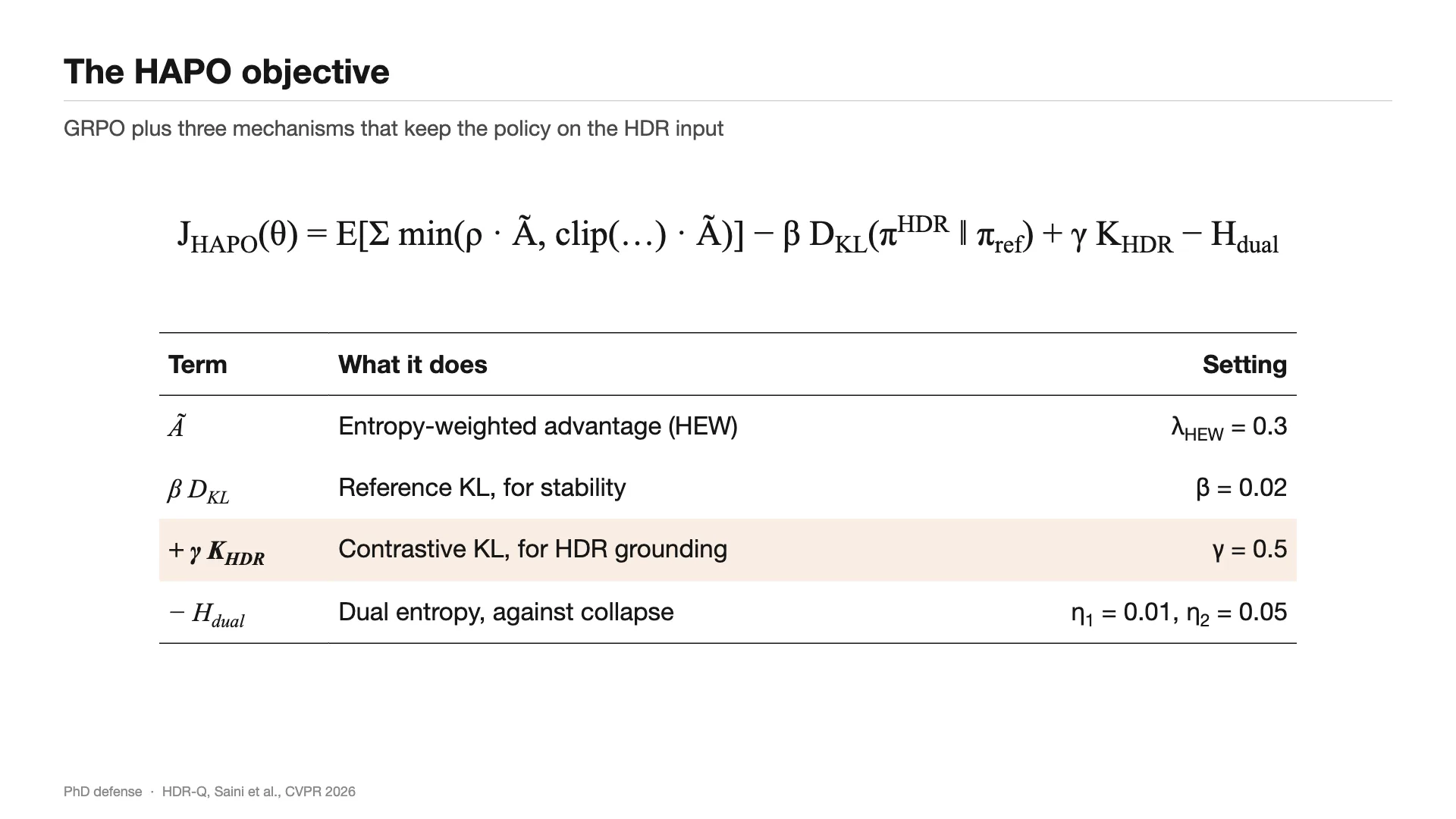
  15. The HAPO objective
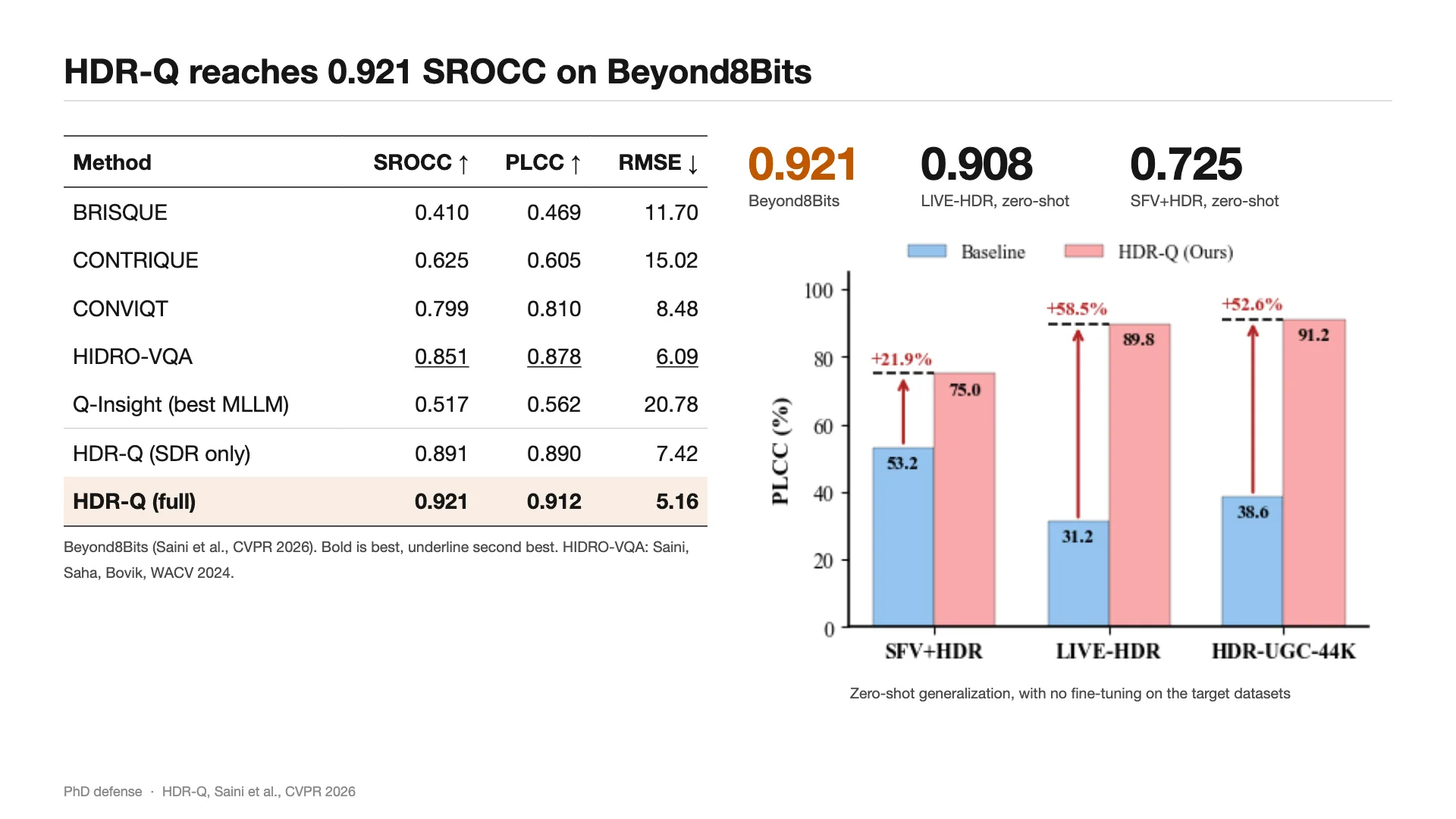
  16. HDR-Q reaches 0.921 SROCC on Beyond8Bits
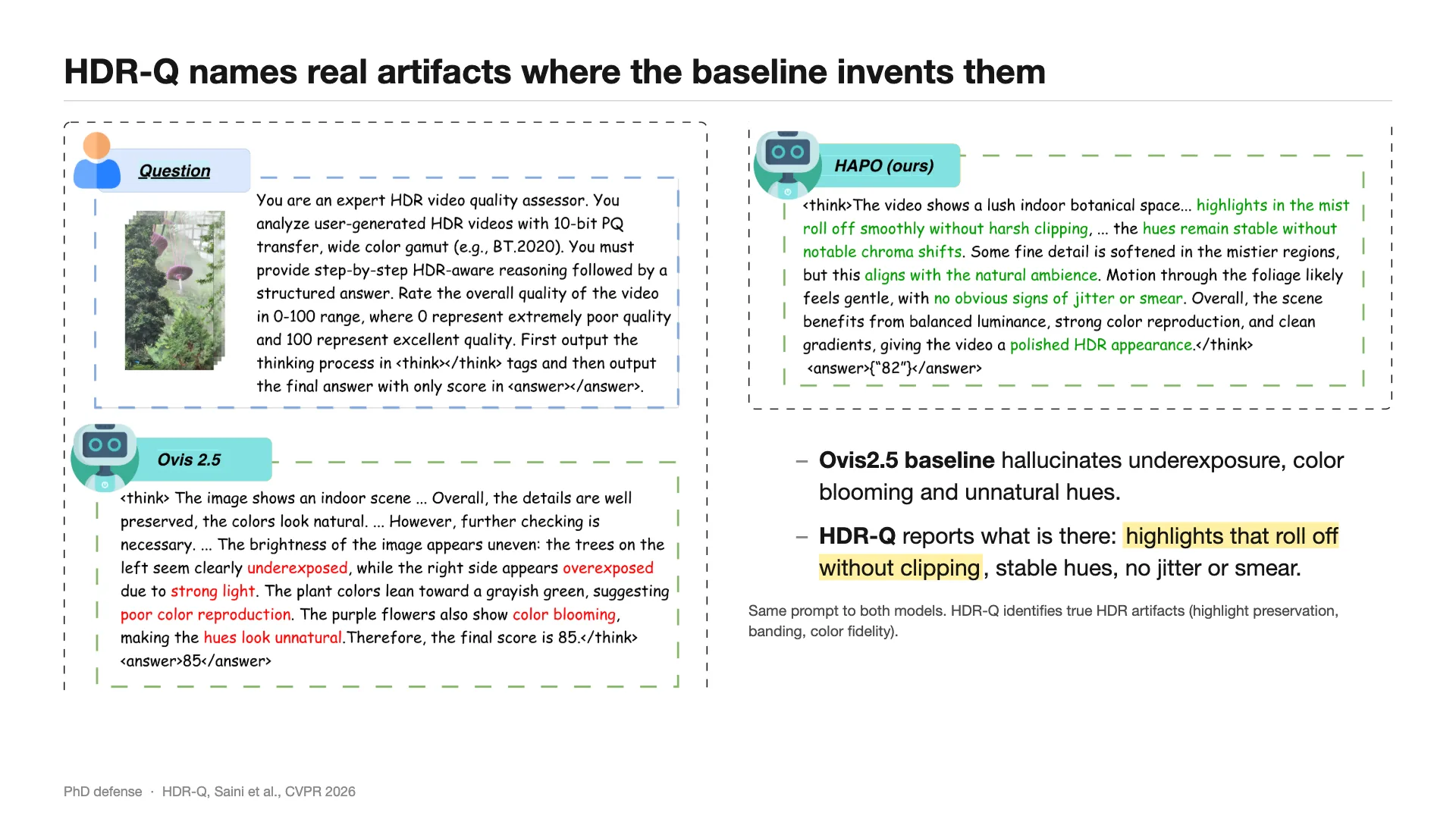
  17. HDR-Q names real artifacts where the baseline invents them
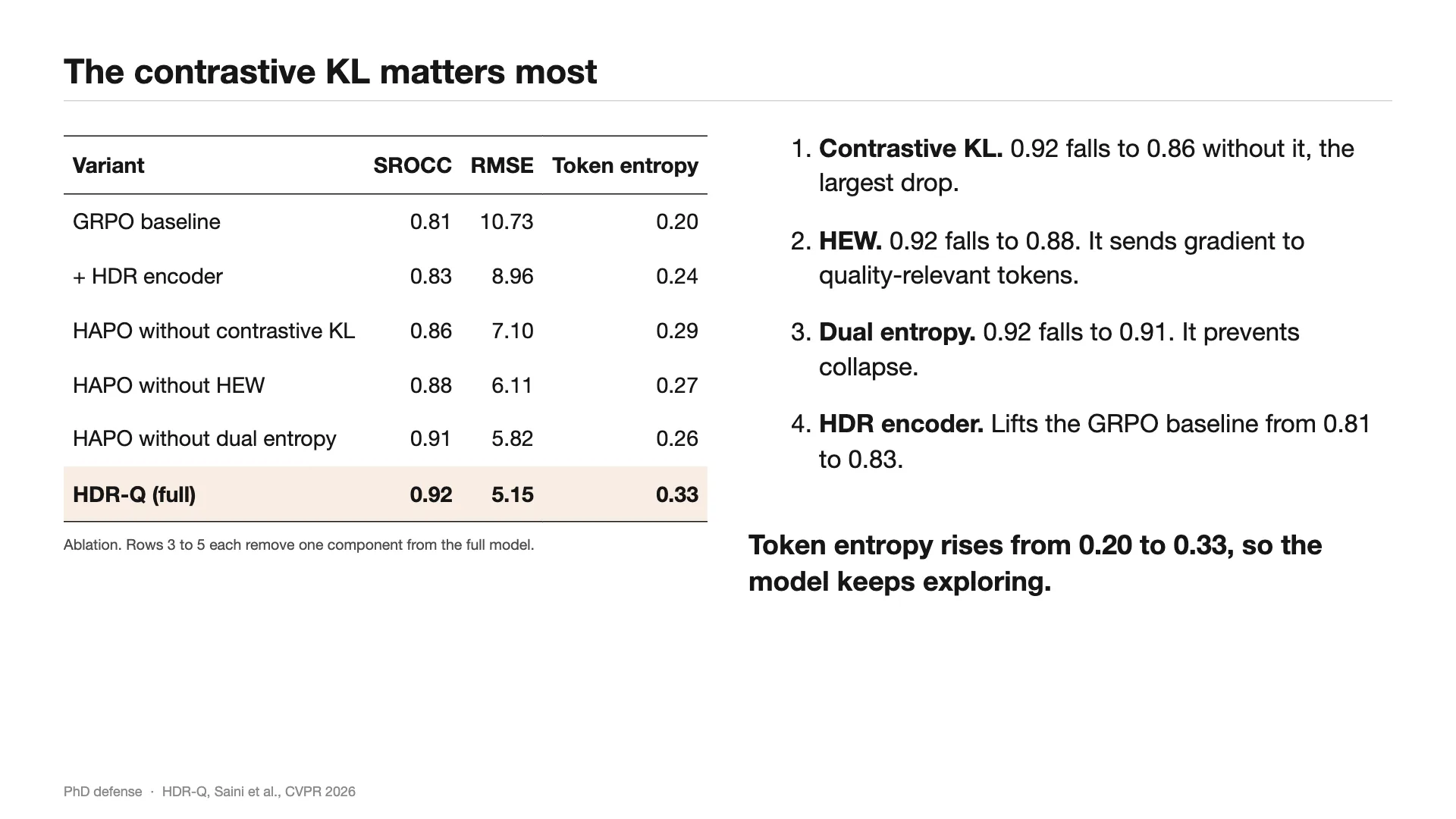
  18. The contrastive KL matters most
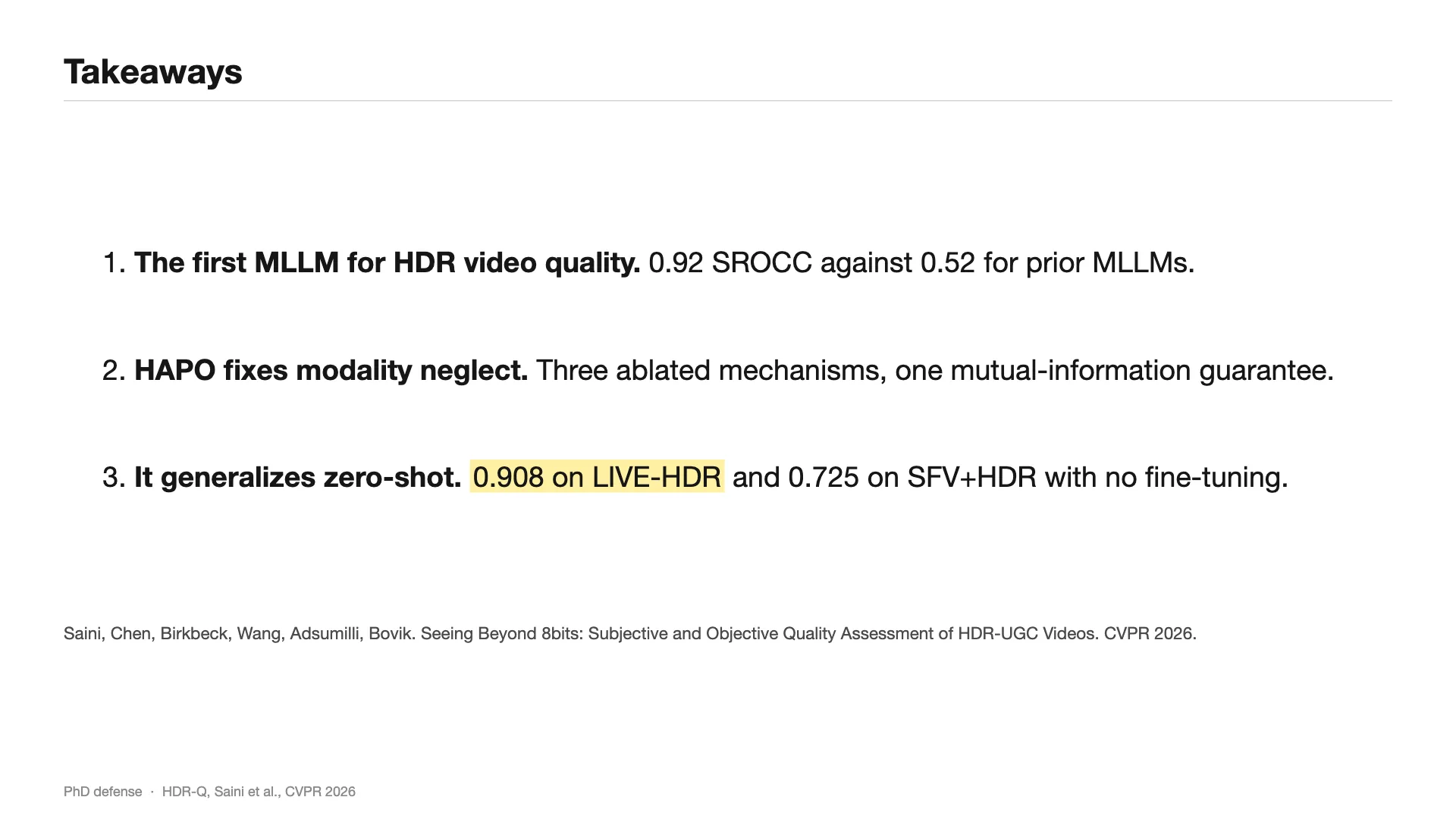
  19. Takeaways
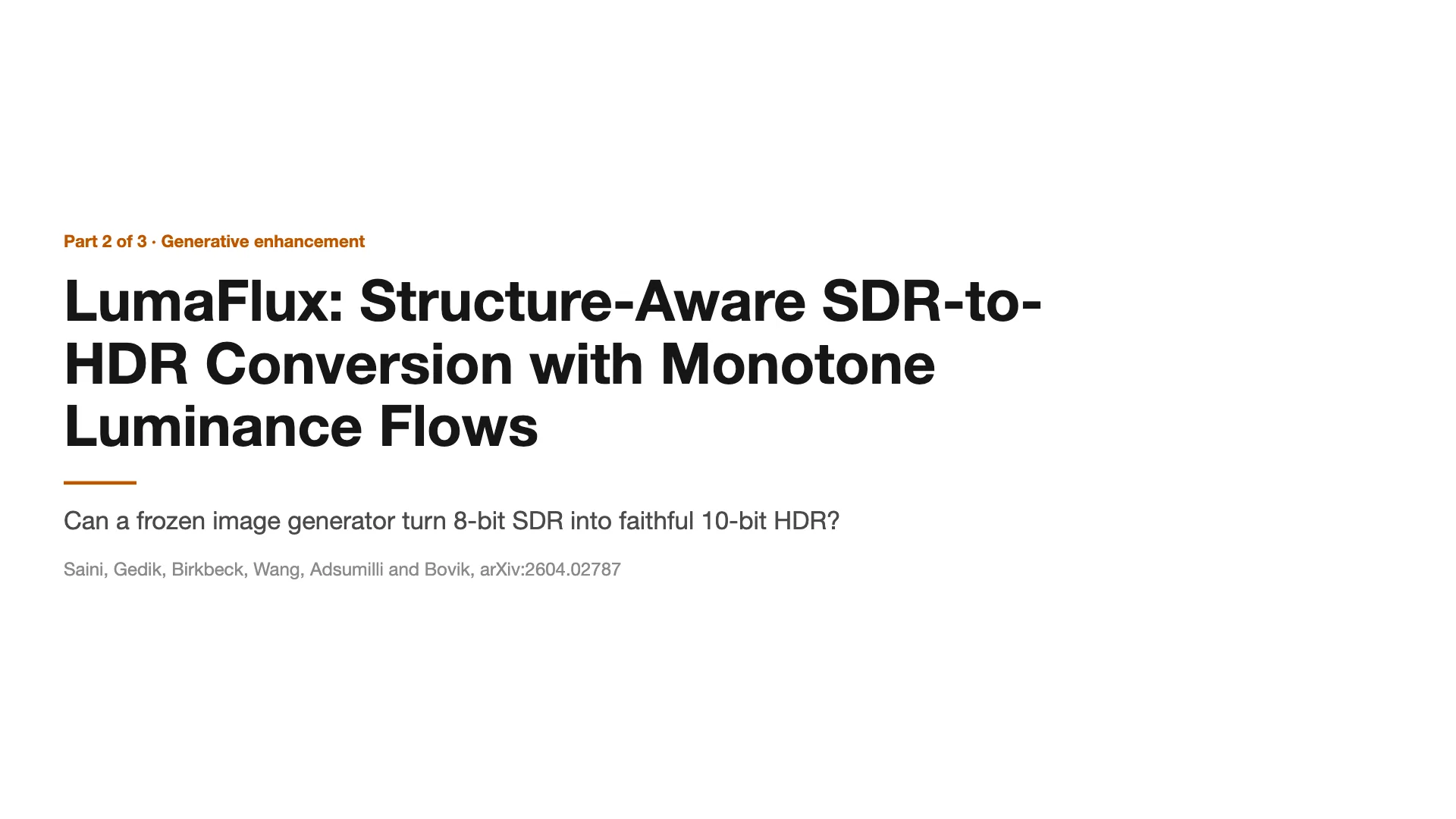
  20. LumaFlux: Structure-Aware SDR-to-HDR Conversion with Monotone Luminance Flows
  21. The question
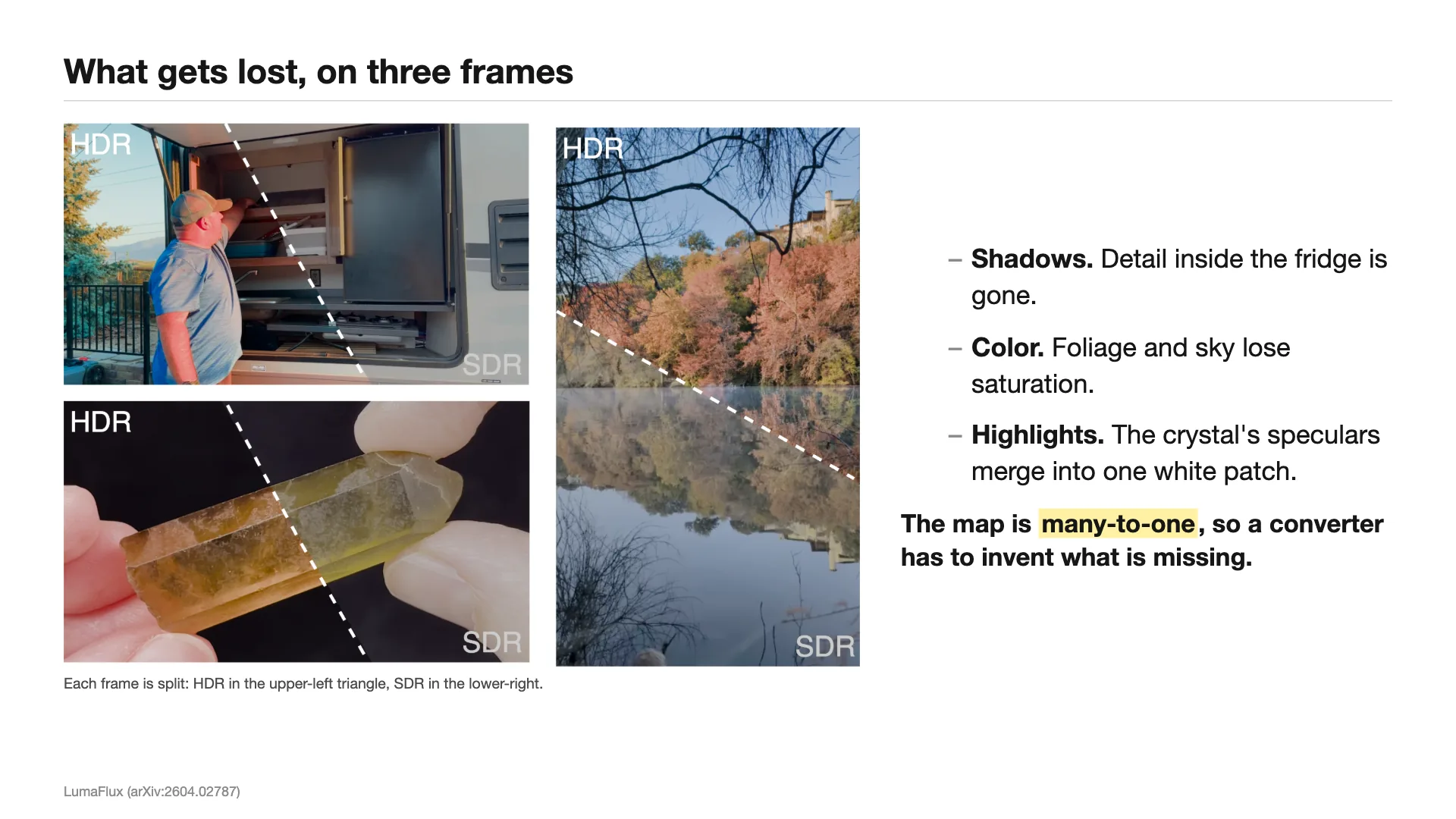
  22. What gets lost, on three frames
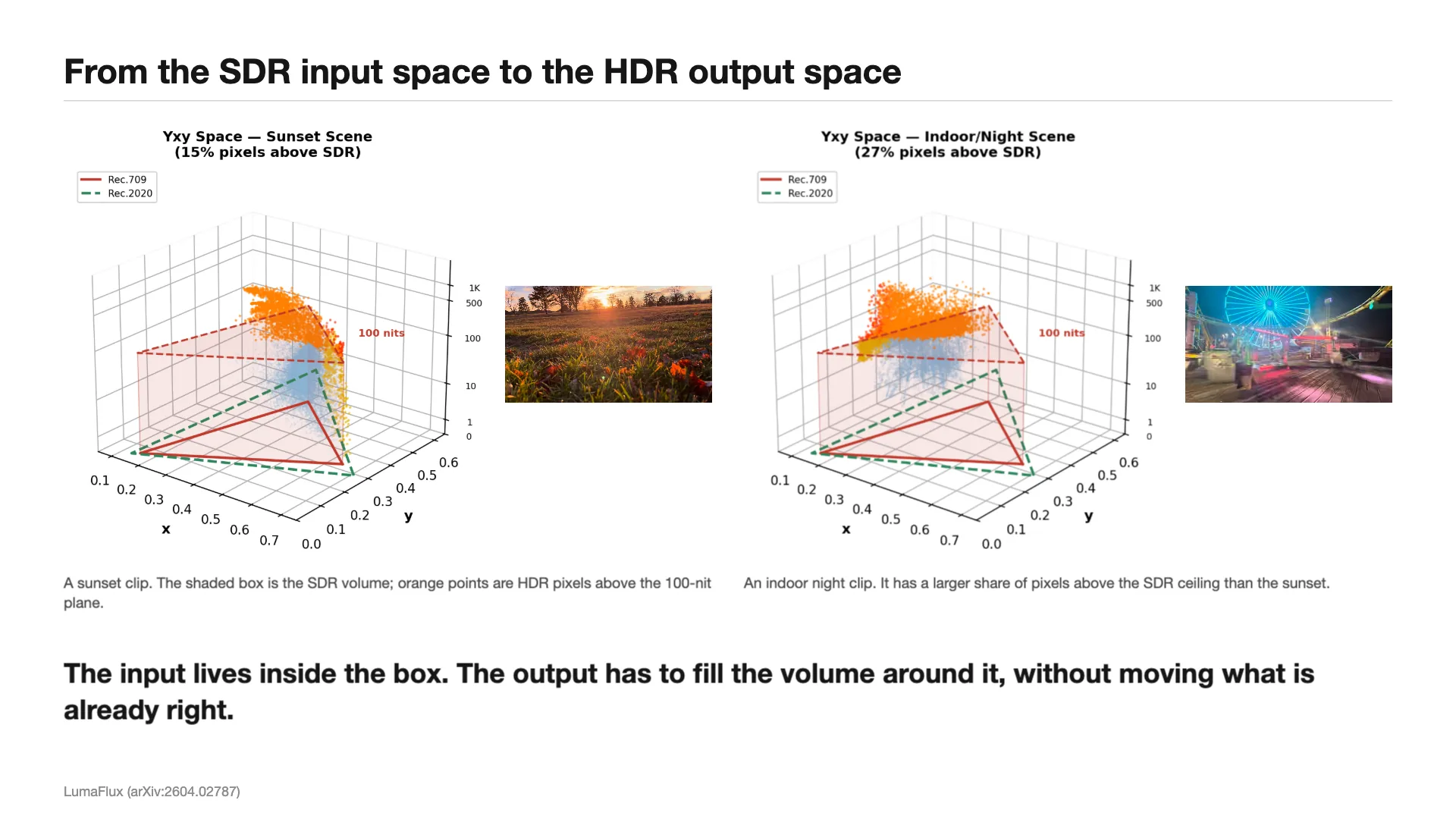
  23. From the SDR input space to the HDR output space
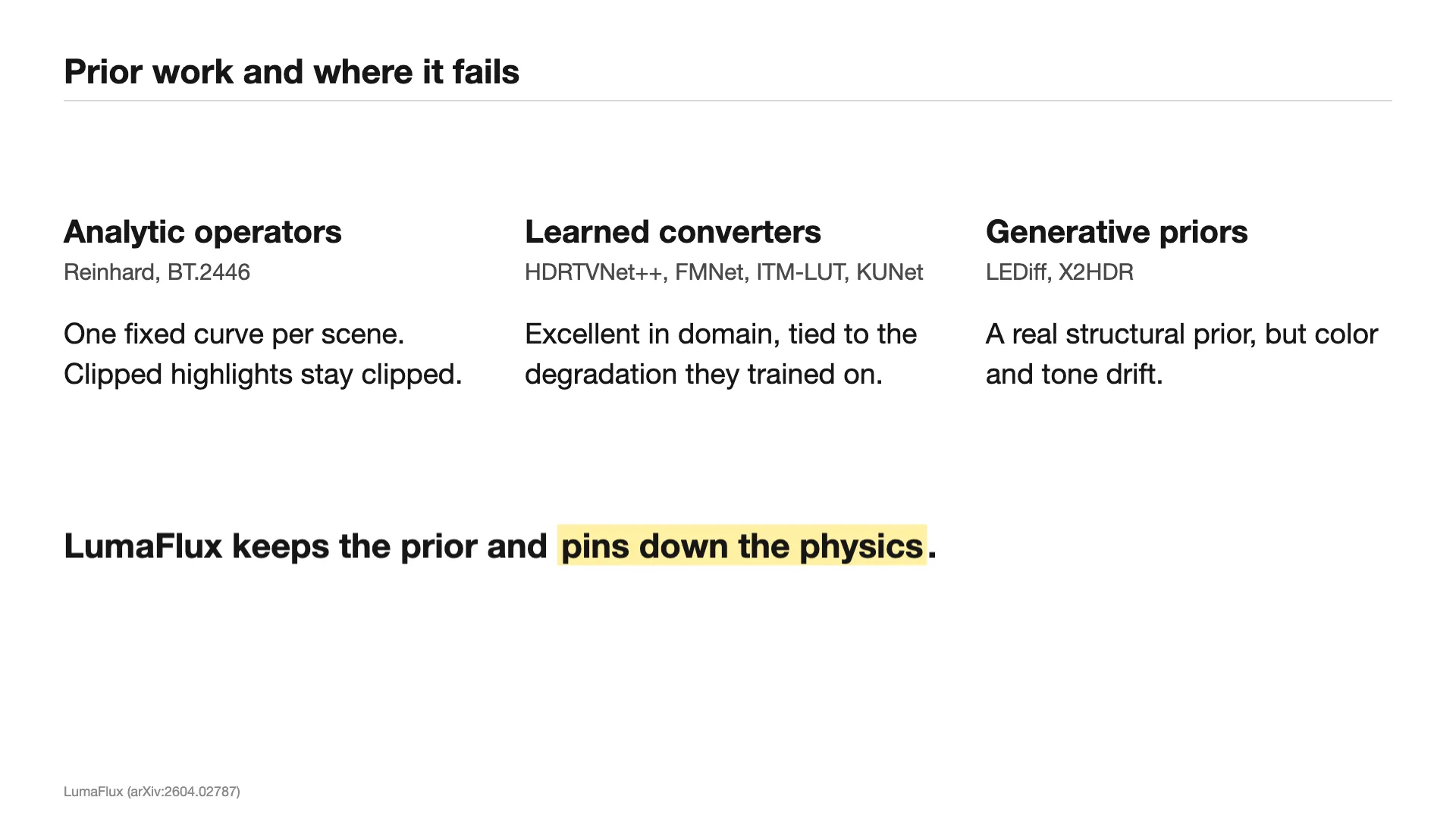
  24. Prior work and where it fails
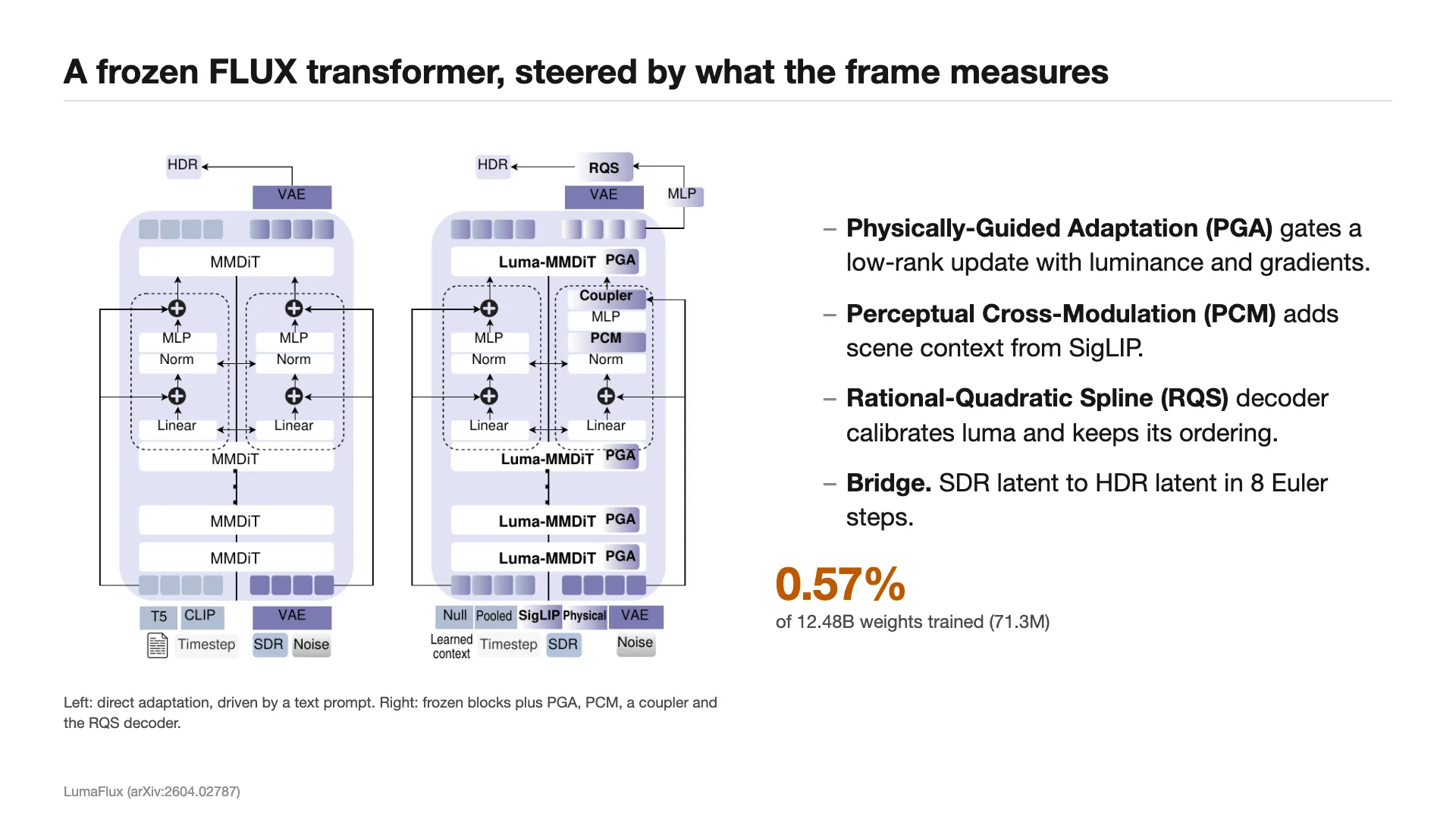
  25. A frozen FLUX transformer, steered by what the frame measures
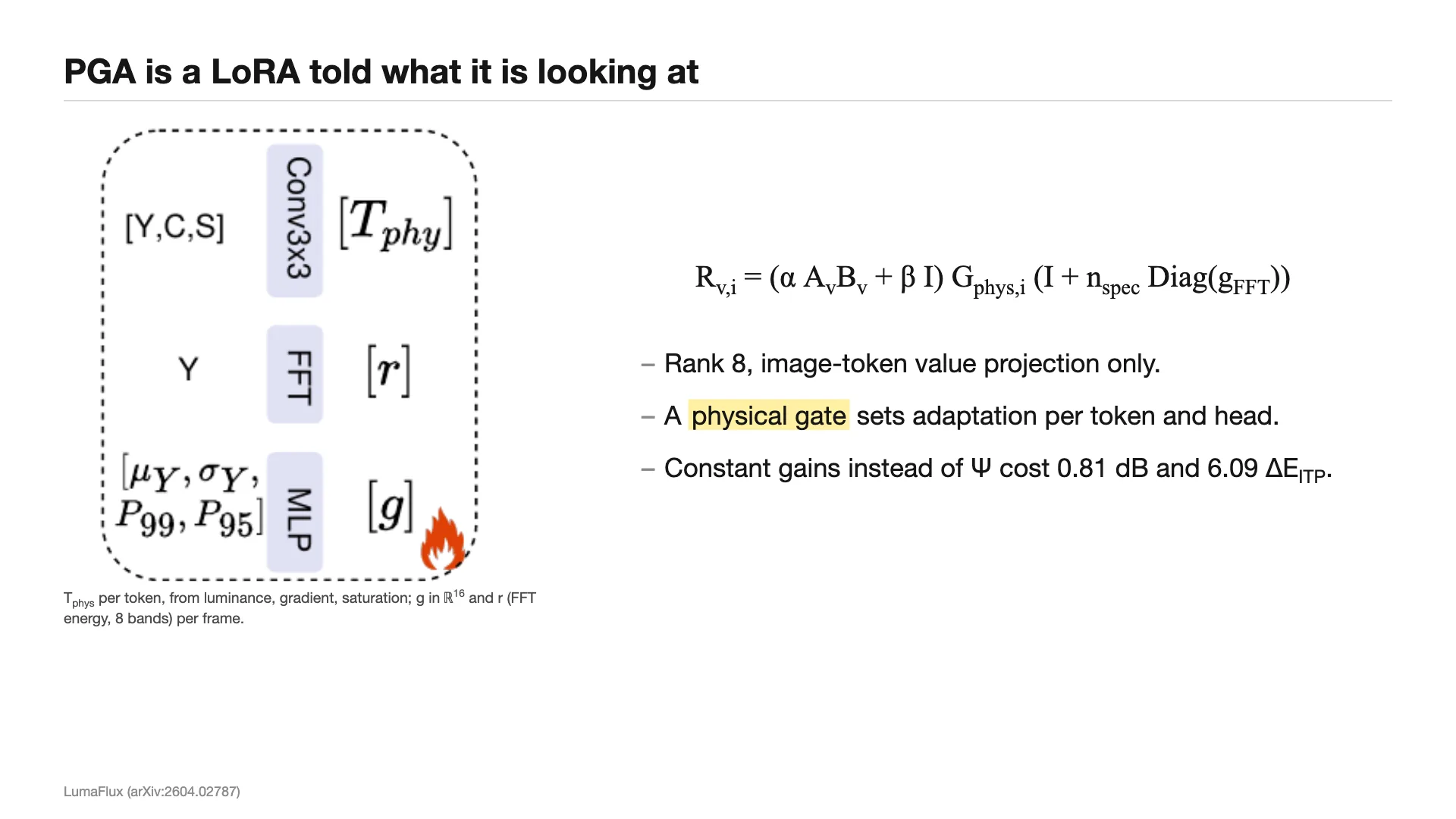
  26. PGA is a LoRA told what it is looking at
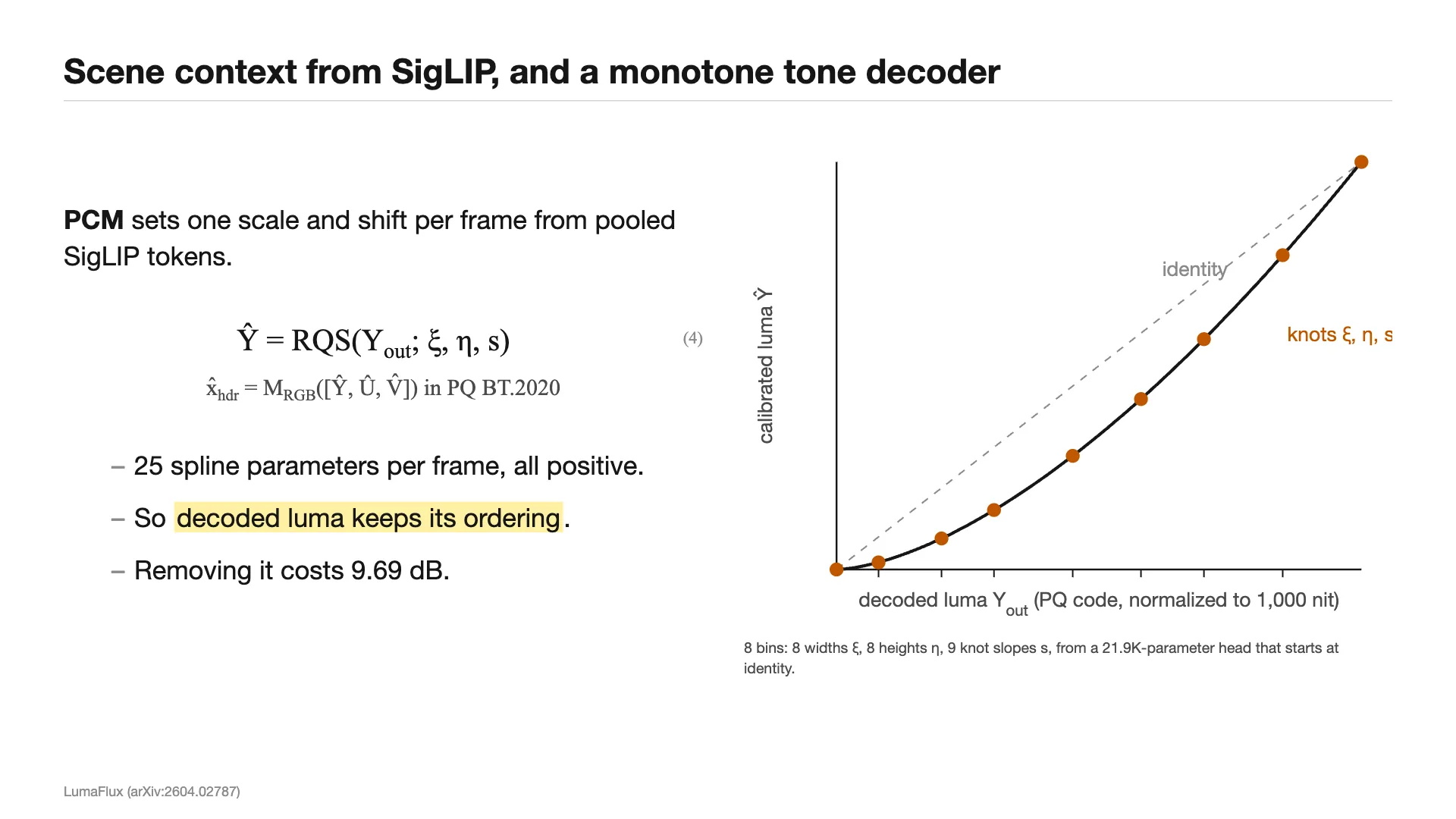
  27. Scene context from SigLIP, and a monotone tone decoder
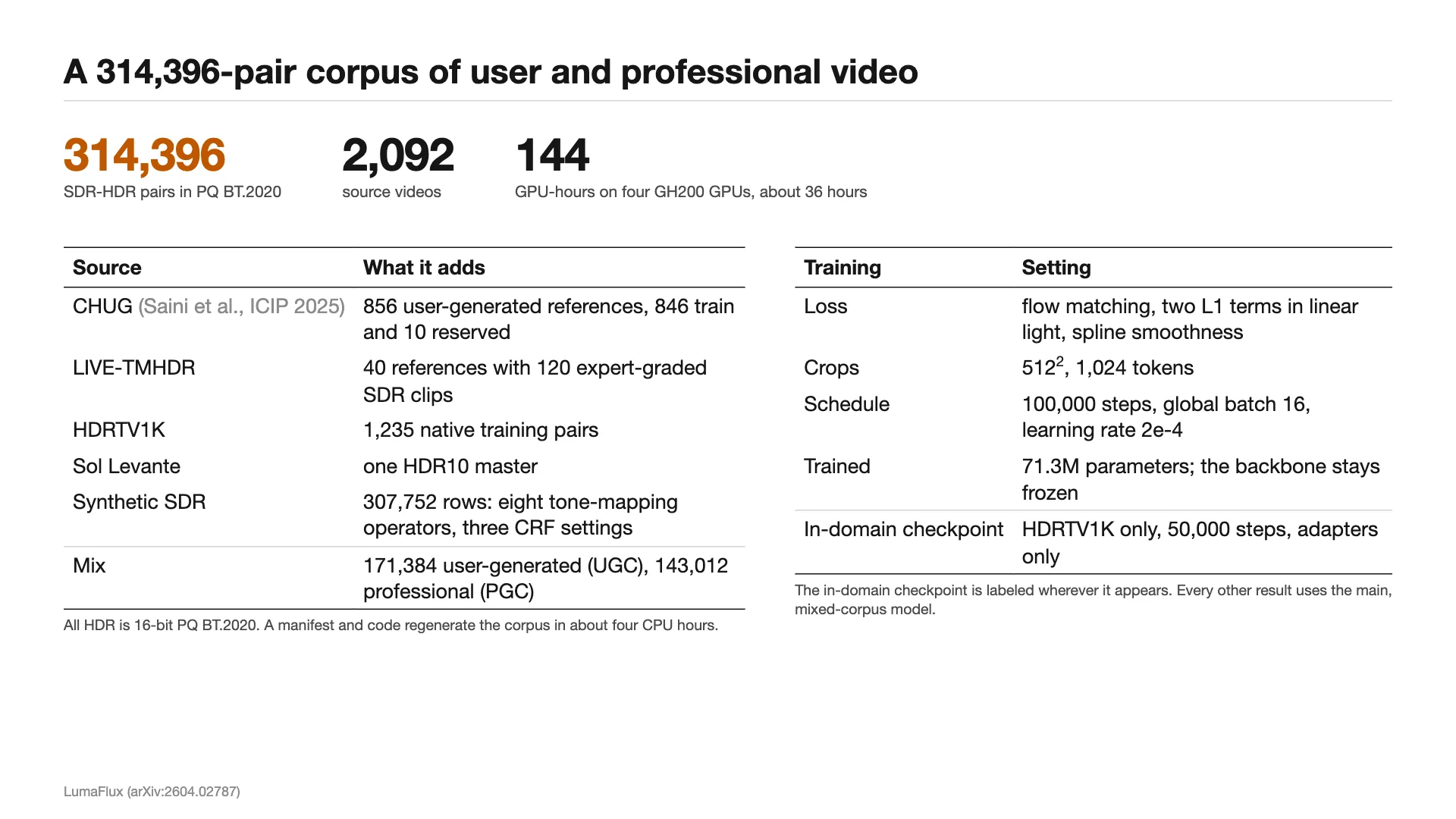
  28. A 314,396-pair corpus of user and professional video
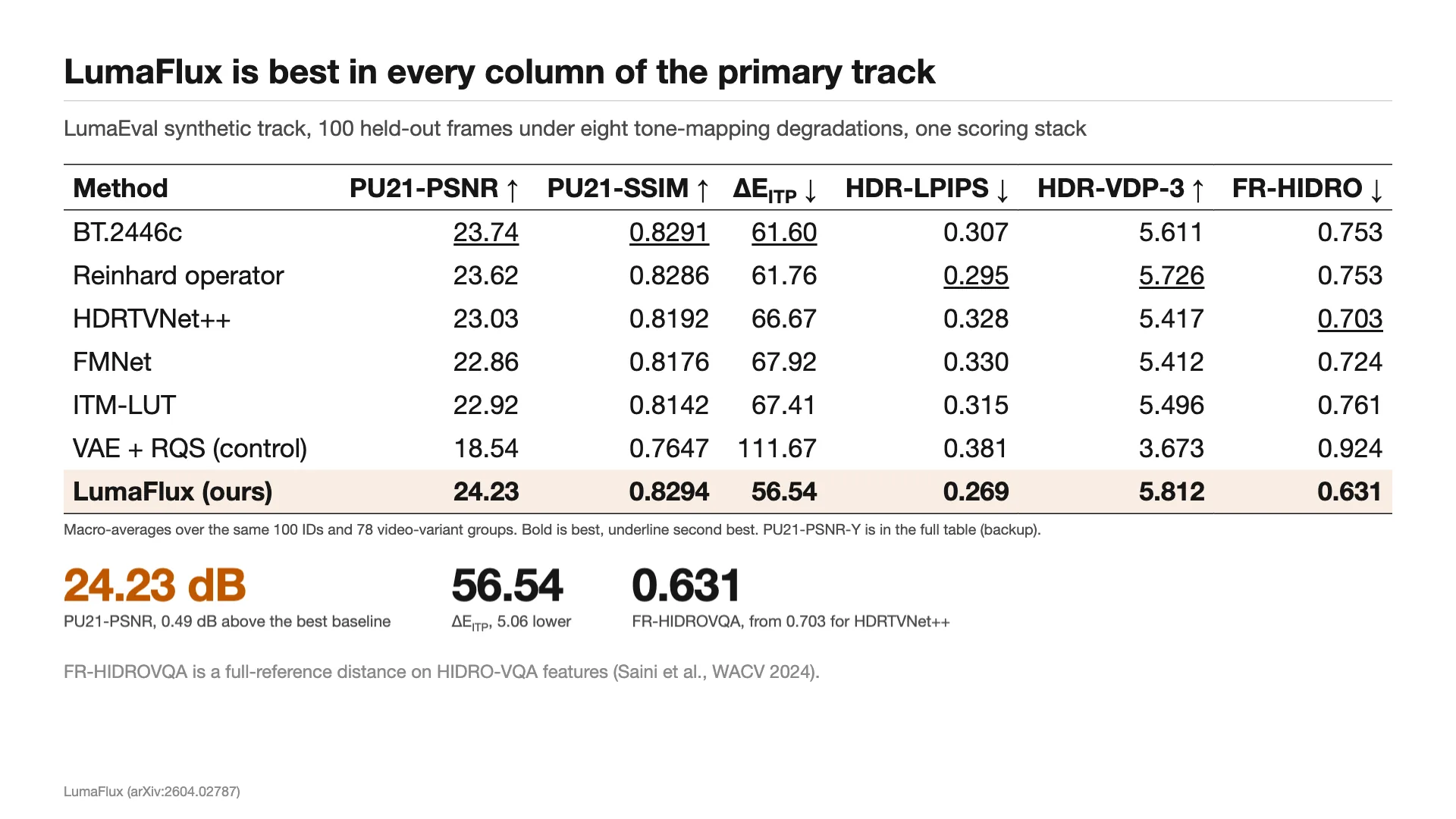
  29. LumaFlux is best in every column of the primary track
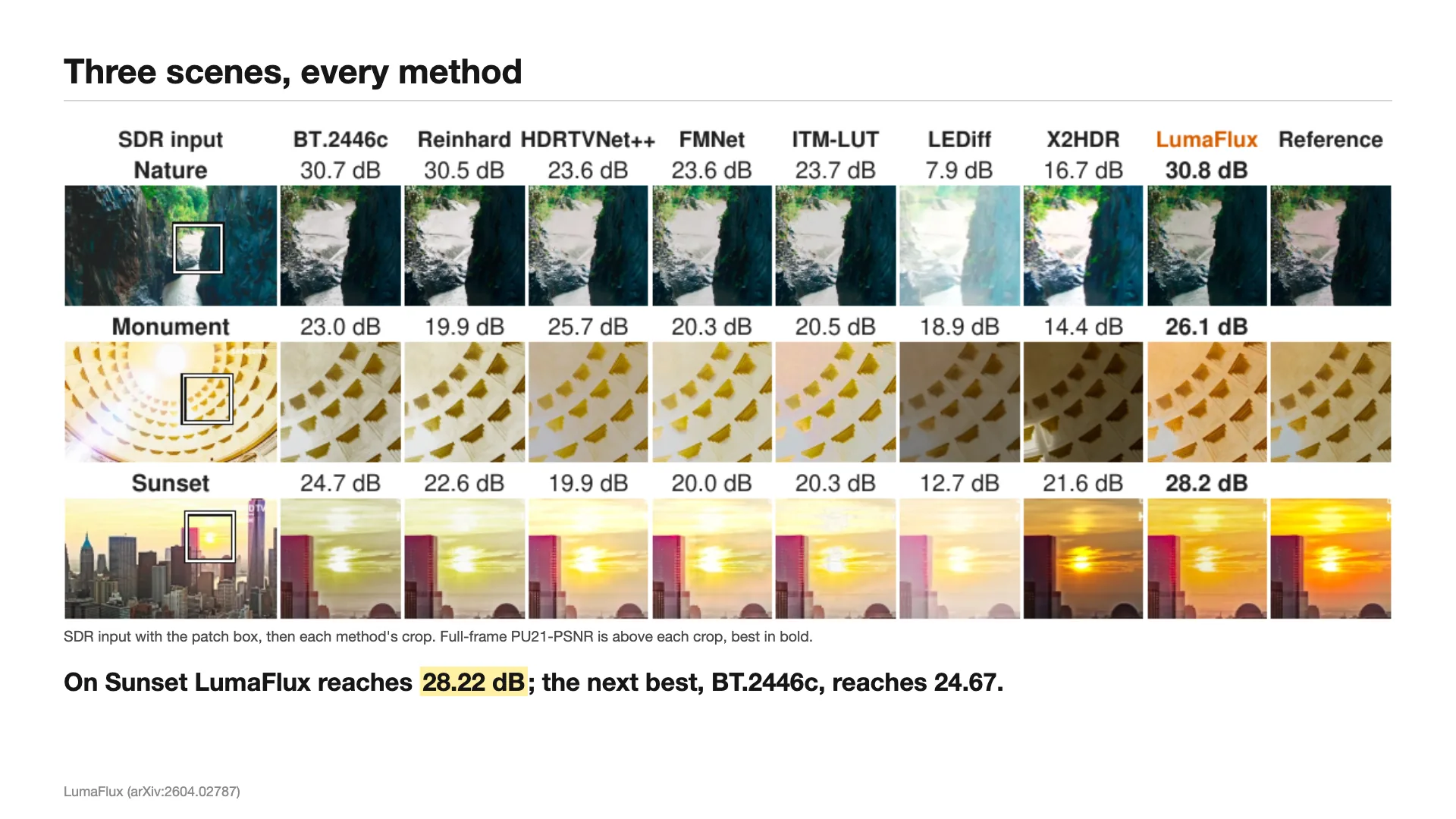
  30. Three scenes, every method
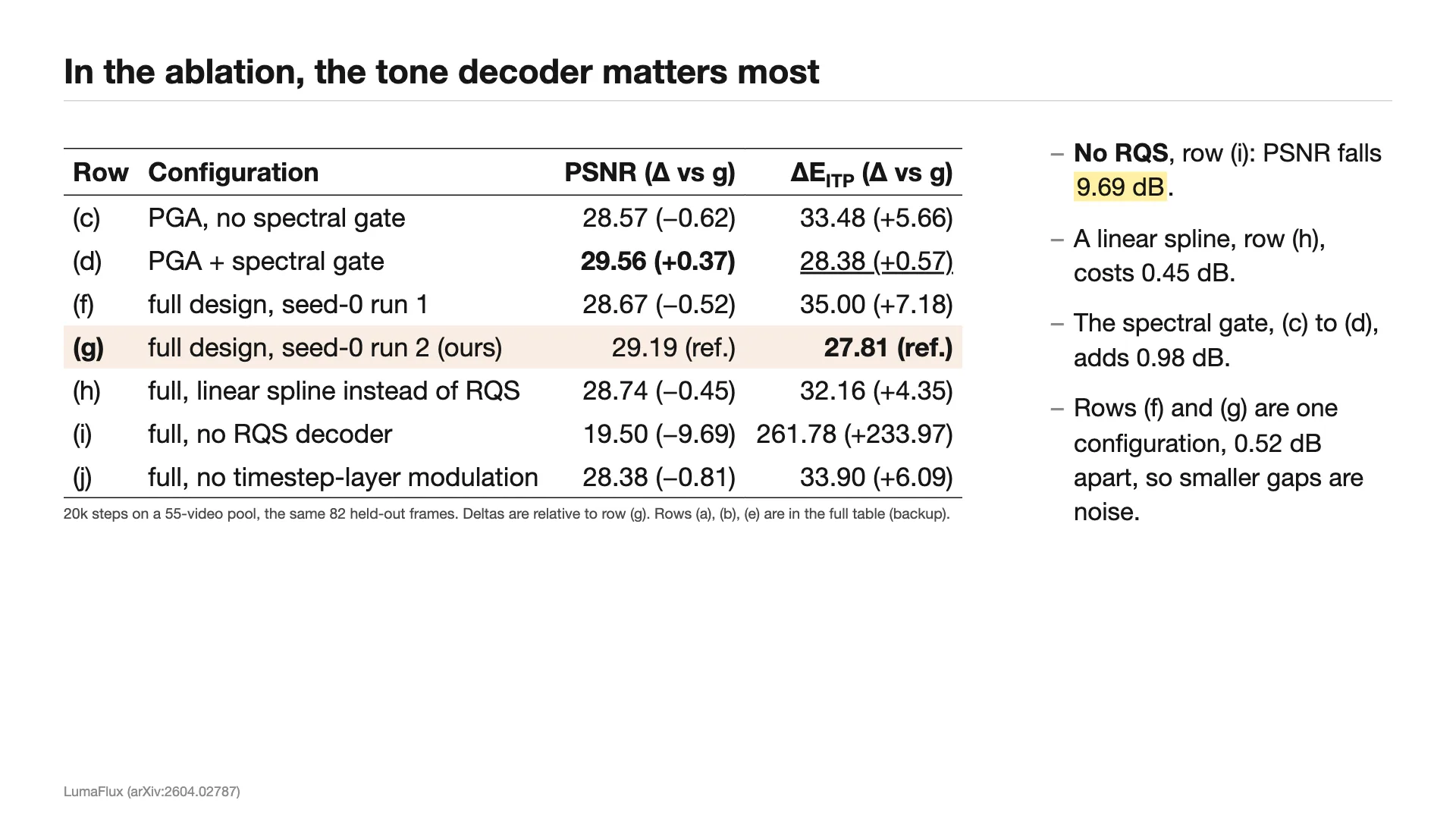
  31. In the ablation, the tone decoder matters most
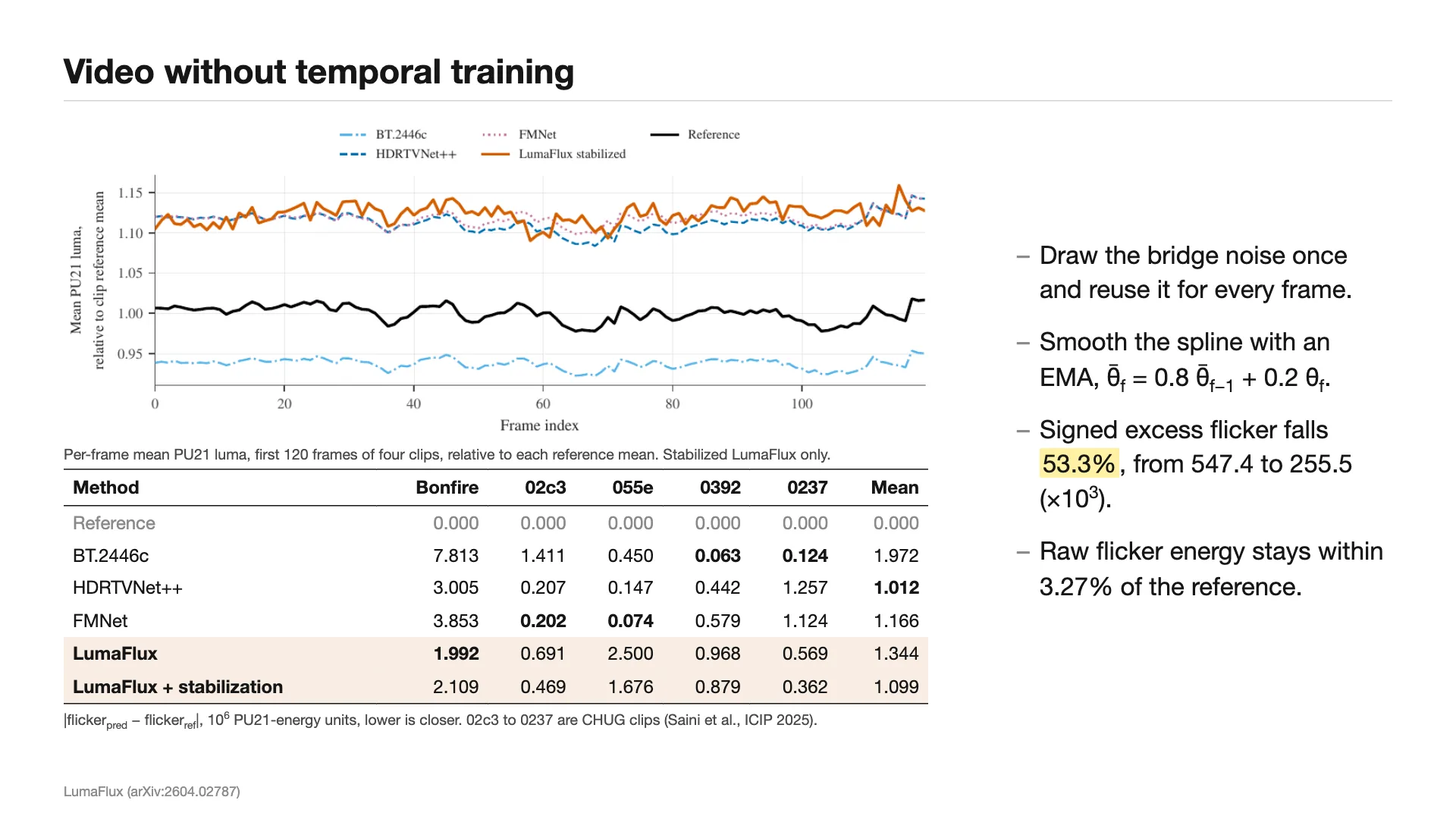
  32. Video without temporal training
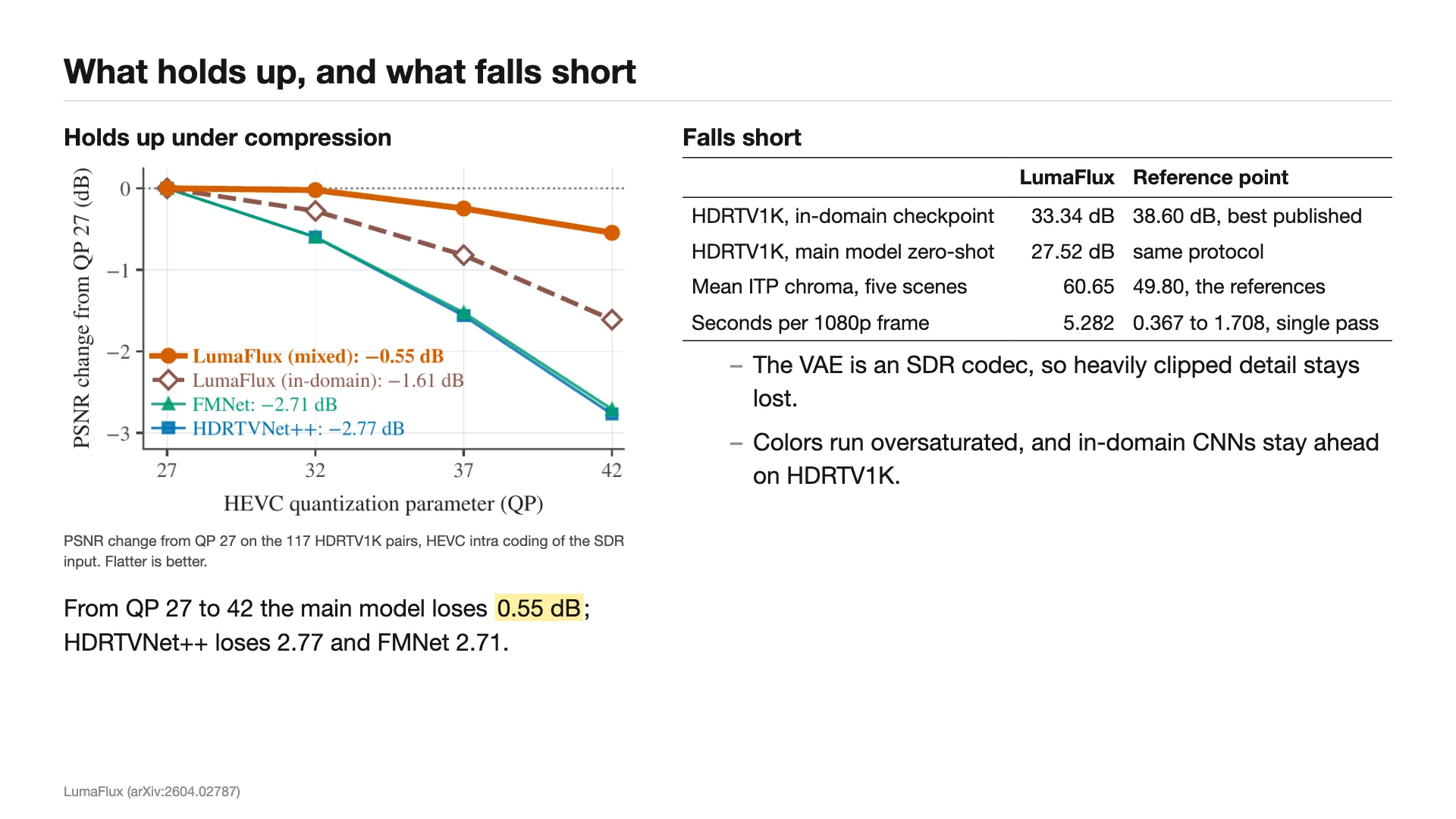
  33. What holds up, and what falls short
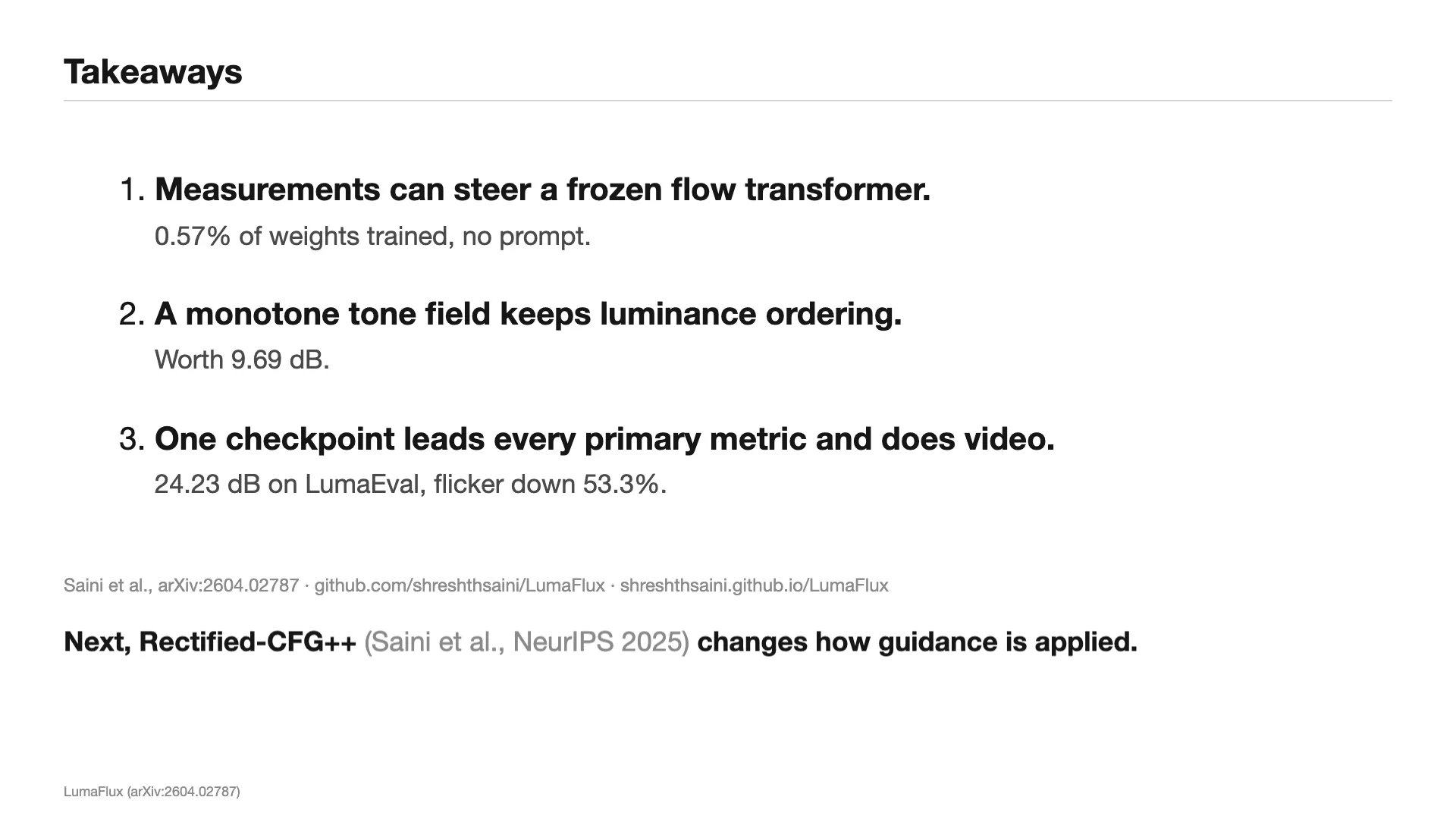
  34. Takeaways
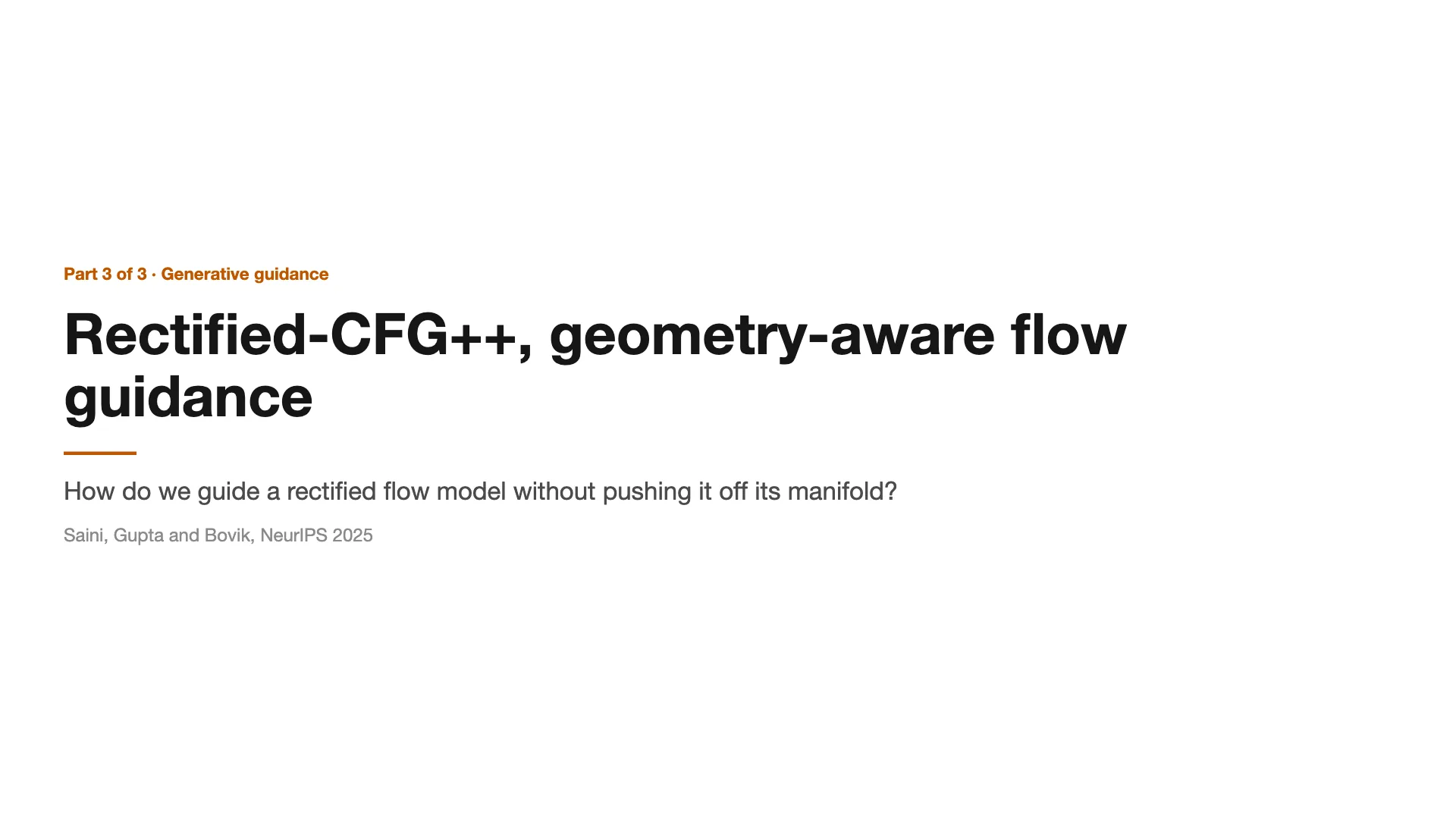
  35. Rectified-CFG++, geometry-aware flow guidance
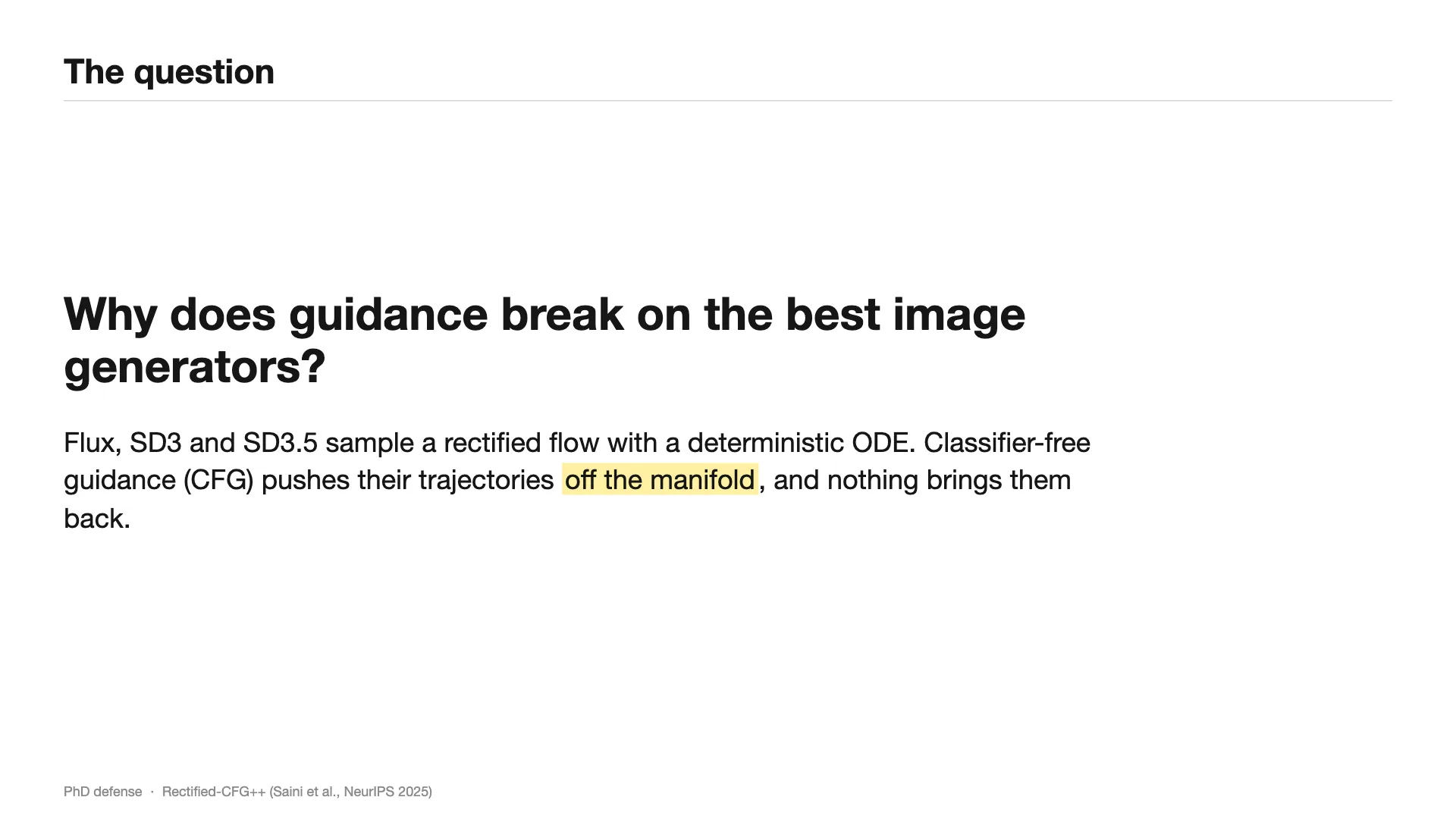
  36. The question
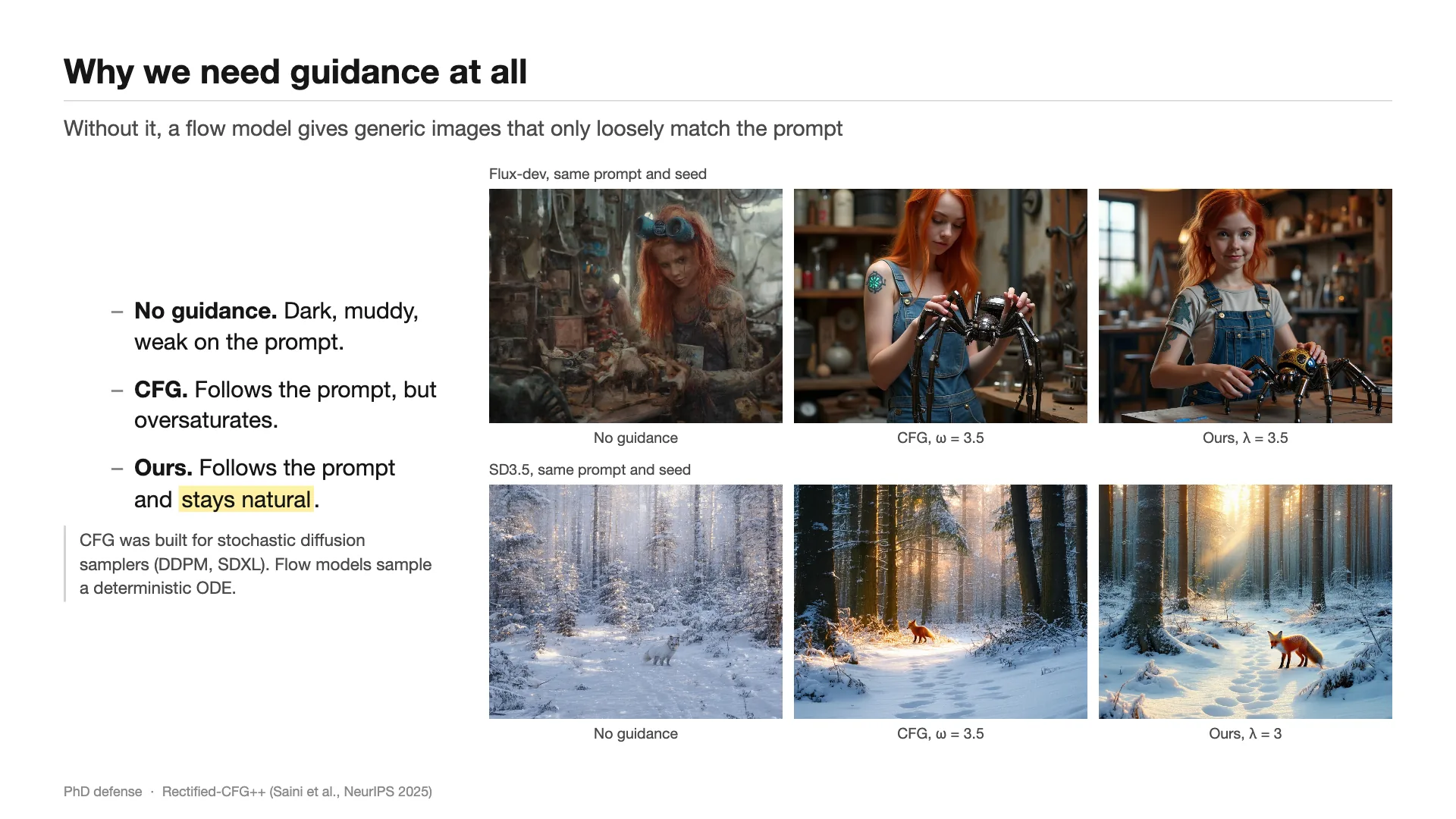
  37. Why we need guidance at all
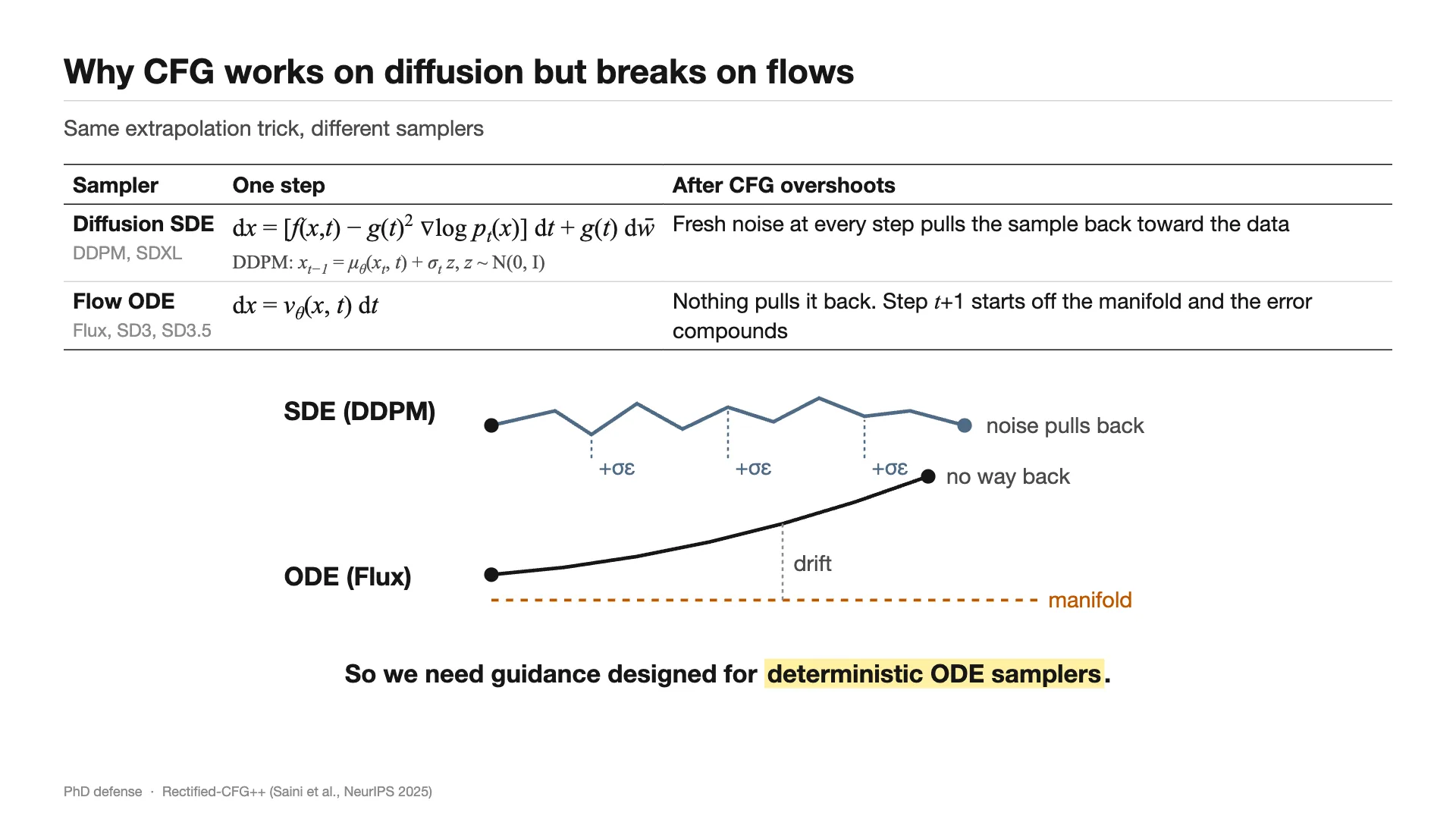
  38. Why CFG works on diffusion but breaks on flows
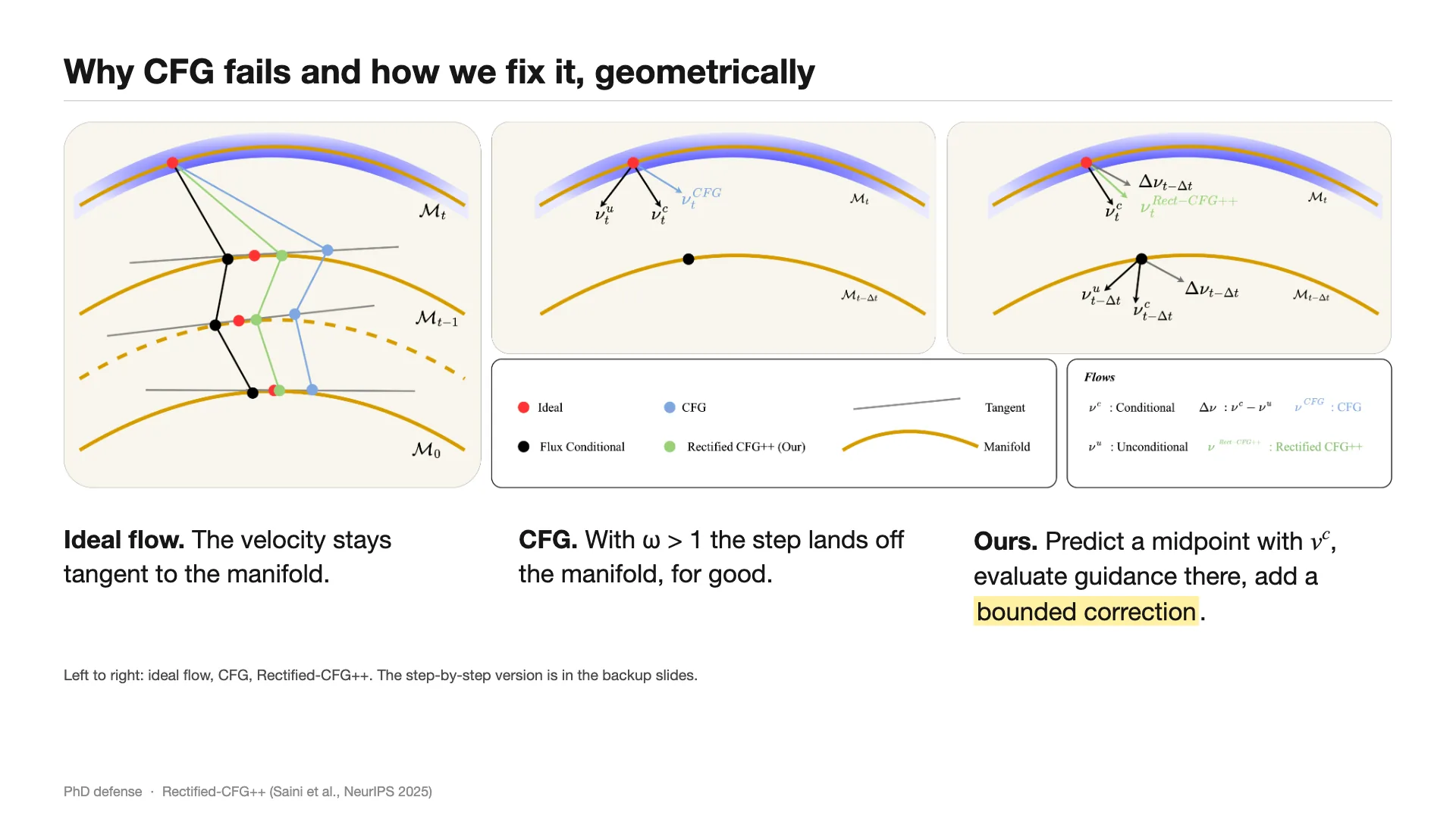
  39. Why CFG fails and how we fix it, geometrically
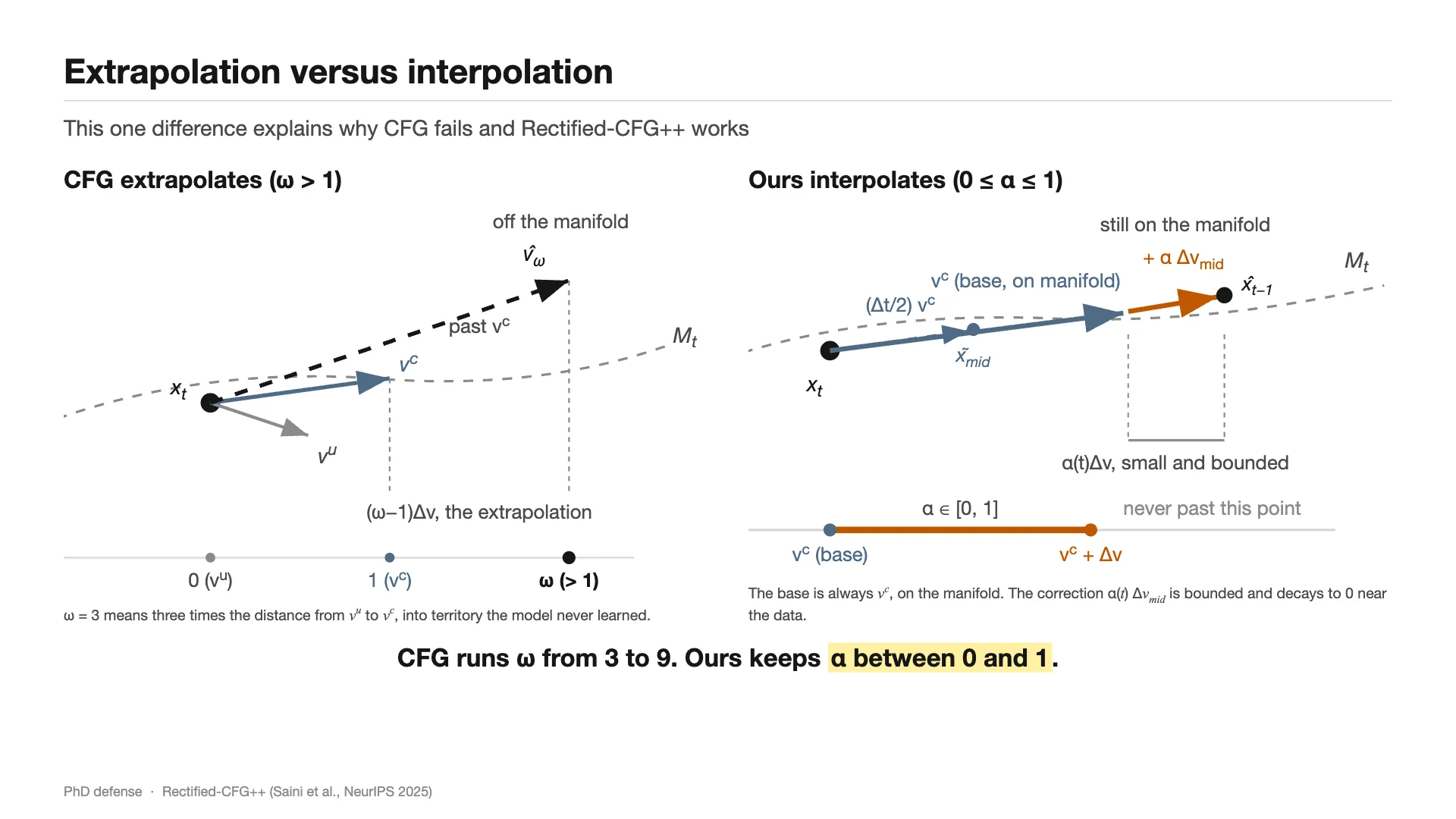
  40. Extrapolation versus interpolation
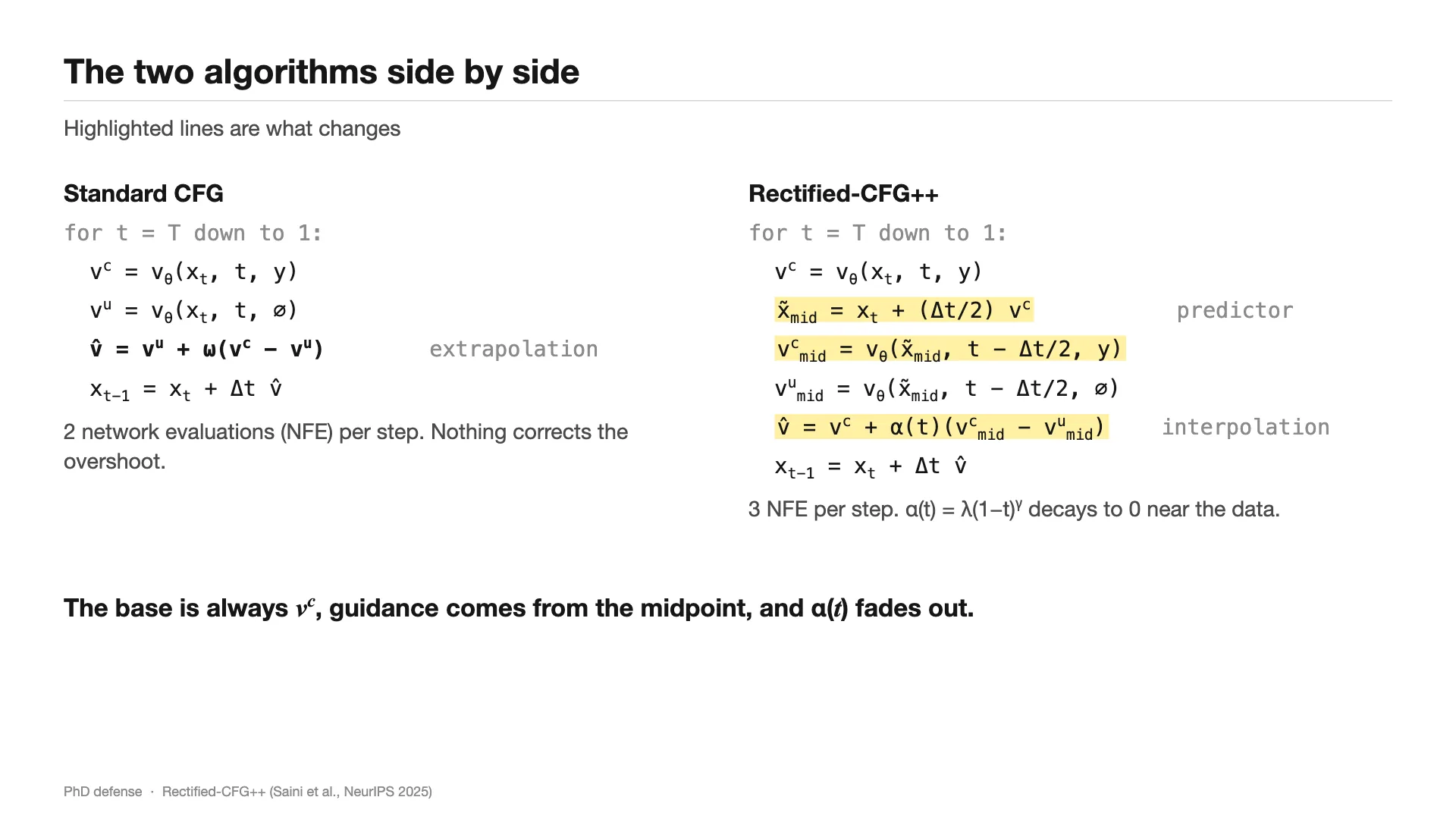
  41. The two algorithms side by side
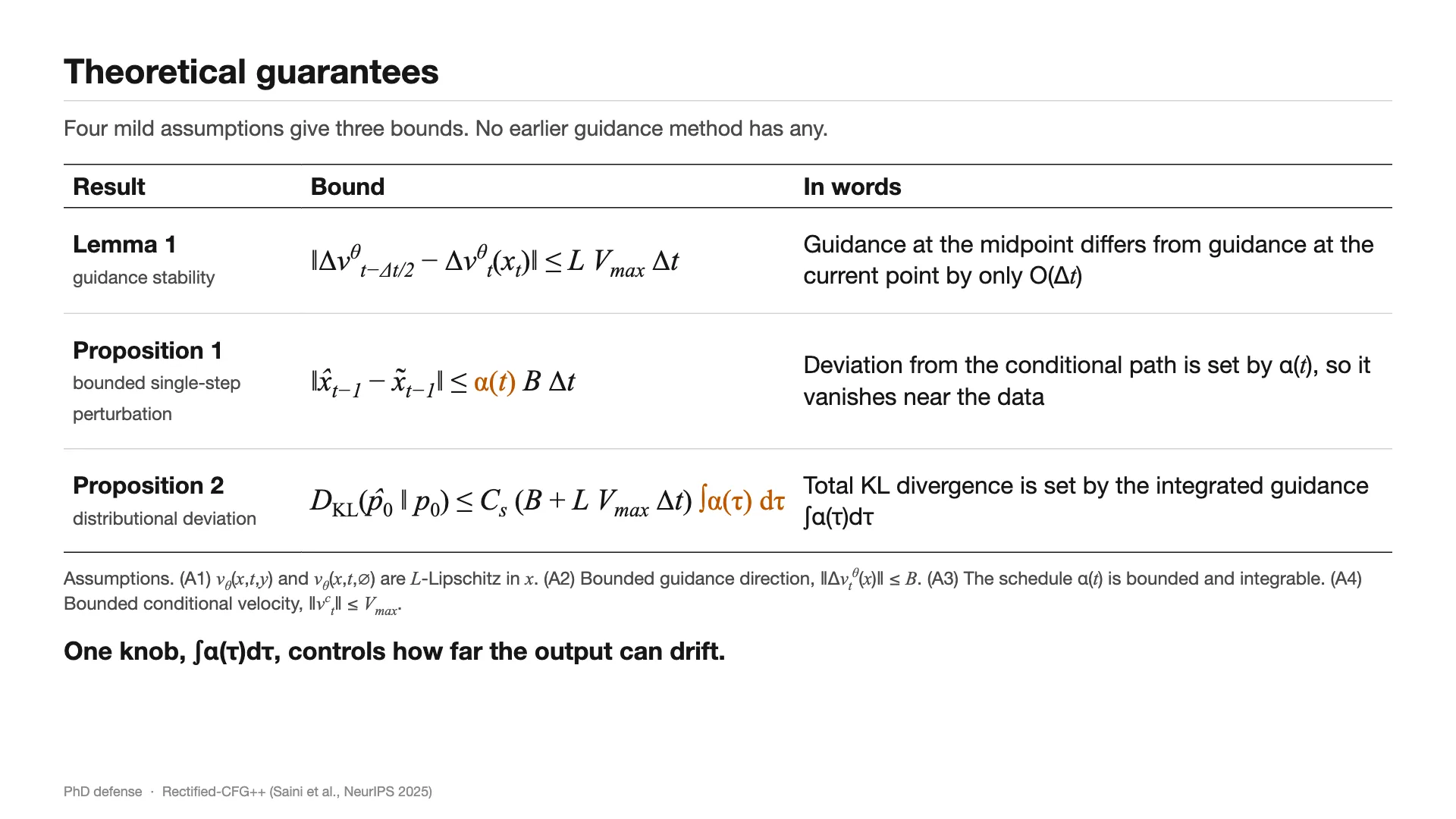
  42. Theoretical guarantees
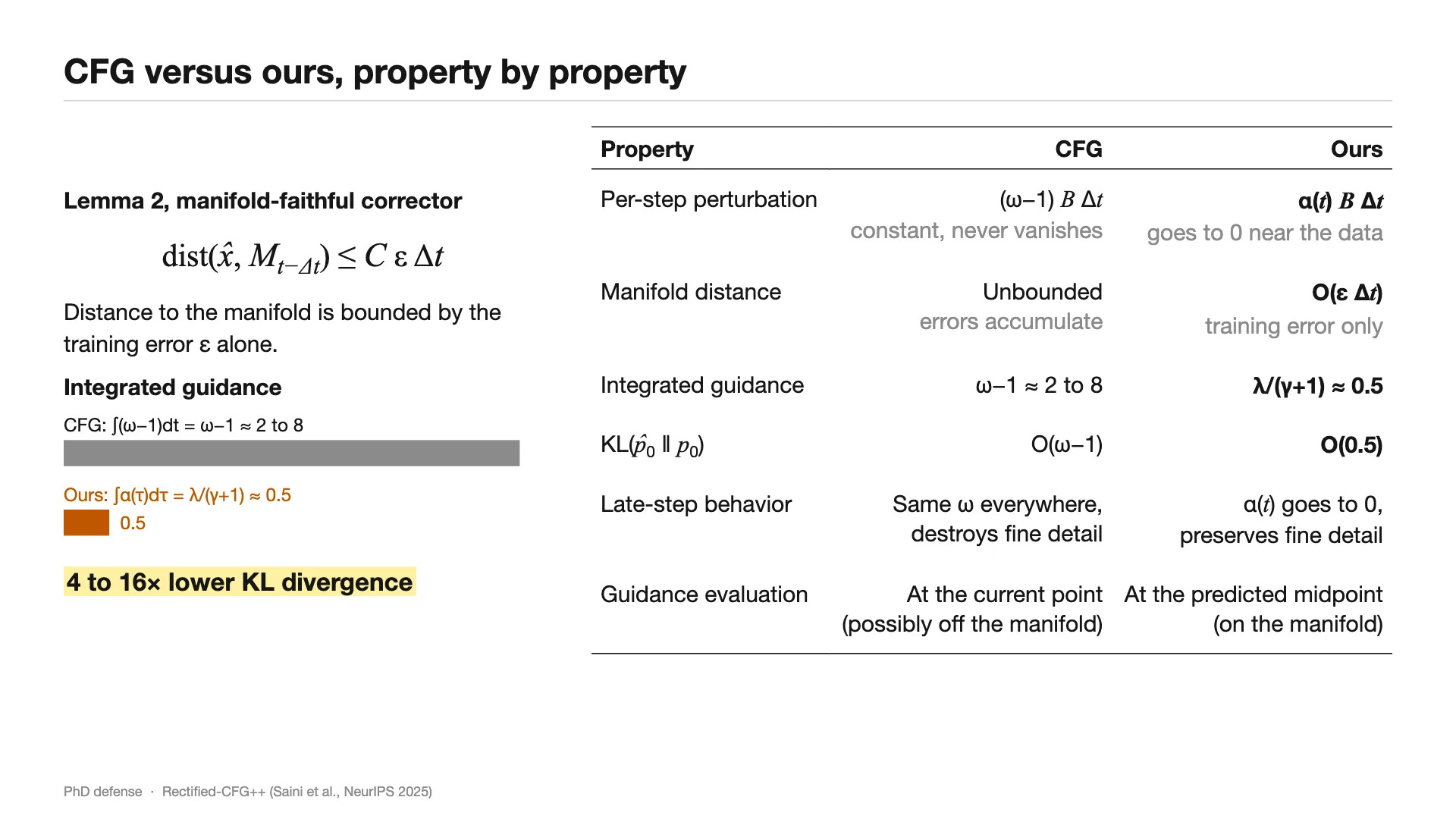
  43. CFG versus ours, property by property
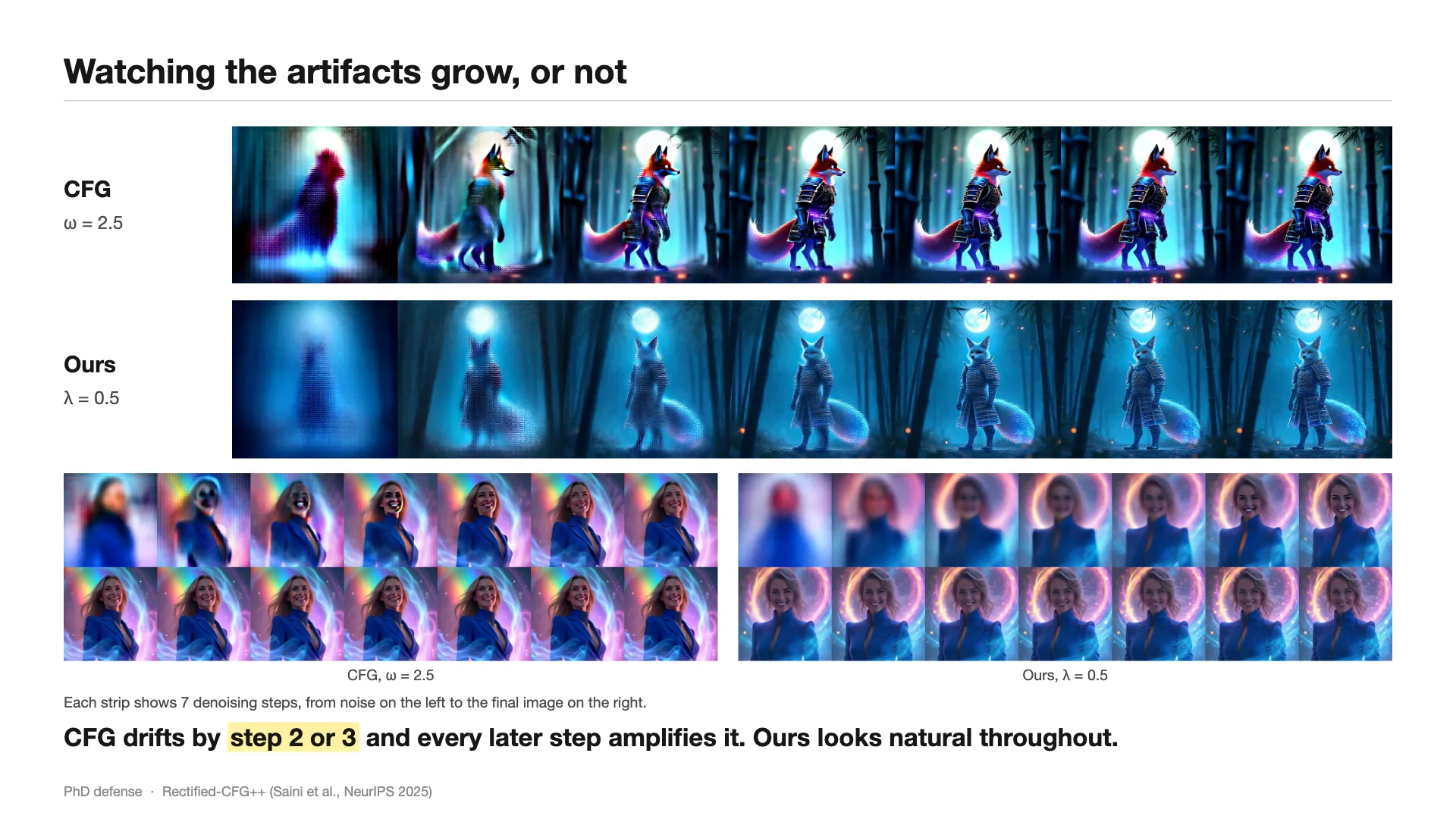
  44. Watching the artifacts grow, or not
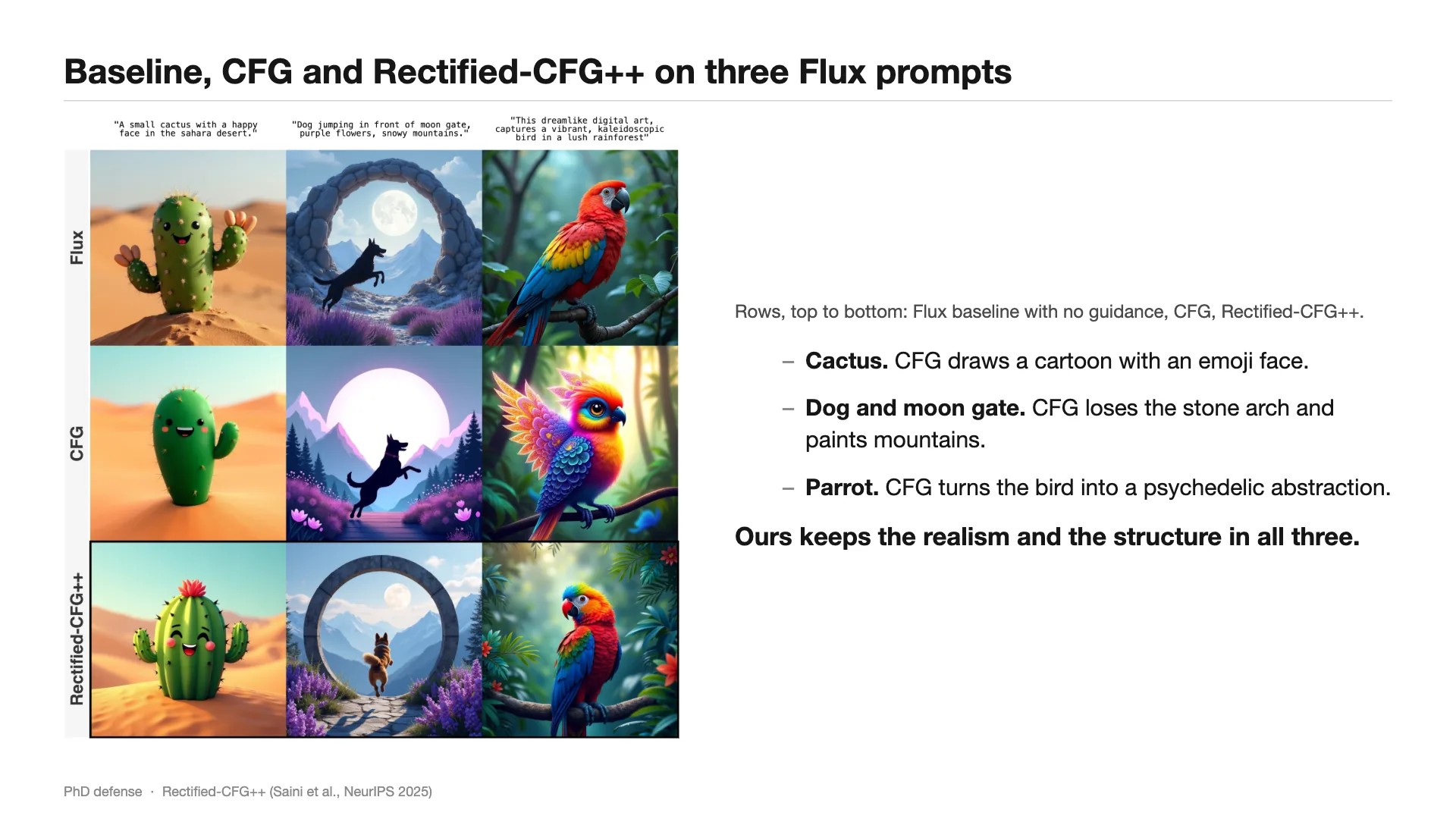
  45. Baseline, CFG and Rectified-CFG++ on three Flux prompts
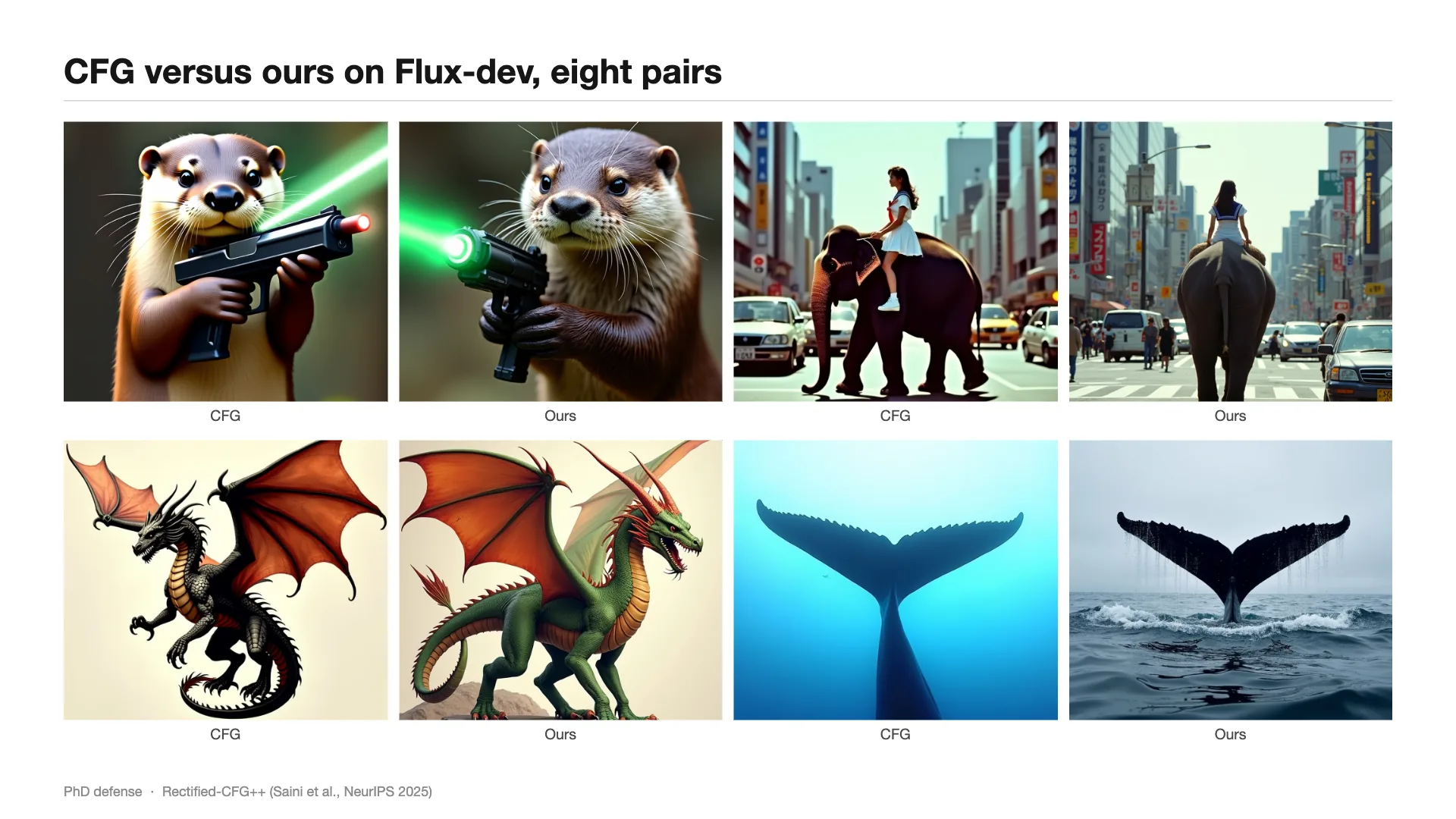
  46. CFG versus ours on Flux-dev, eight pairs
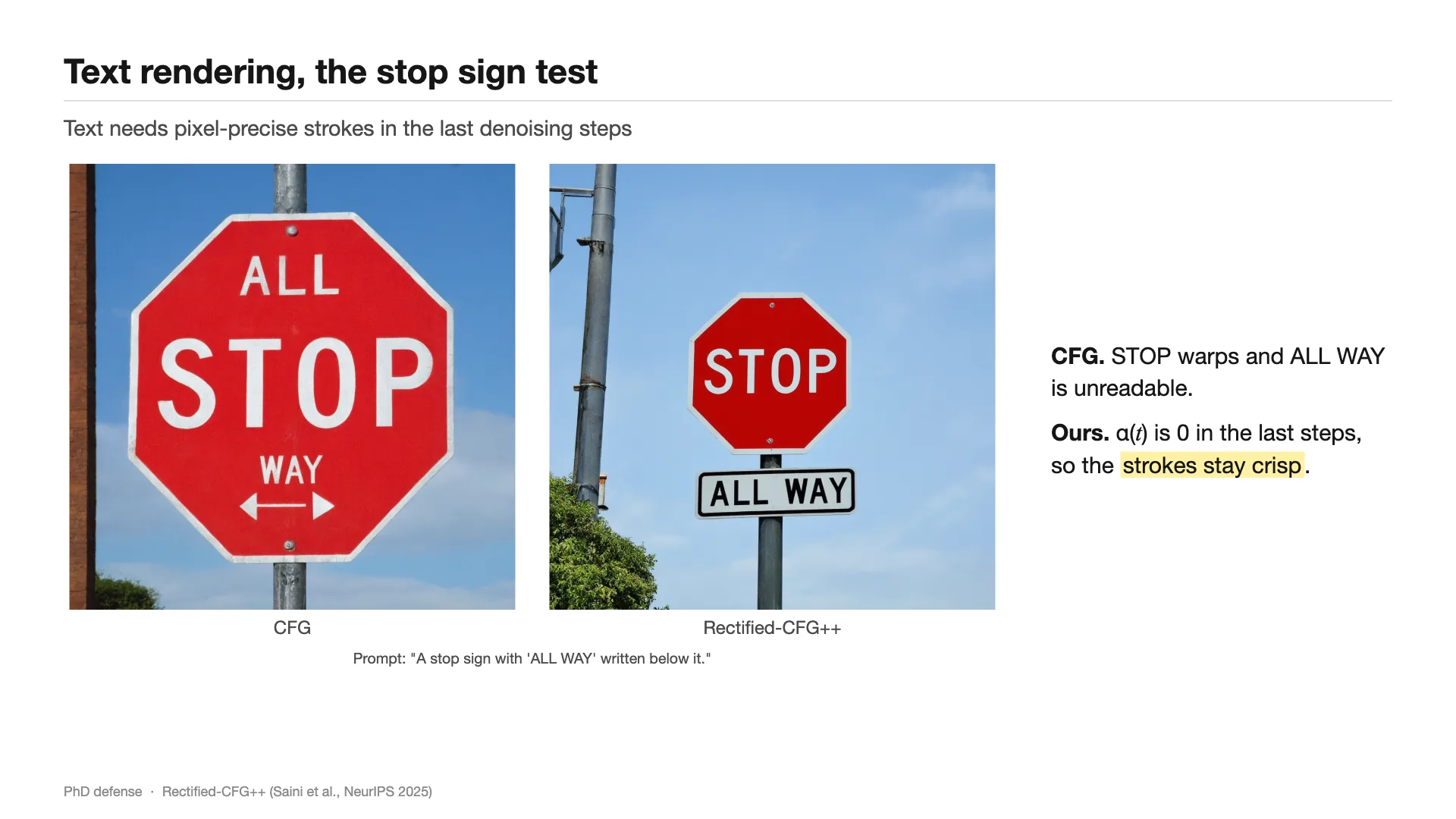
  47. Text rendering, the stop sign test
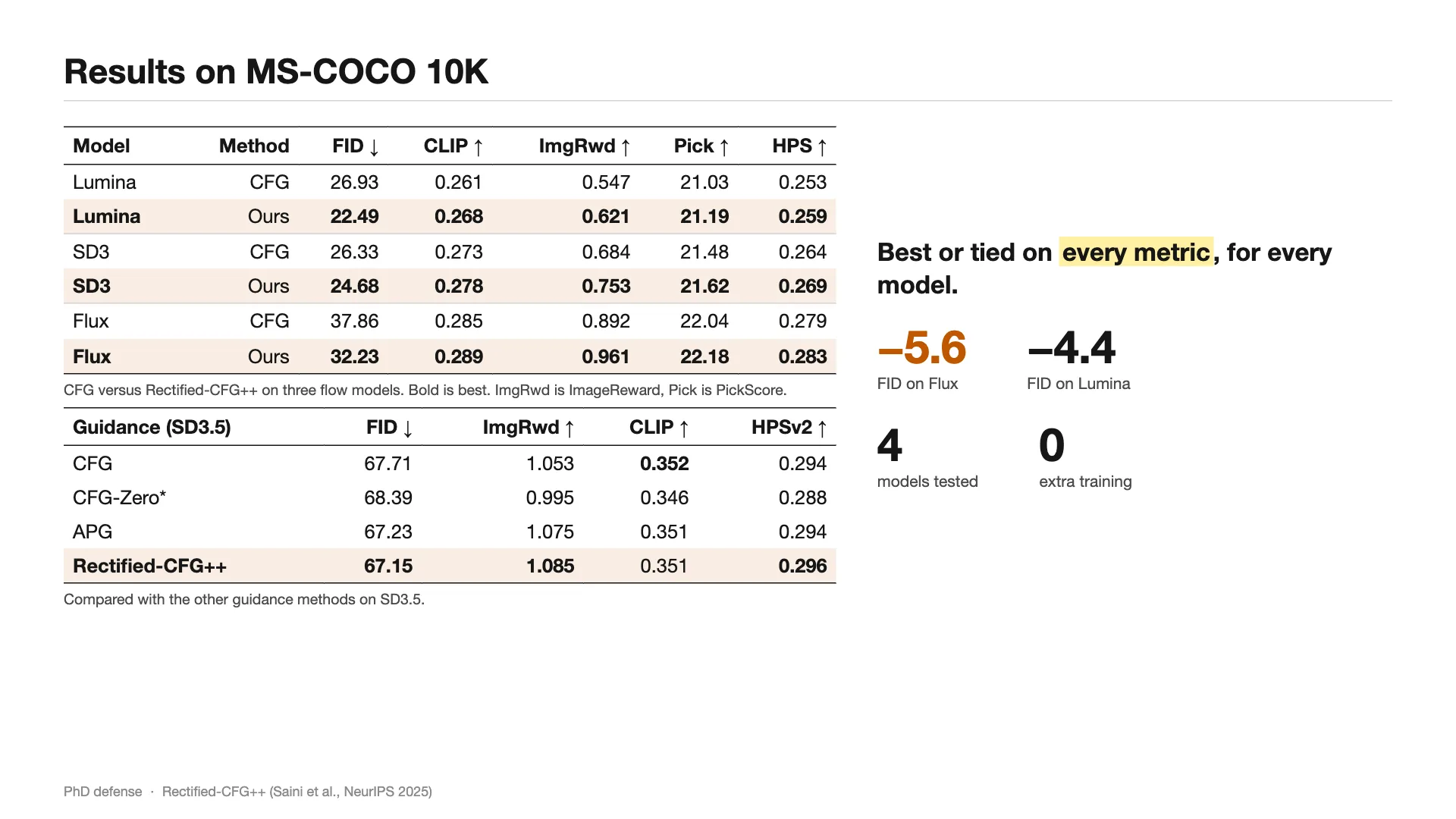
  48. Results on MS-COCO 10K
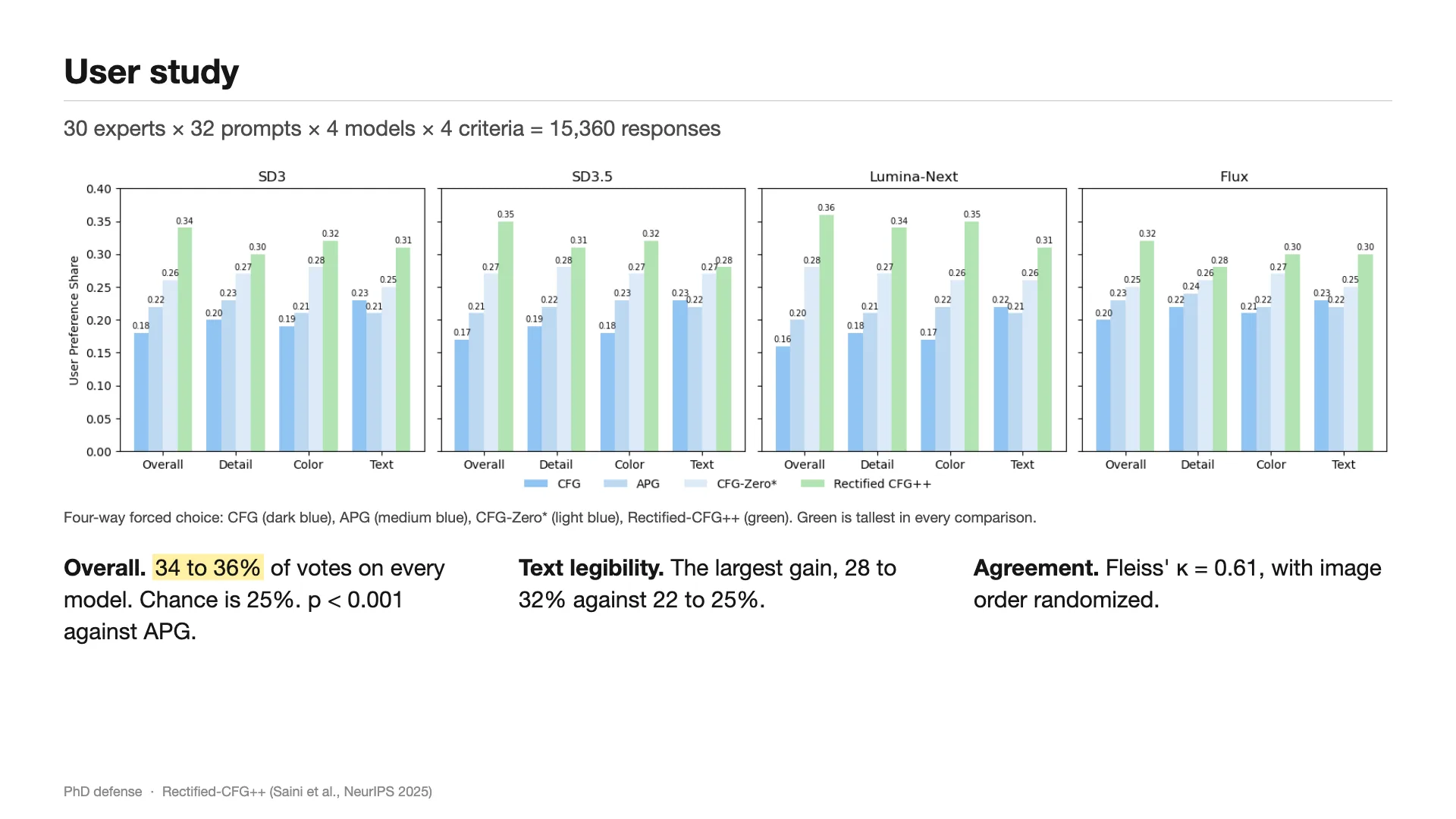
  49. User study
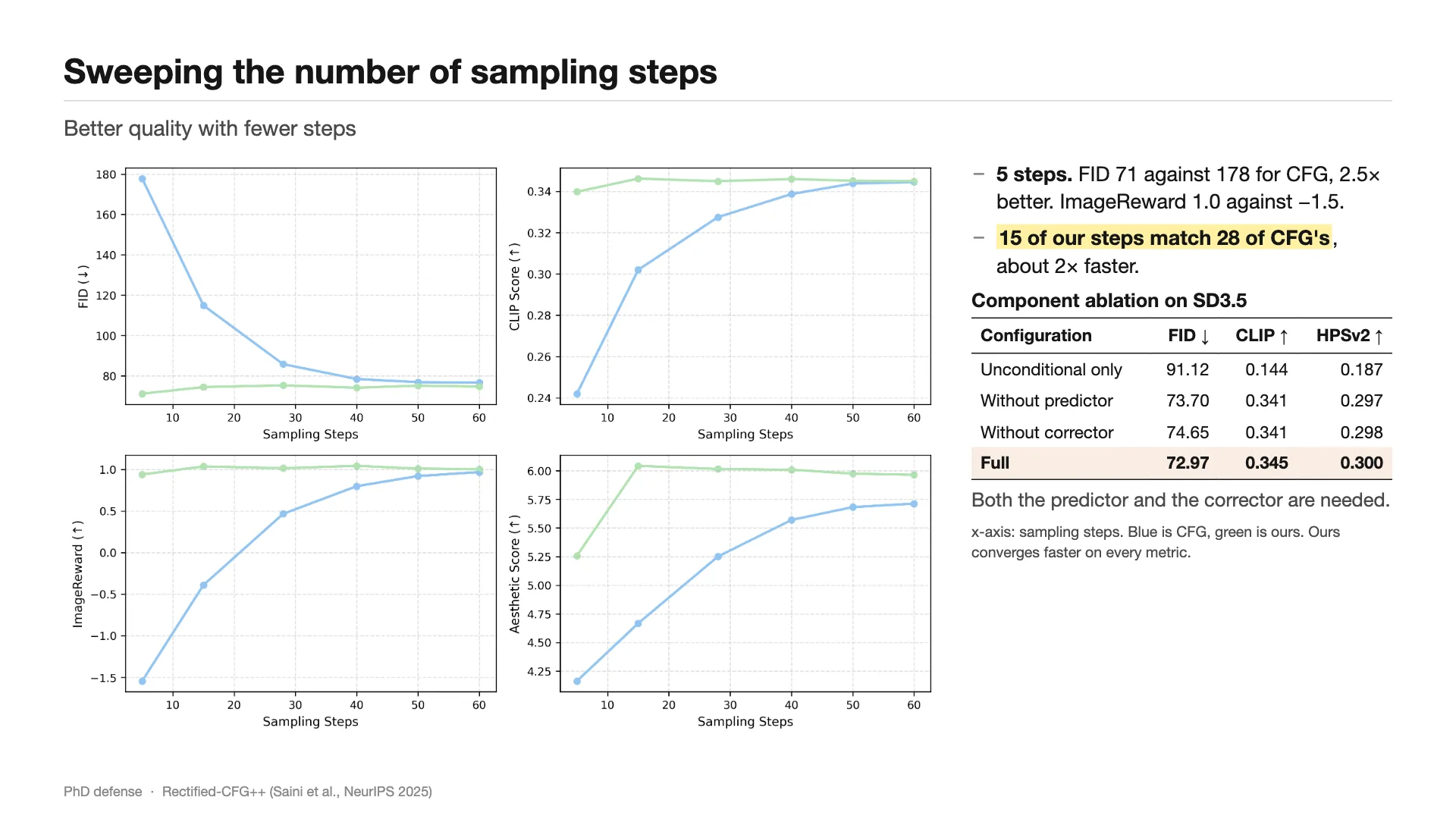
  50. Sweeping the number of sampling steps
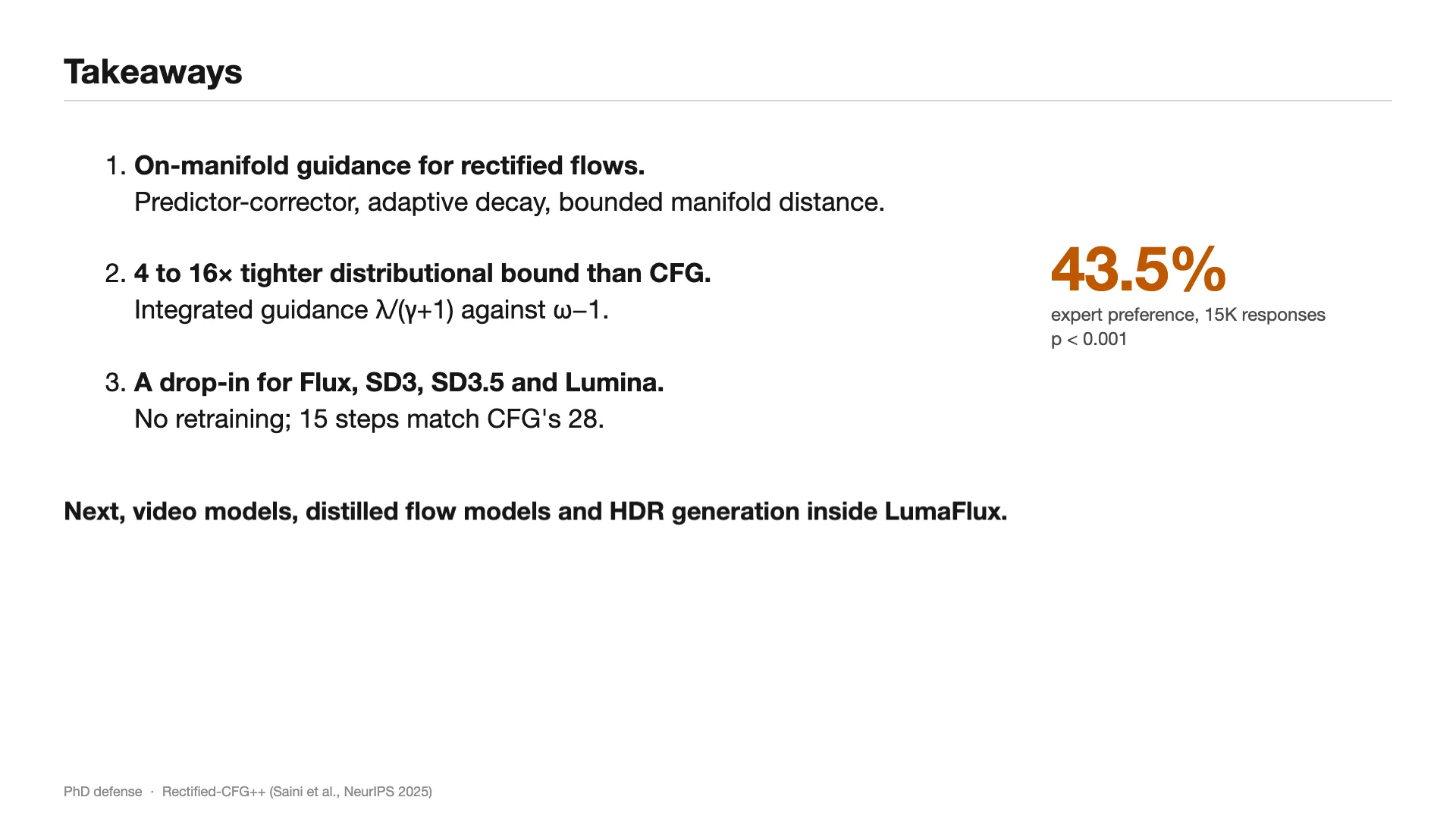
  51. Takeaways
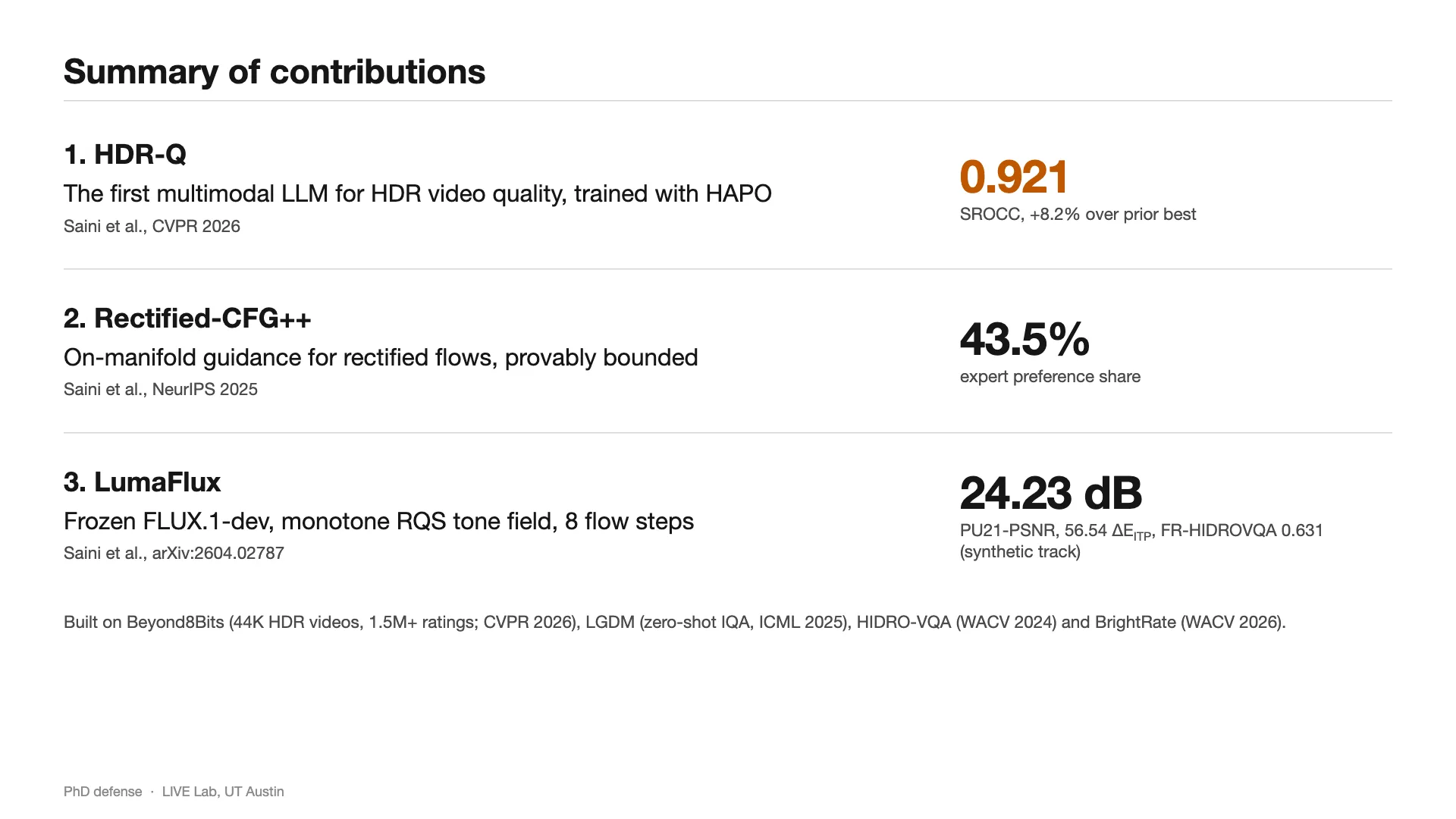
  52. Summary of contributions
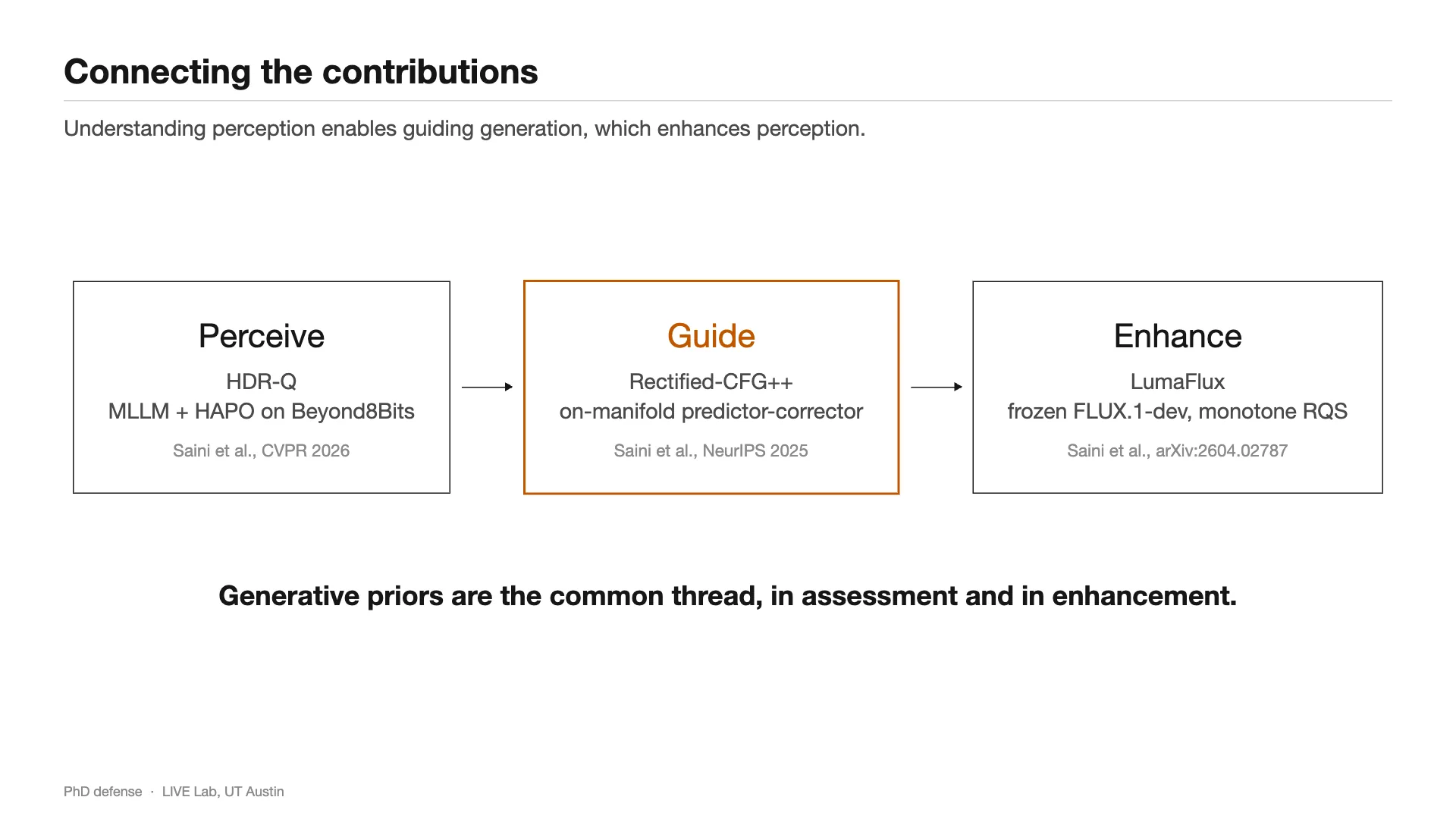
  53. Connecting the contributions
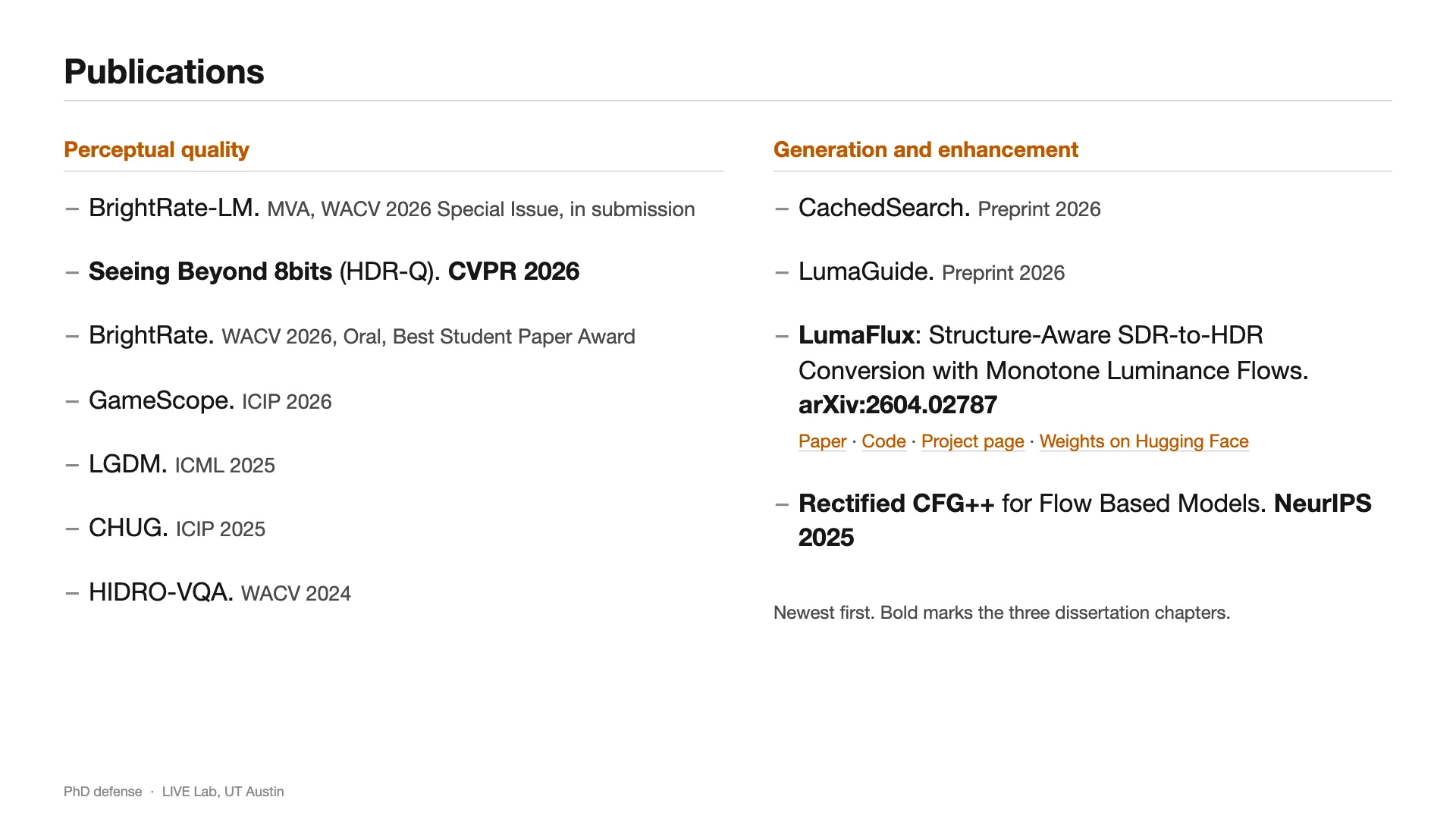
  54. Publications
  55. Questions?
  56. Thank you

← → or swipe to move, click the slide to advance, F for full screen. Add #12 to the address to link to slide 12.