LumaFlux: Structure-Aware SDR-to-HDR Conversion with Monotone Luminance Flows
  1. LumaFlux: Structure-Aware SDR-to-HDR Conversion with Monotone Luminance Flows
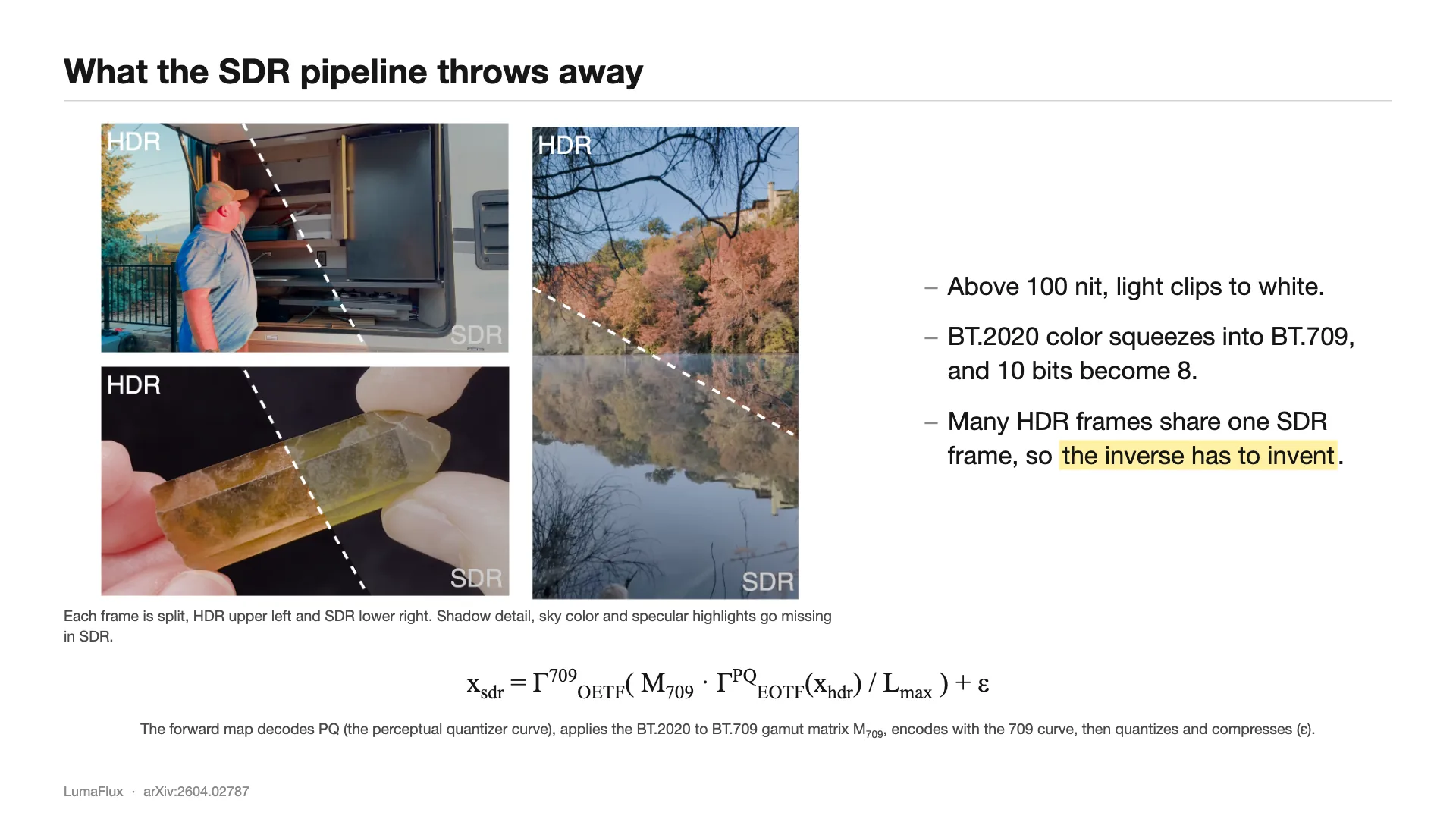
  2. What the SDR pipeline throws away
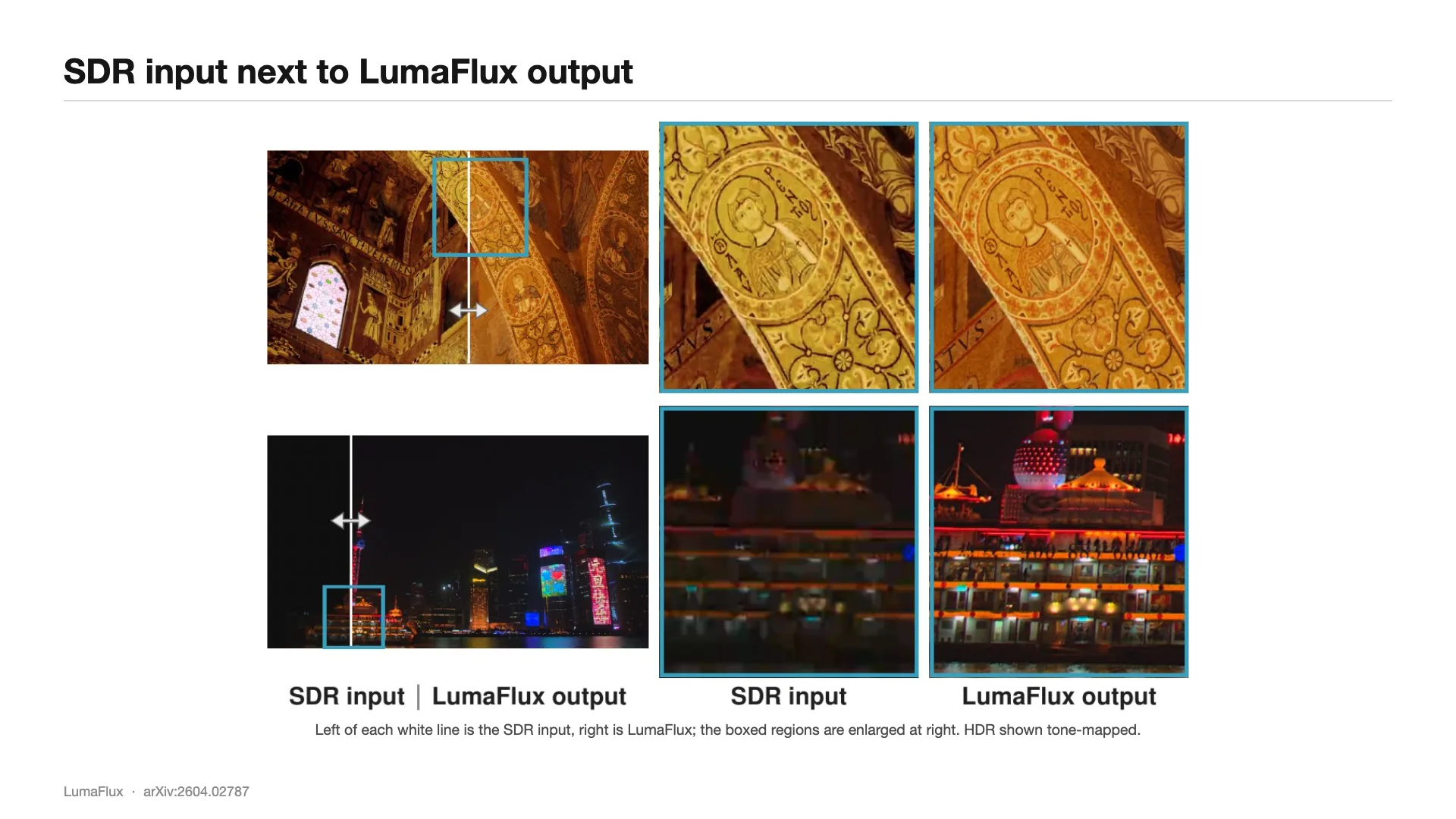
  3. SDR input next to LumaFlux output
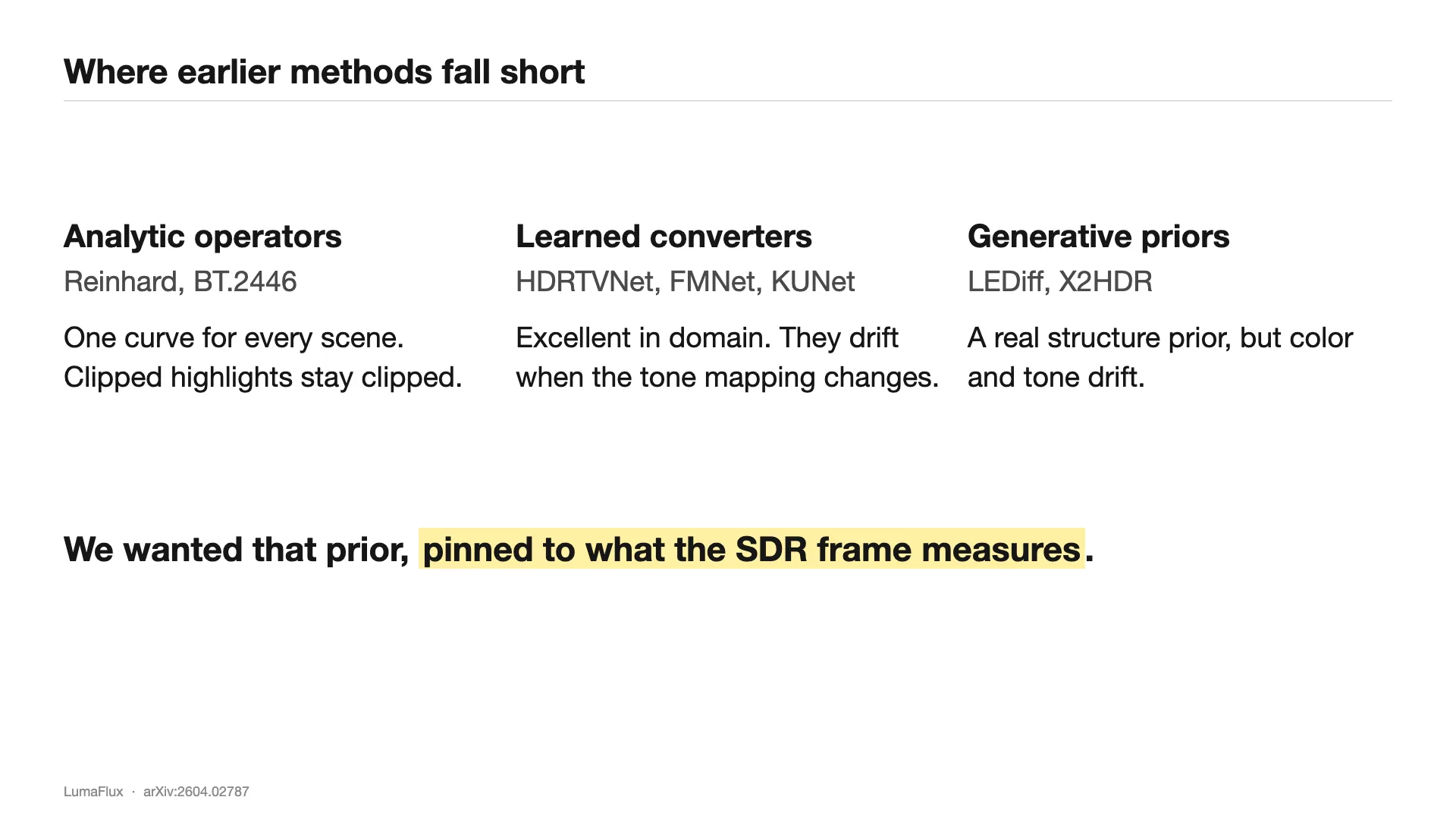
  4. Where earlier methods fall short
  5. How LumaFlux works
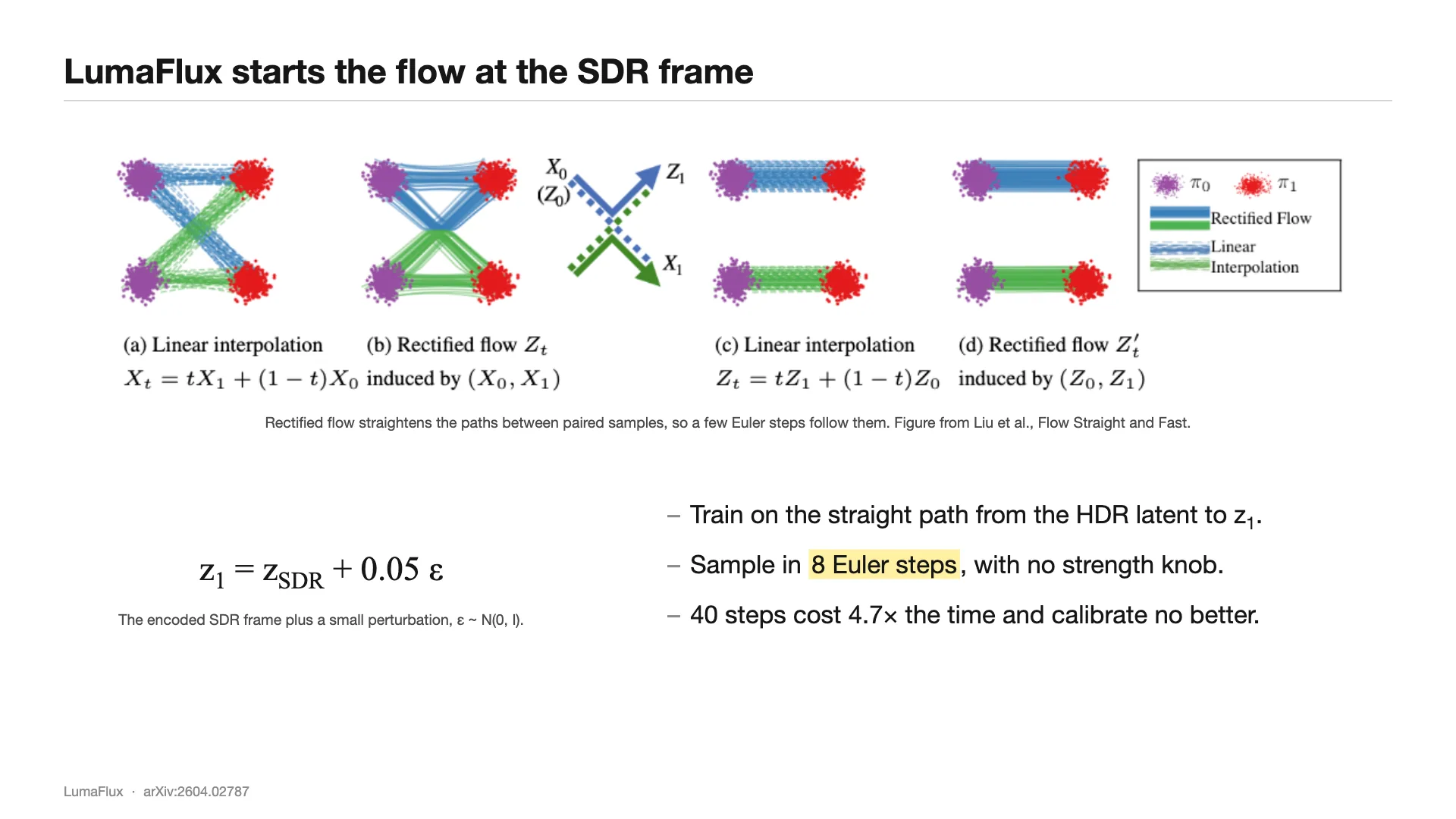
  6. LumaFlux starts the flow at the SDR frame
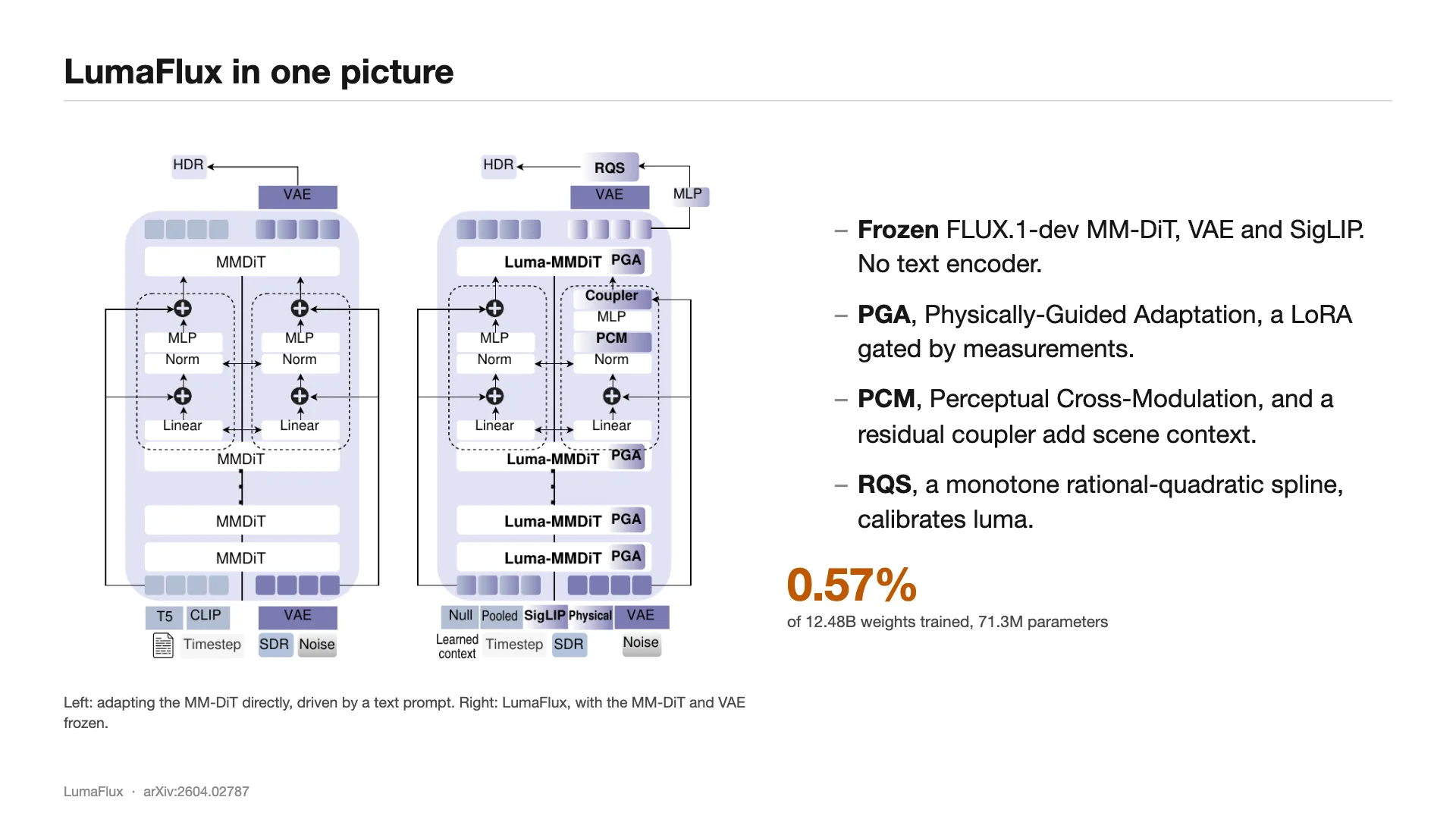
  7. LumaFlux in one picture
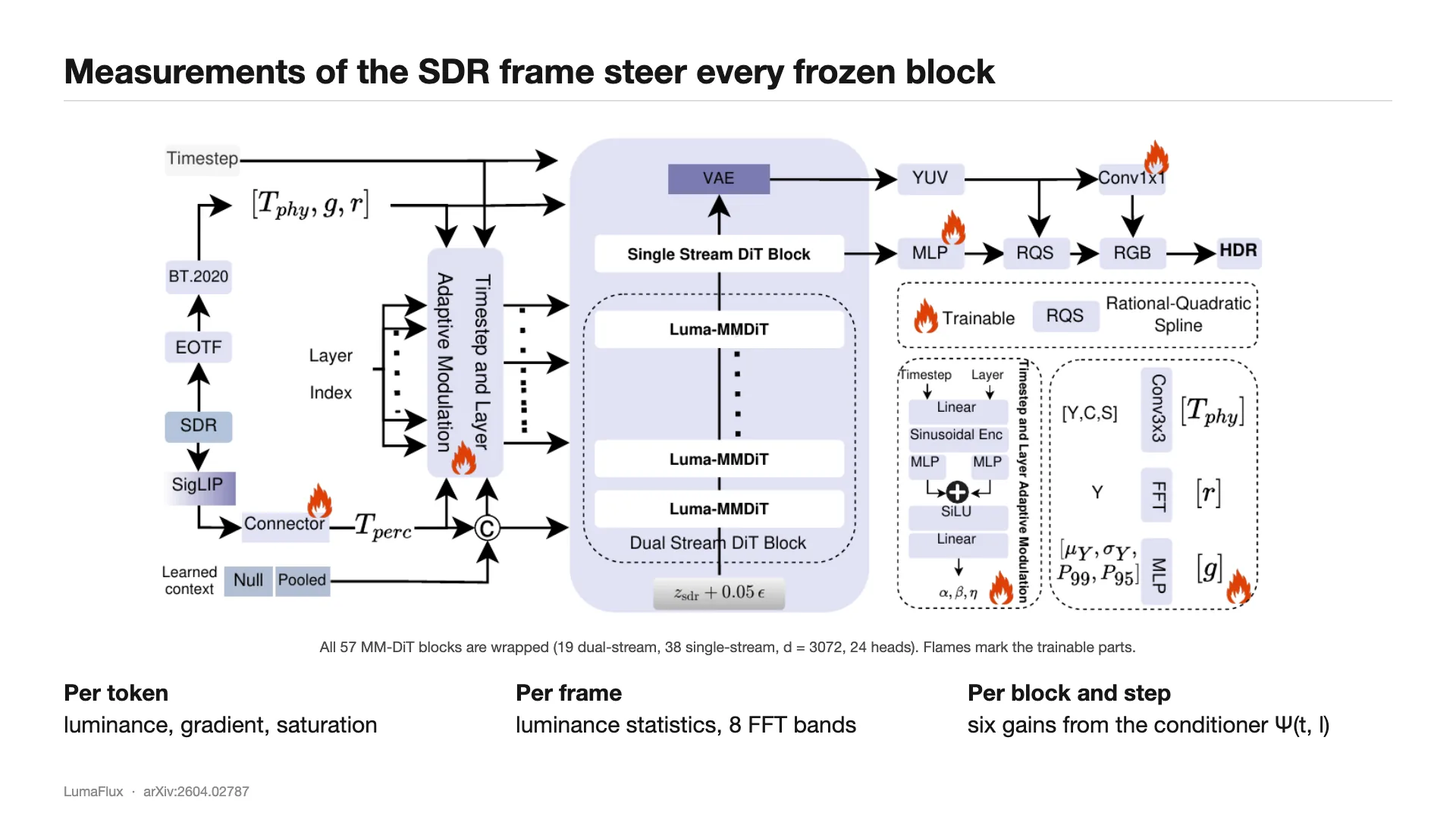
  8. Measurements of the SDR frame steer every frozen block
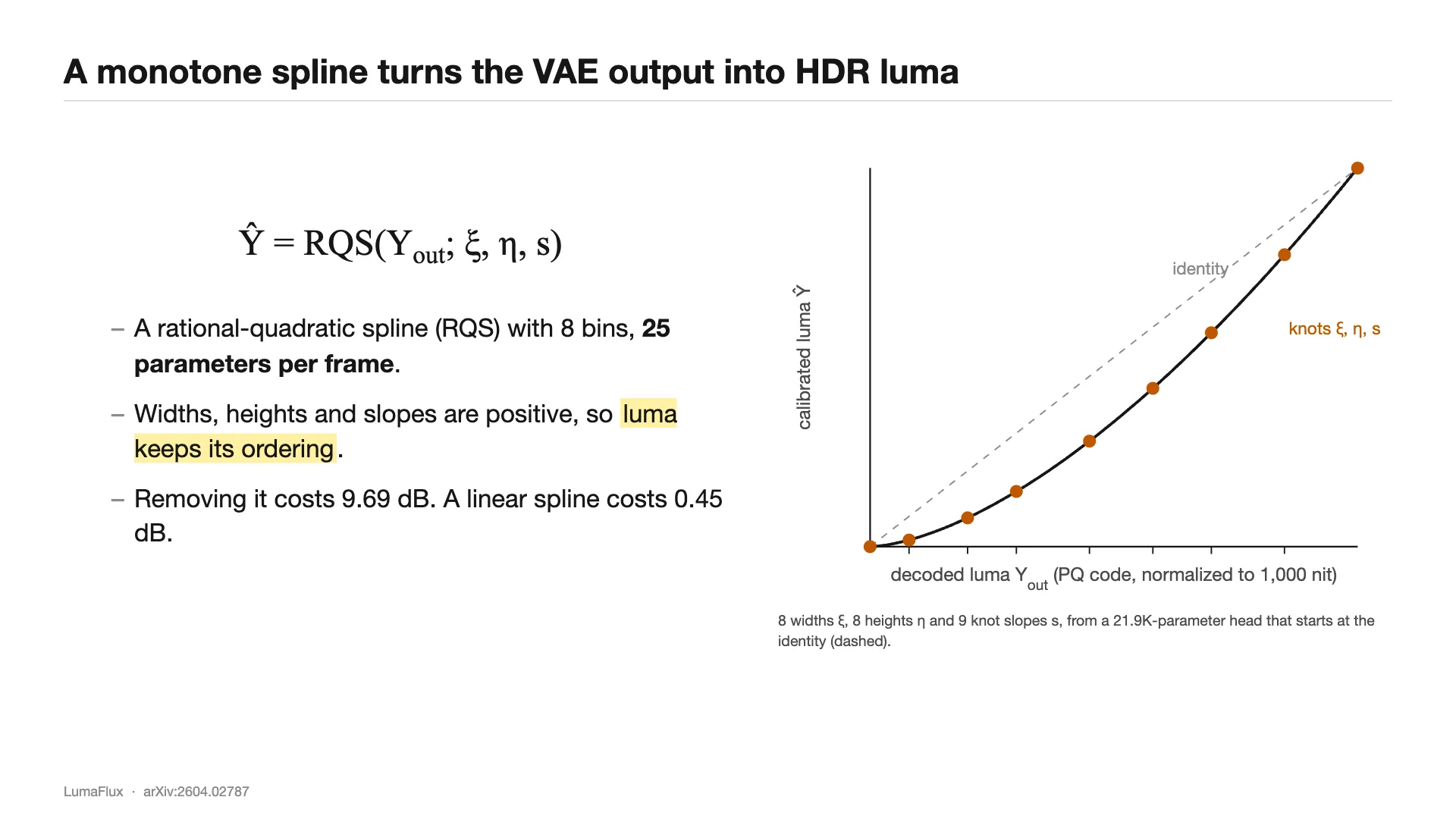
  9. A monotone spline turns the VAE output into HDR luma
  10. Data, benchmark, results
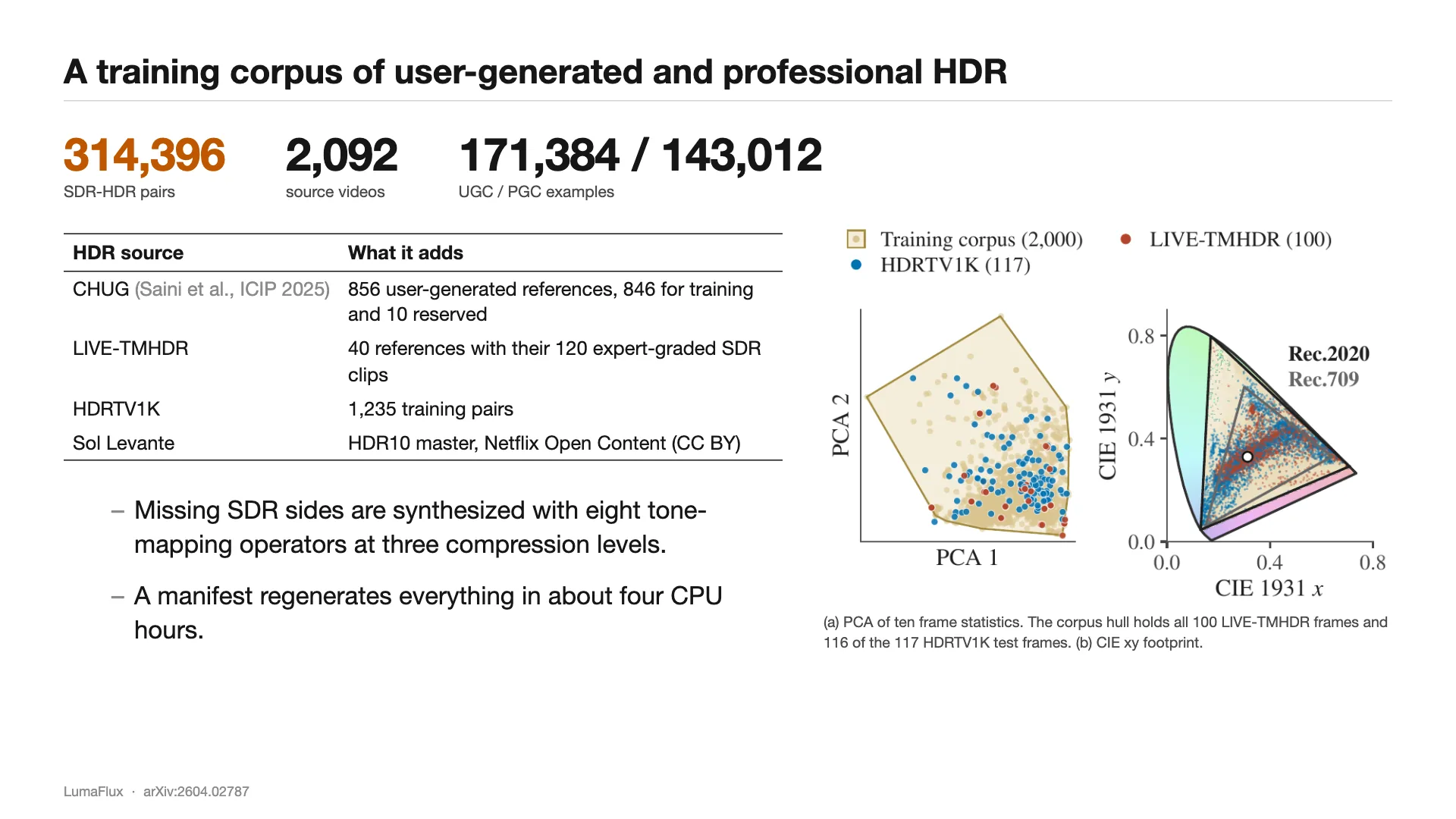
  11. A training corpus of user-generated and professional HDR
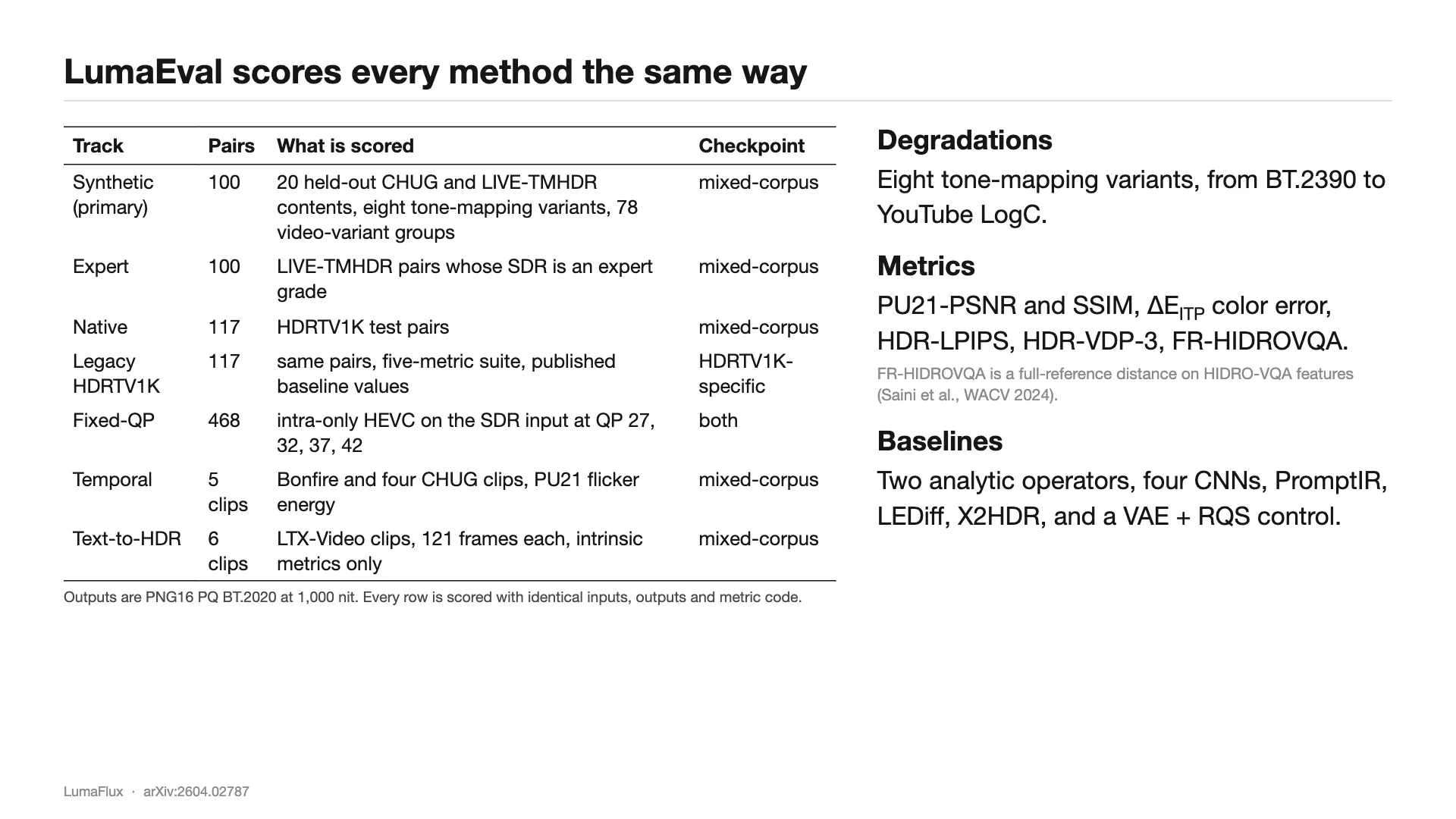
  12. LumaEval scores every method the same way
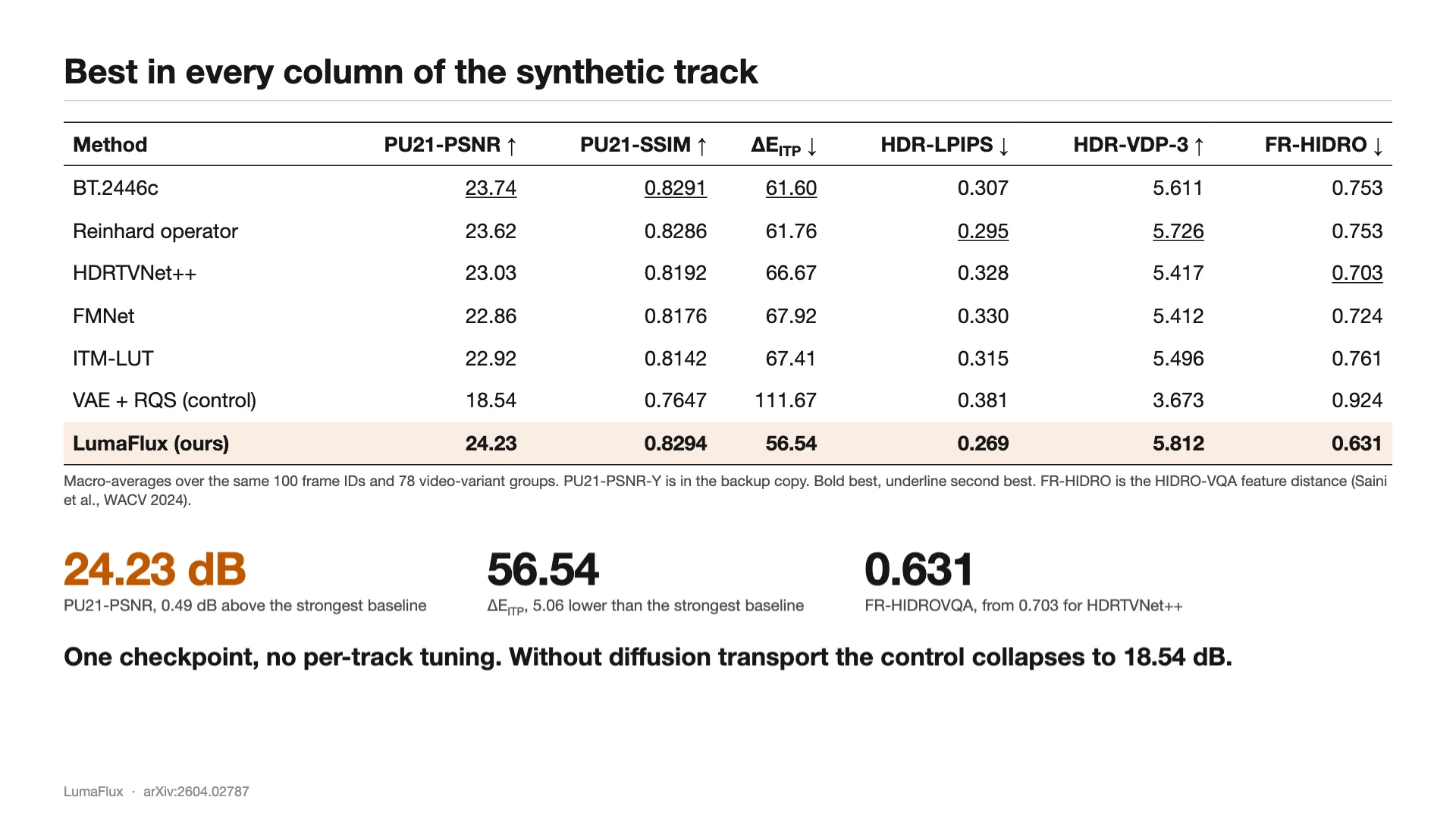
  13. Best in every column of the synthetic track
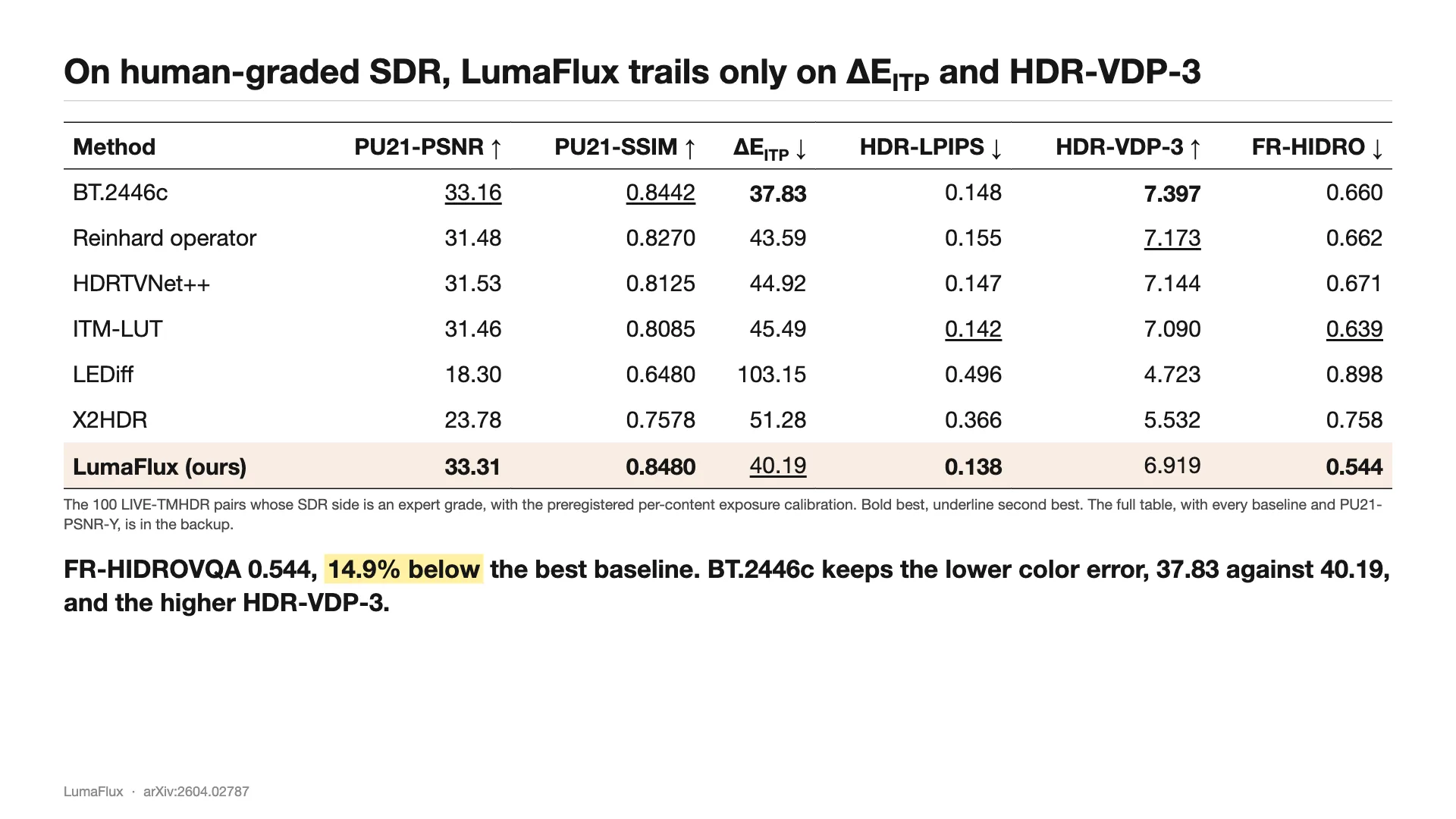
  14. On human-graded SDR, LumaFlux trails only on ΔEITP and HDR-VDP-3
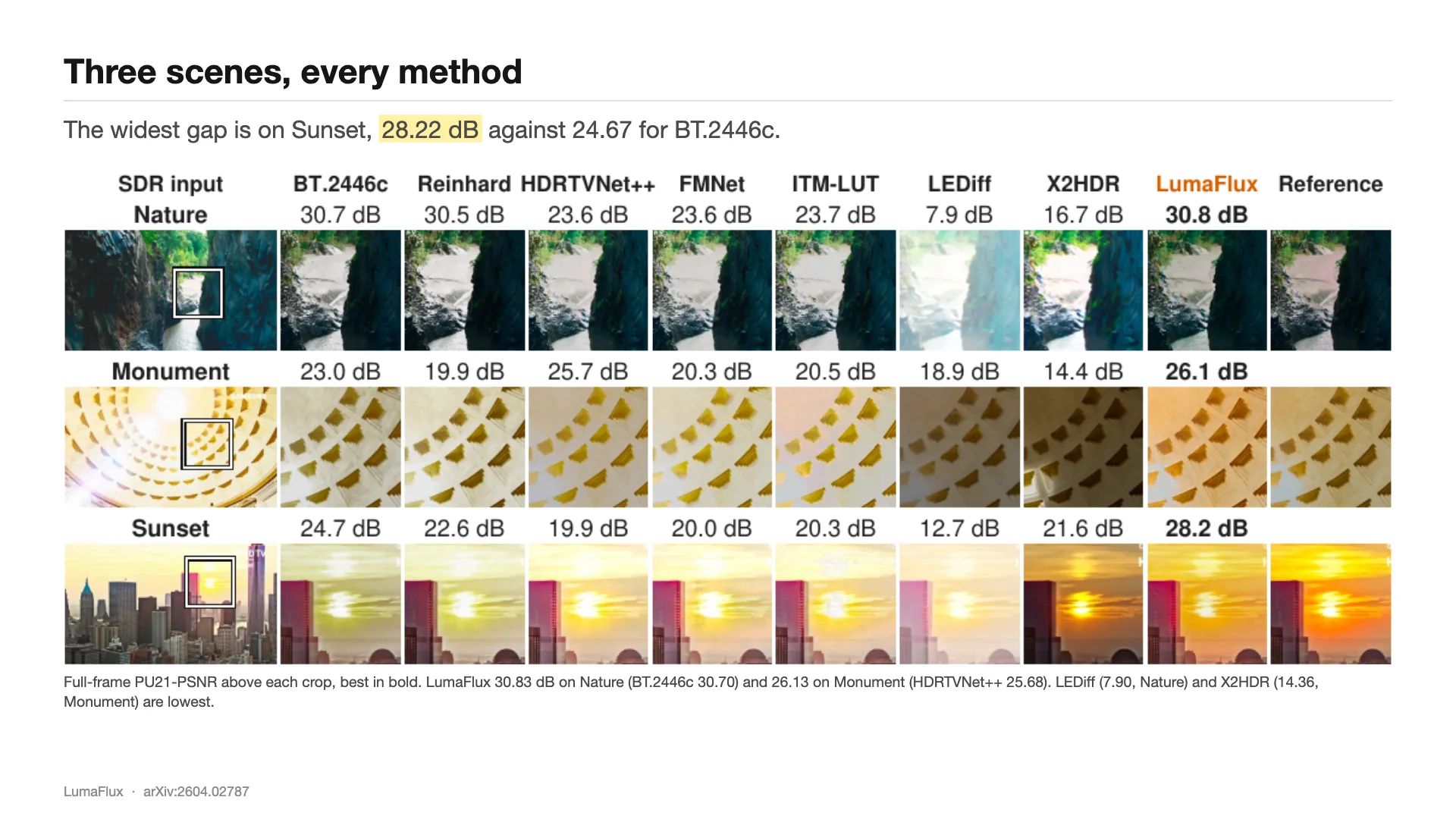
  15. Three scenes, every method
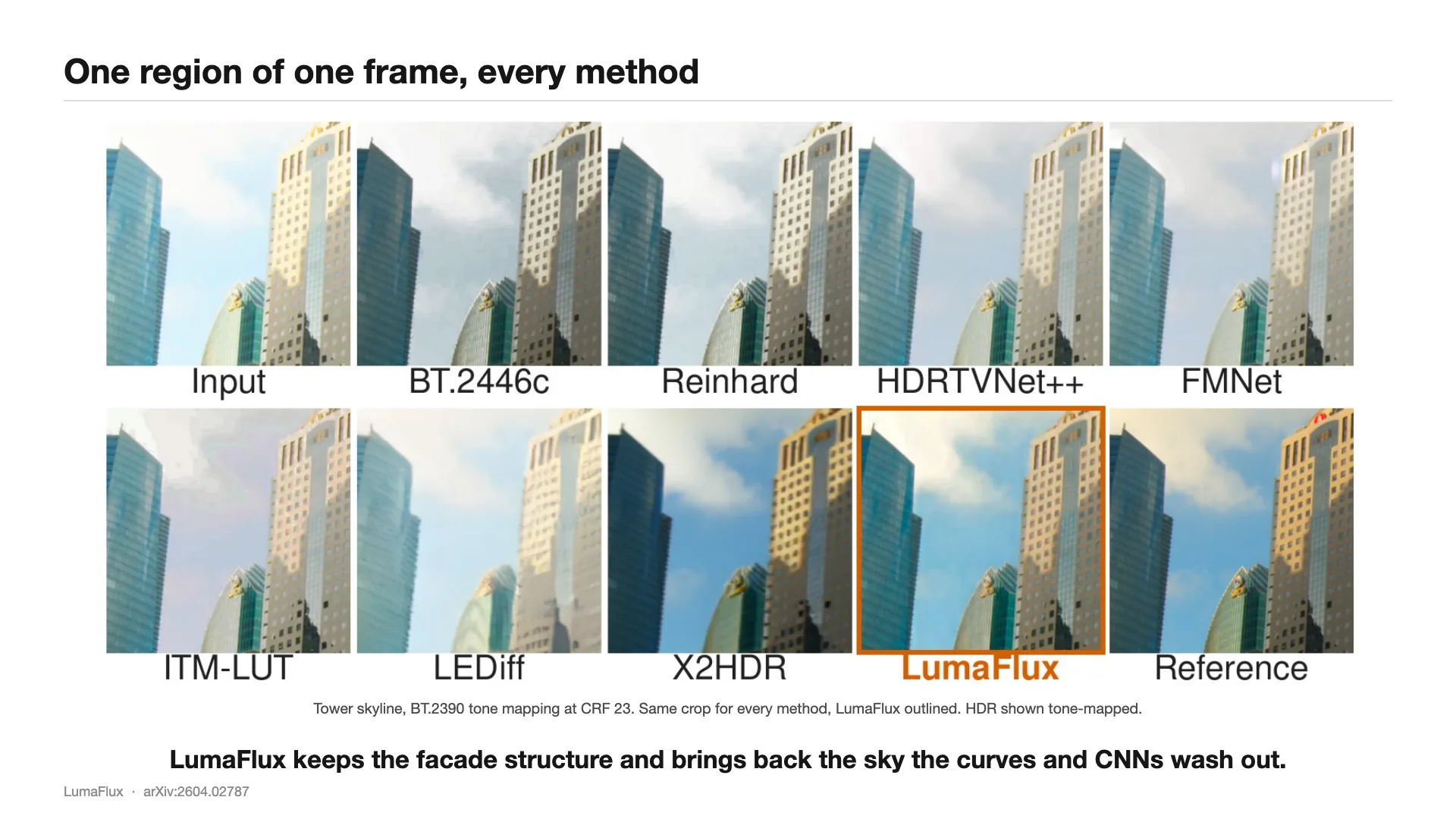
  16. One region of one frame, every method
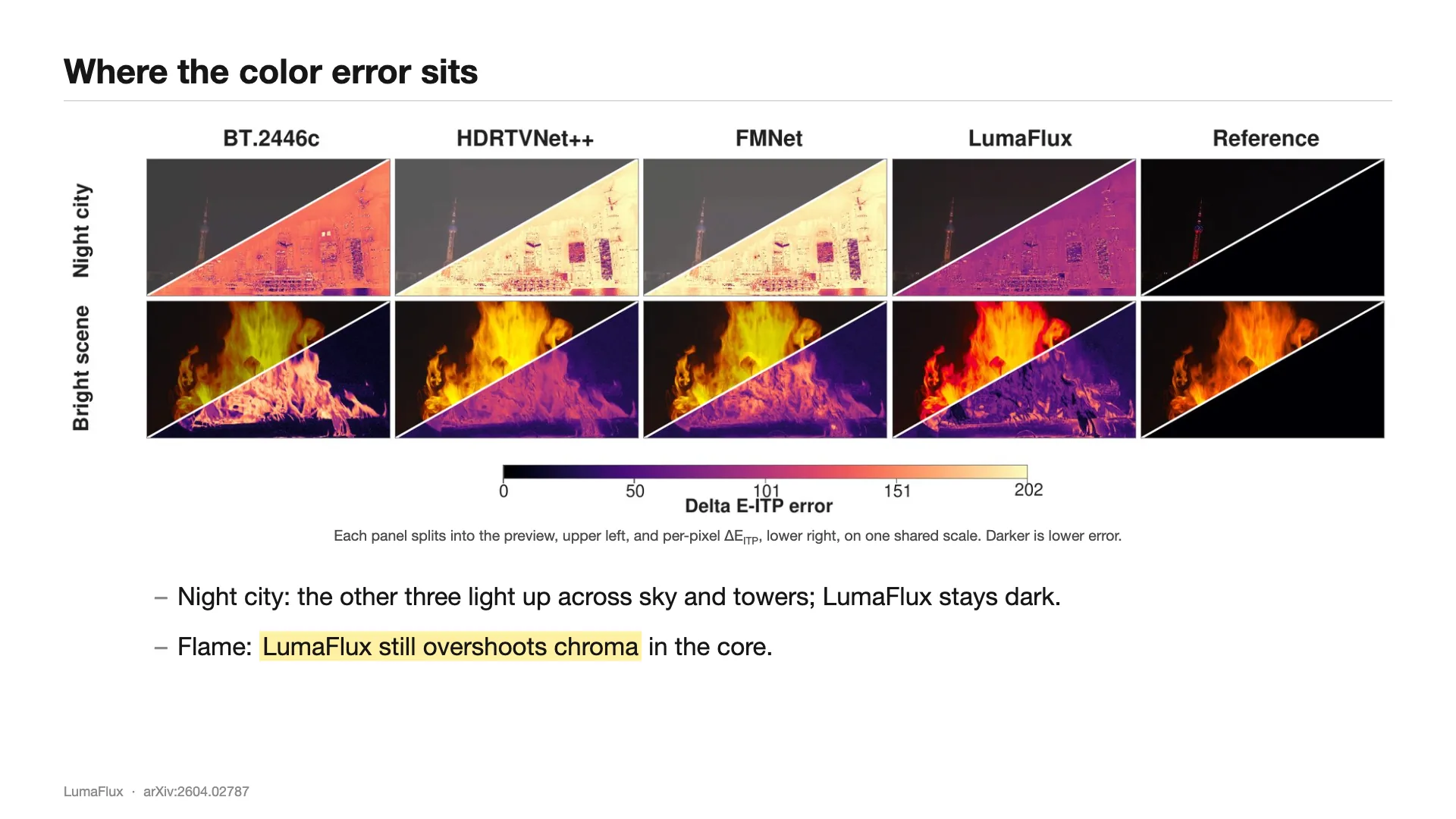
  17. Where the color error sits
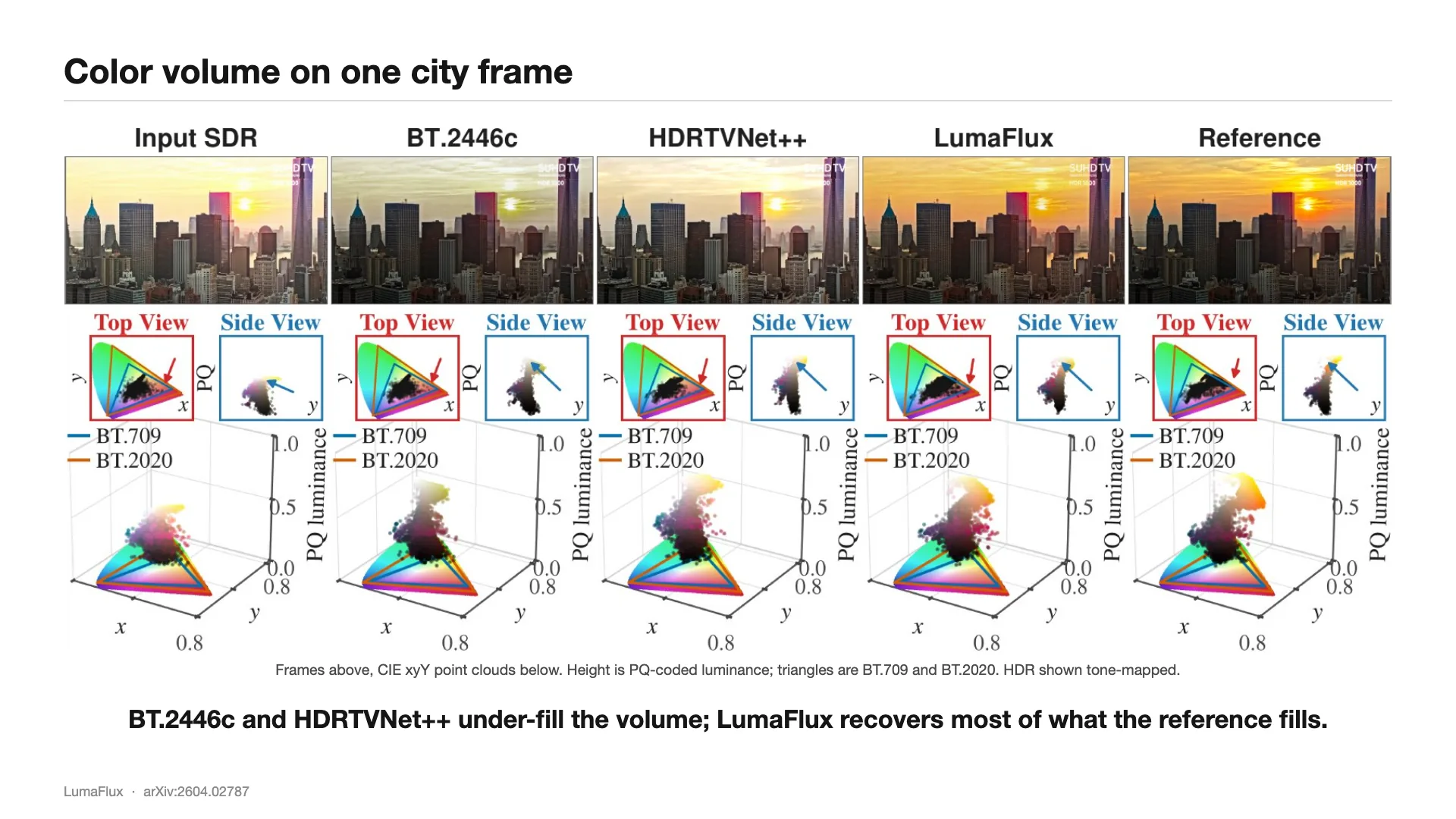
  18. Color volume on one city frame
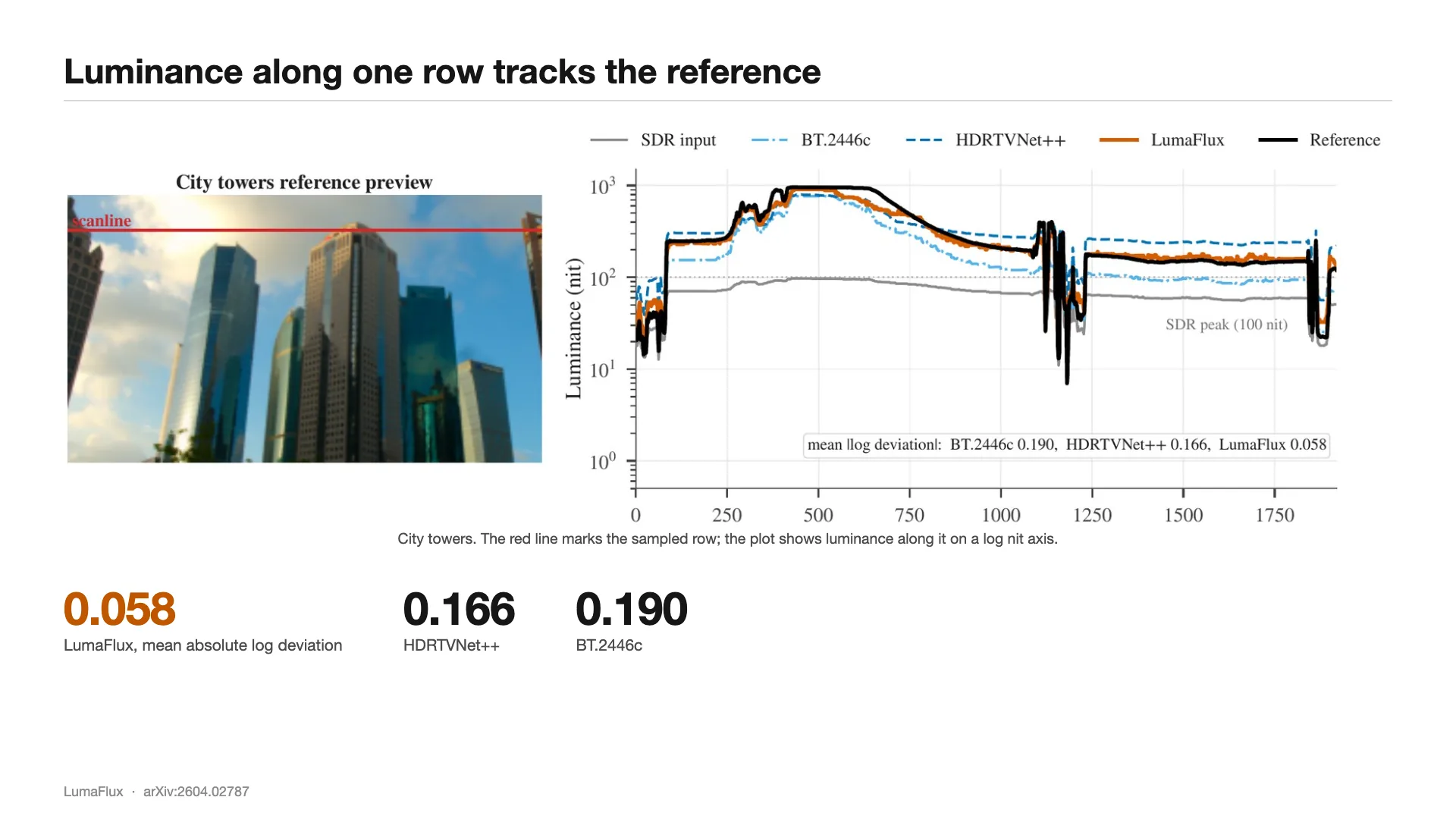
  19. Luminance along one row tracks the reference
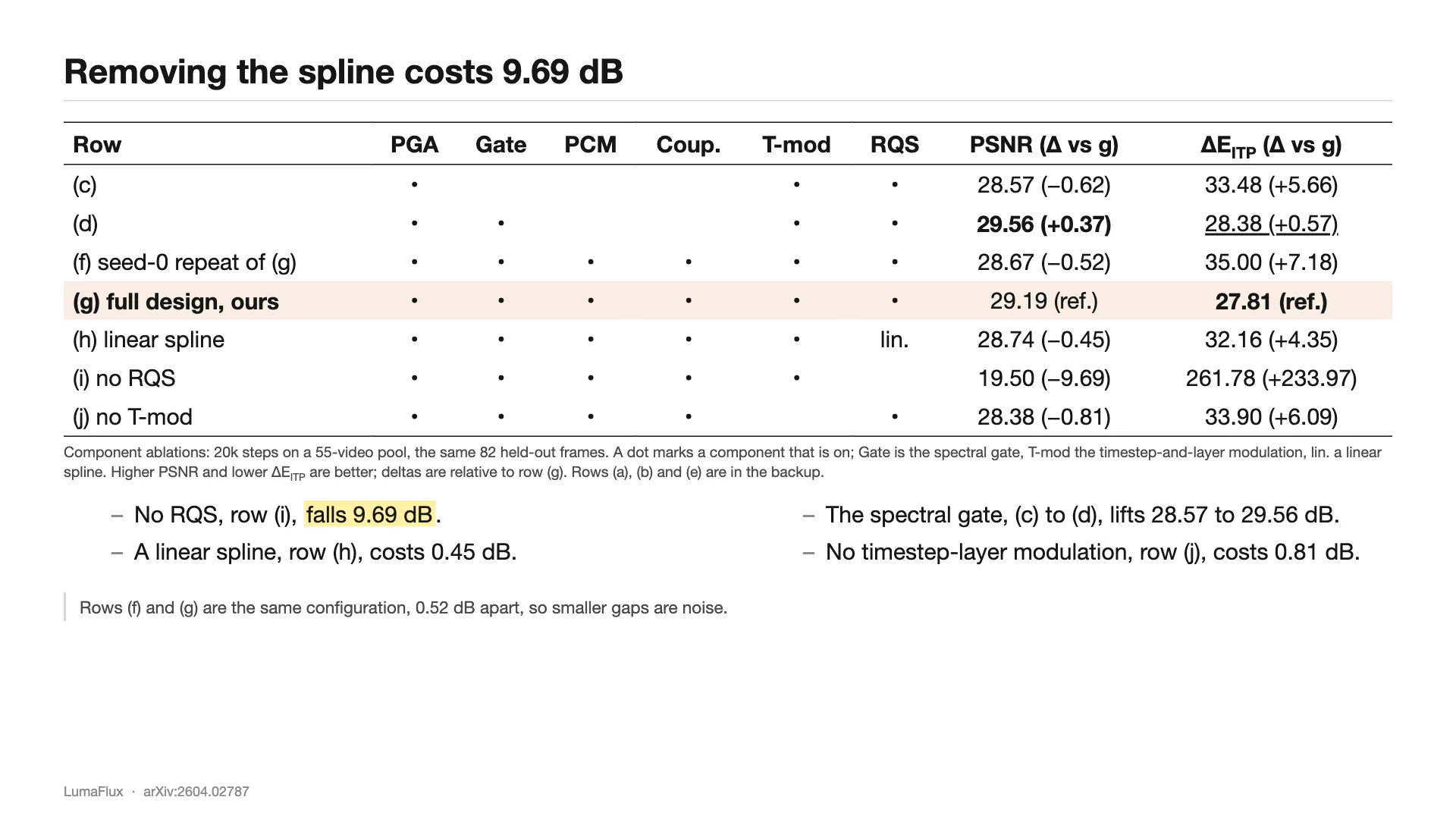
  20. Removing the spline costs 9.69 dB
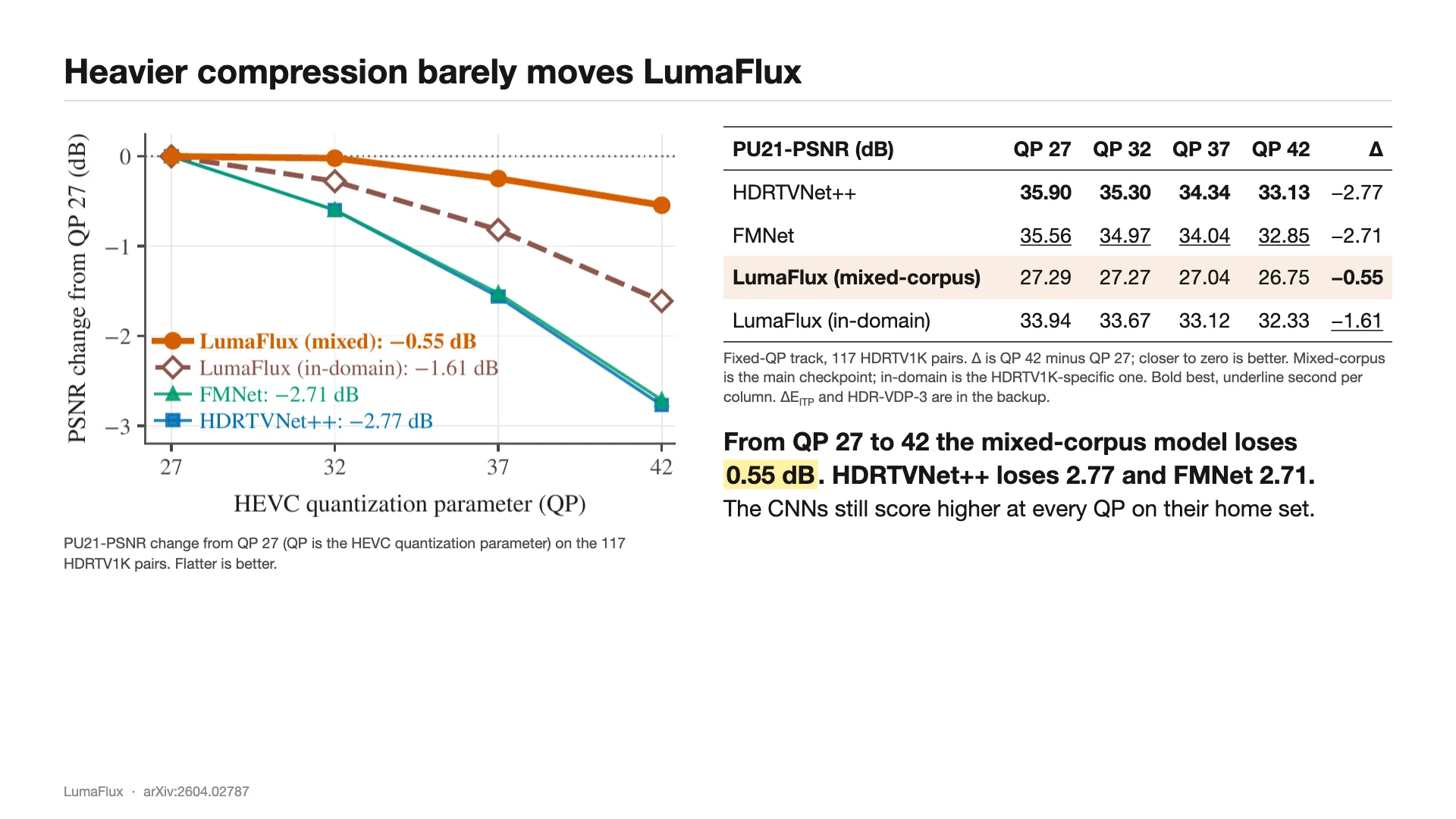
  21. Heavier compression barely moves LumaFlux
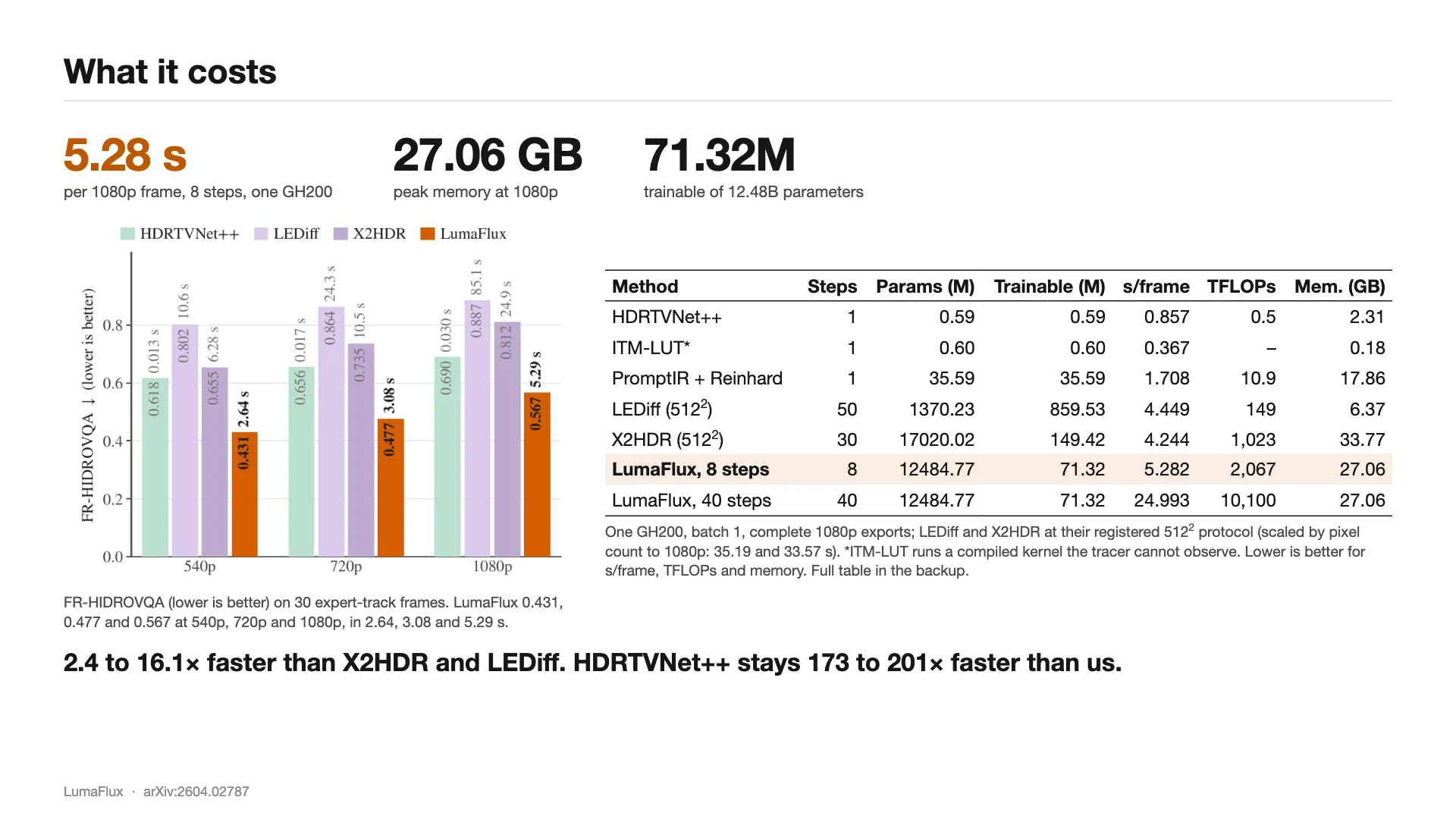
  22. What it costs
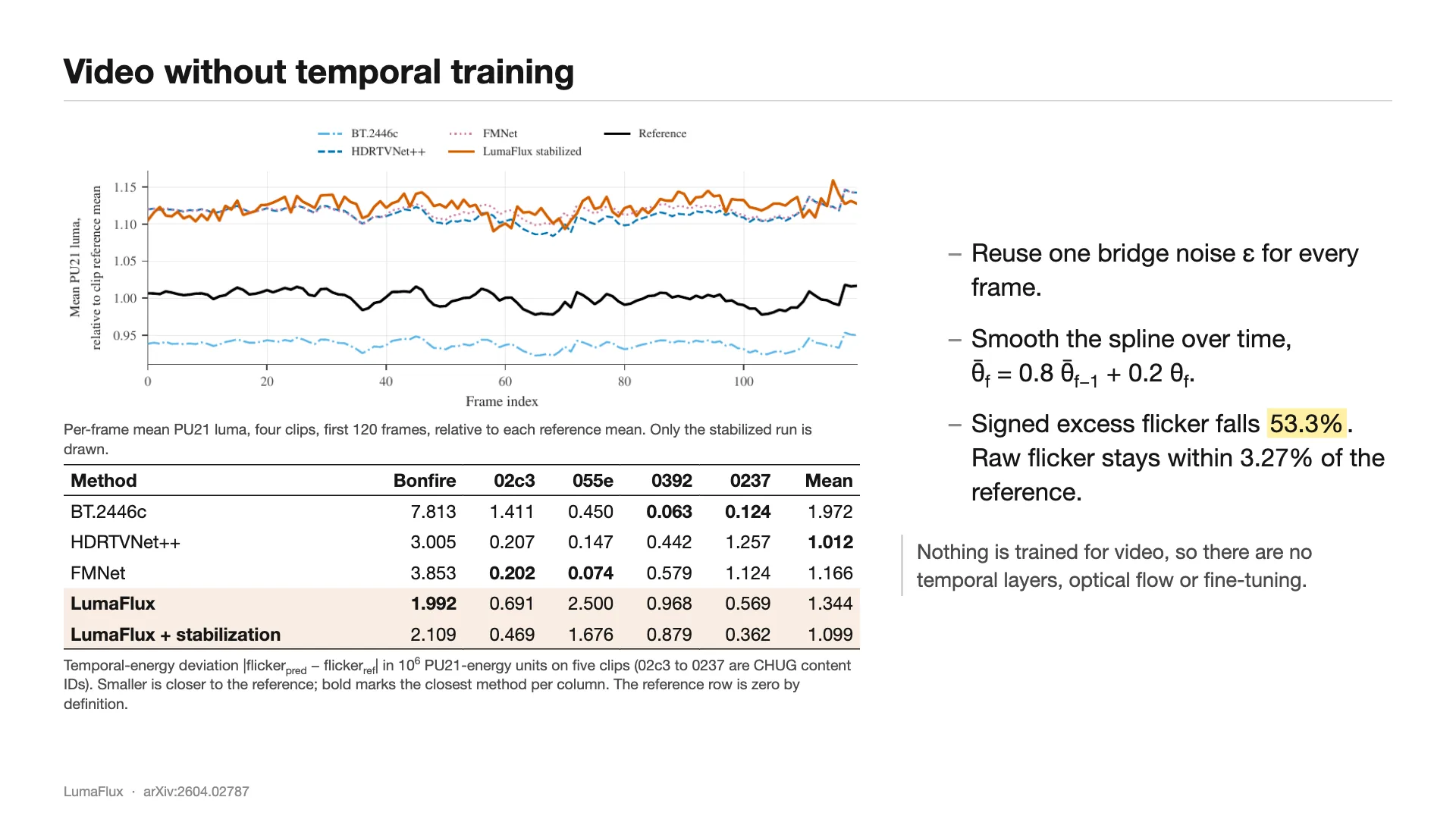
  23. Video without temporal training
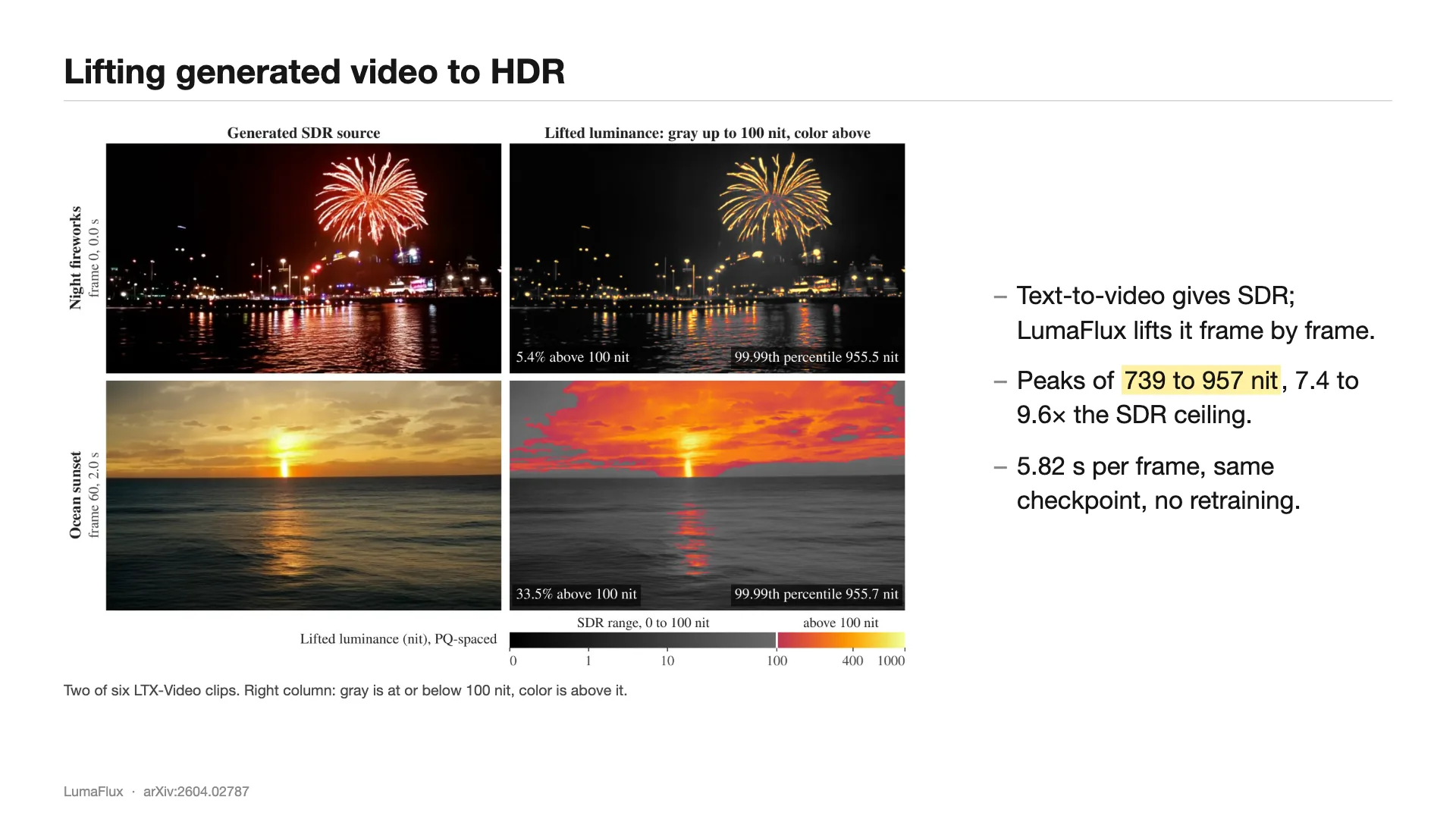
  24. Lifting generated video to HDR
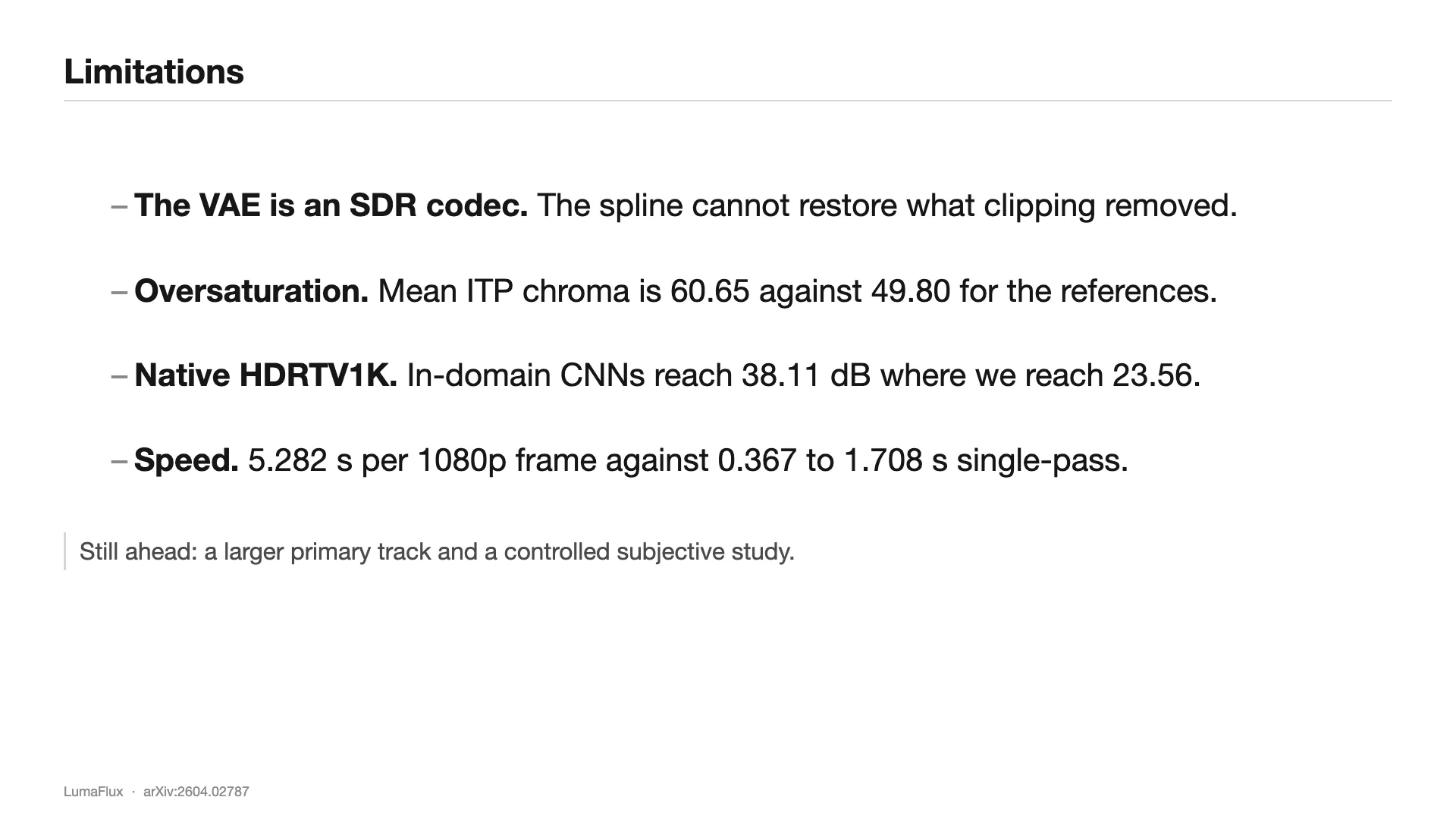
  25. Limitations
  26. Thank you

← → or swipe to move, click the slide to advance, F for full screen. Add #12 to the address to link to slide 12.