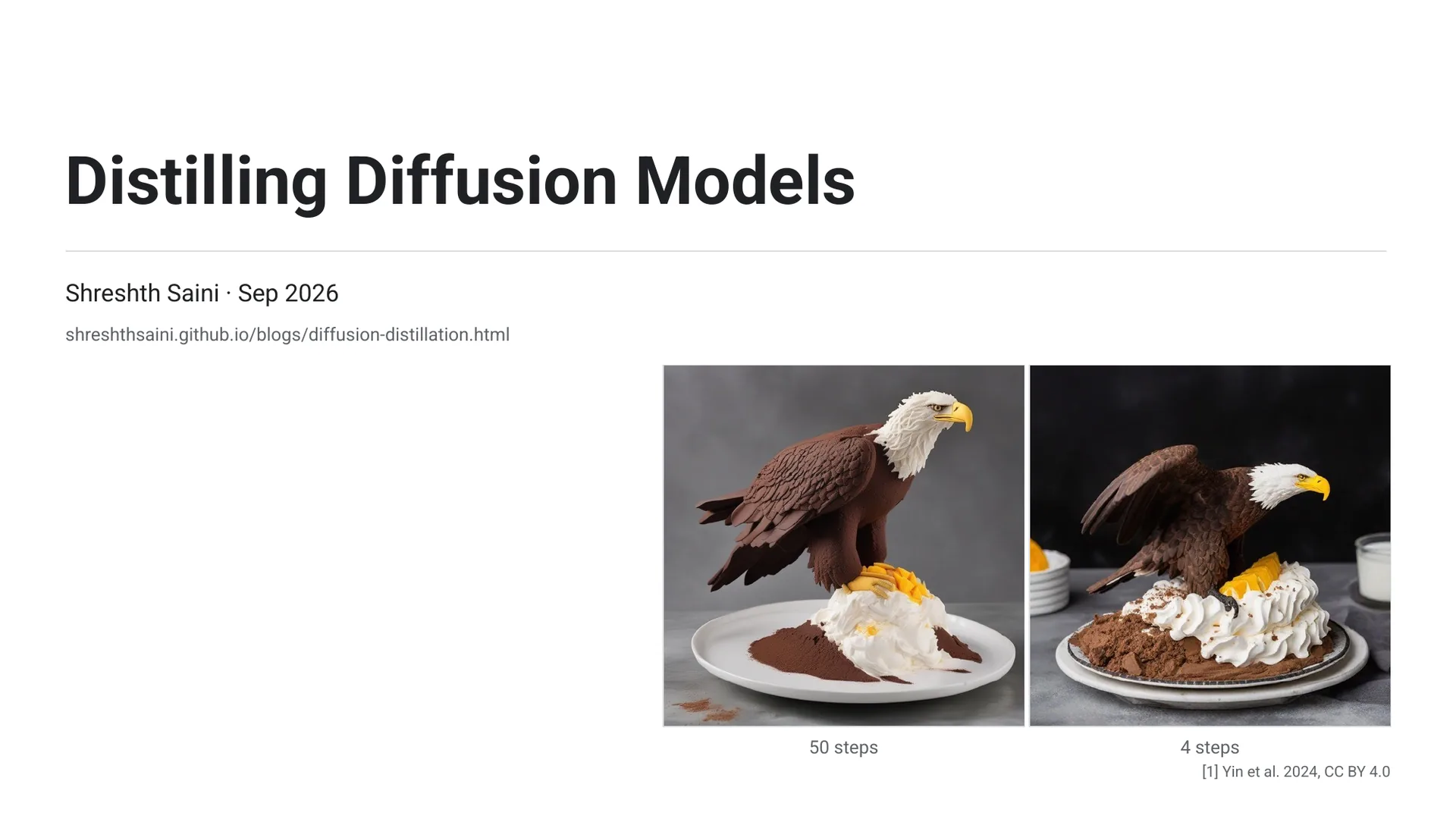
Distilling Diffusion Models
  1. Distilling Diffusion Models
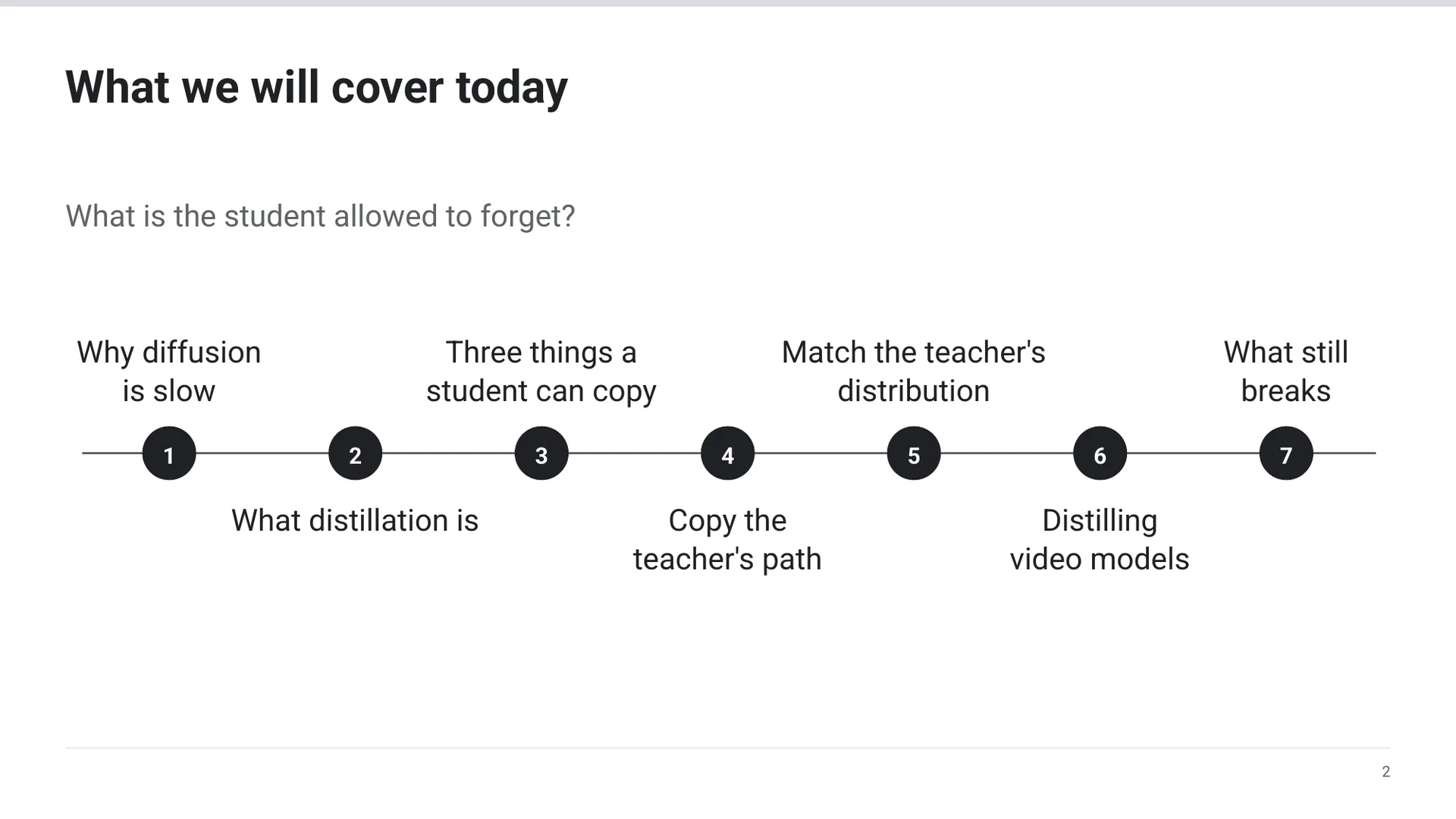
  2. What we will cover today
  3. Part 1: Why diffusion is slow
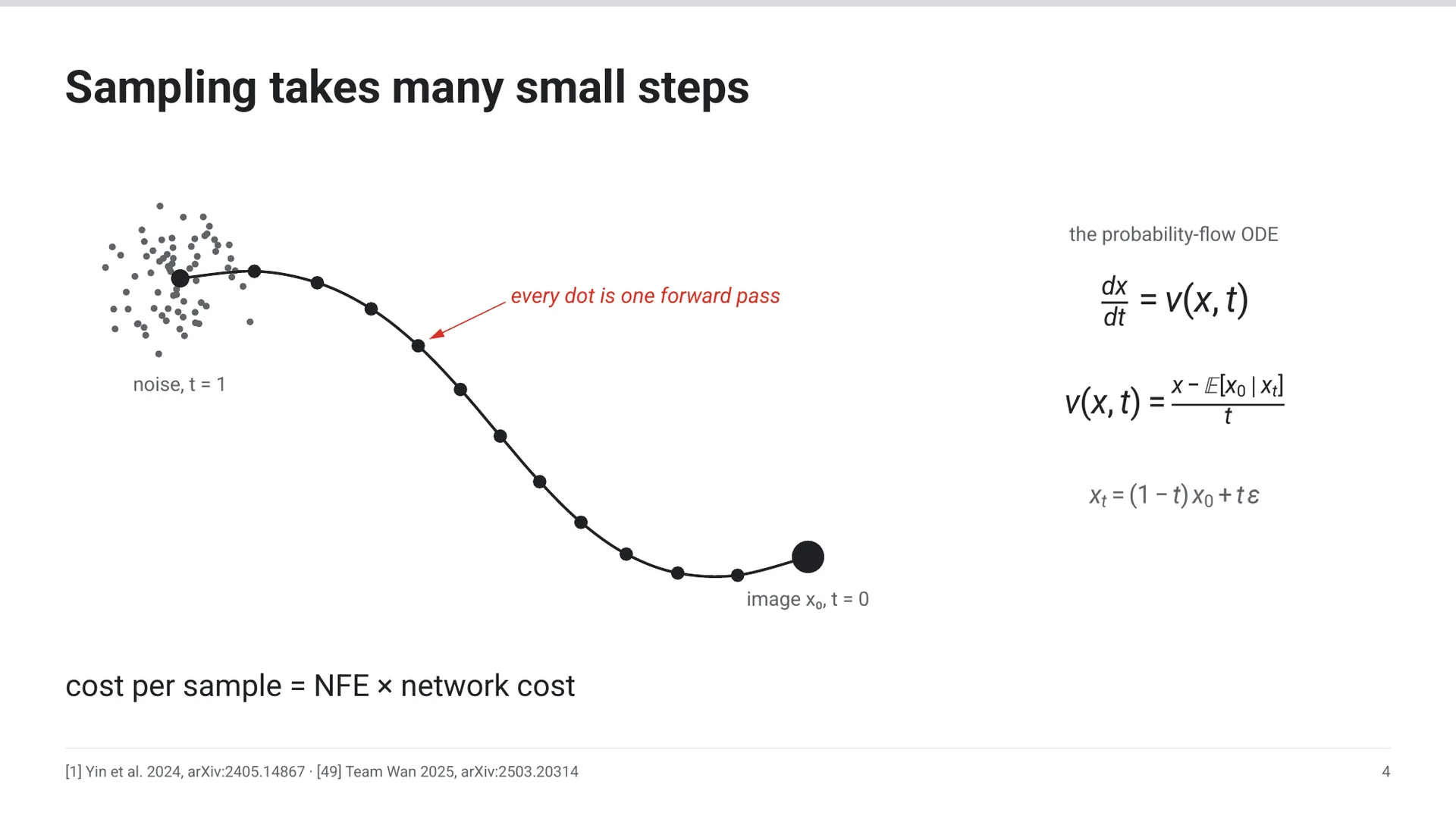
  4. Sampling takes many small steps
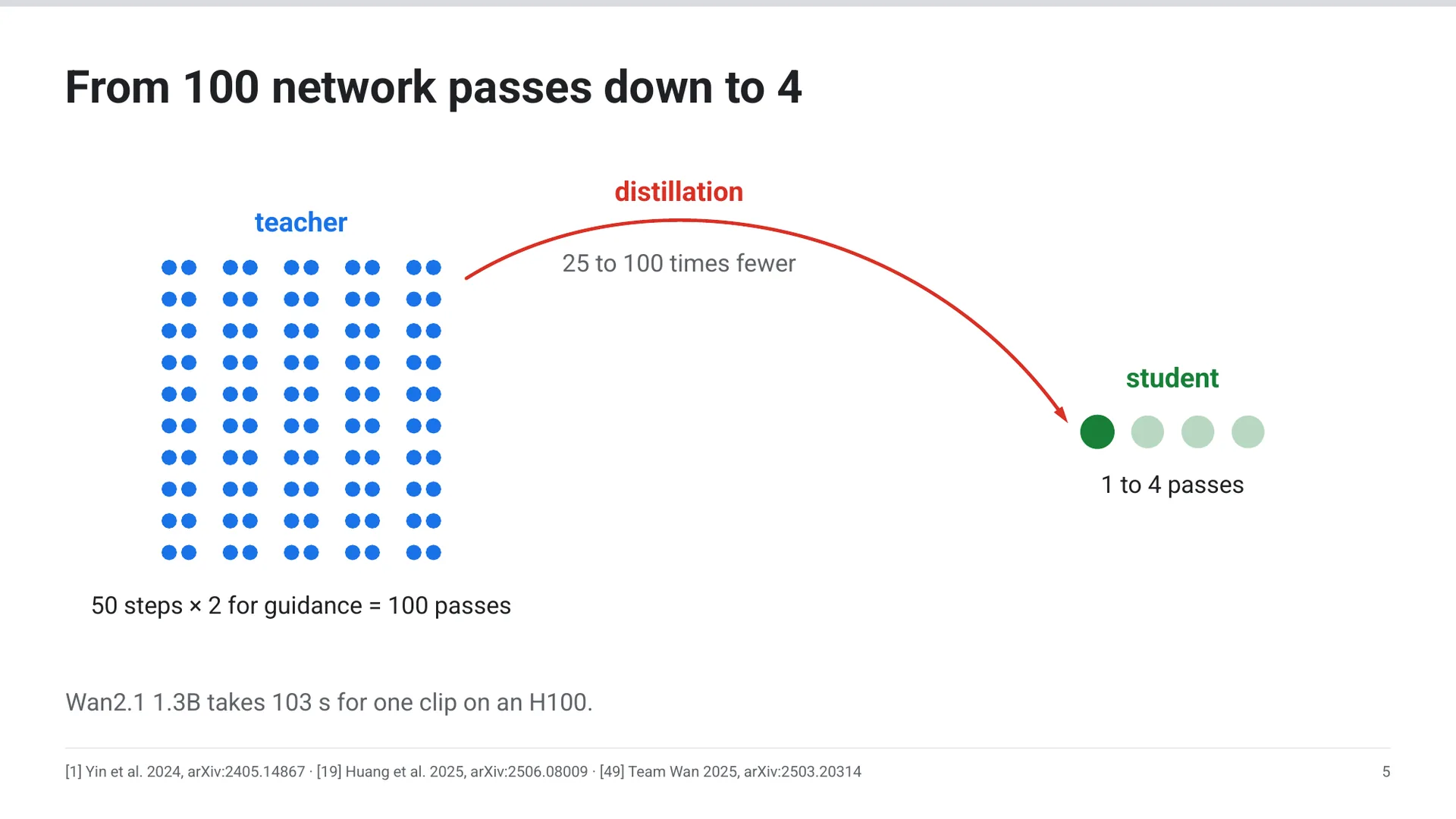
  5. From 100 network passes down to 4
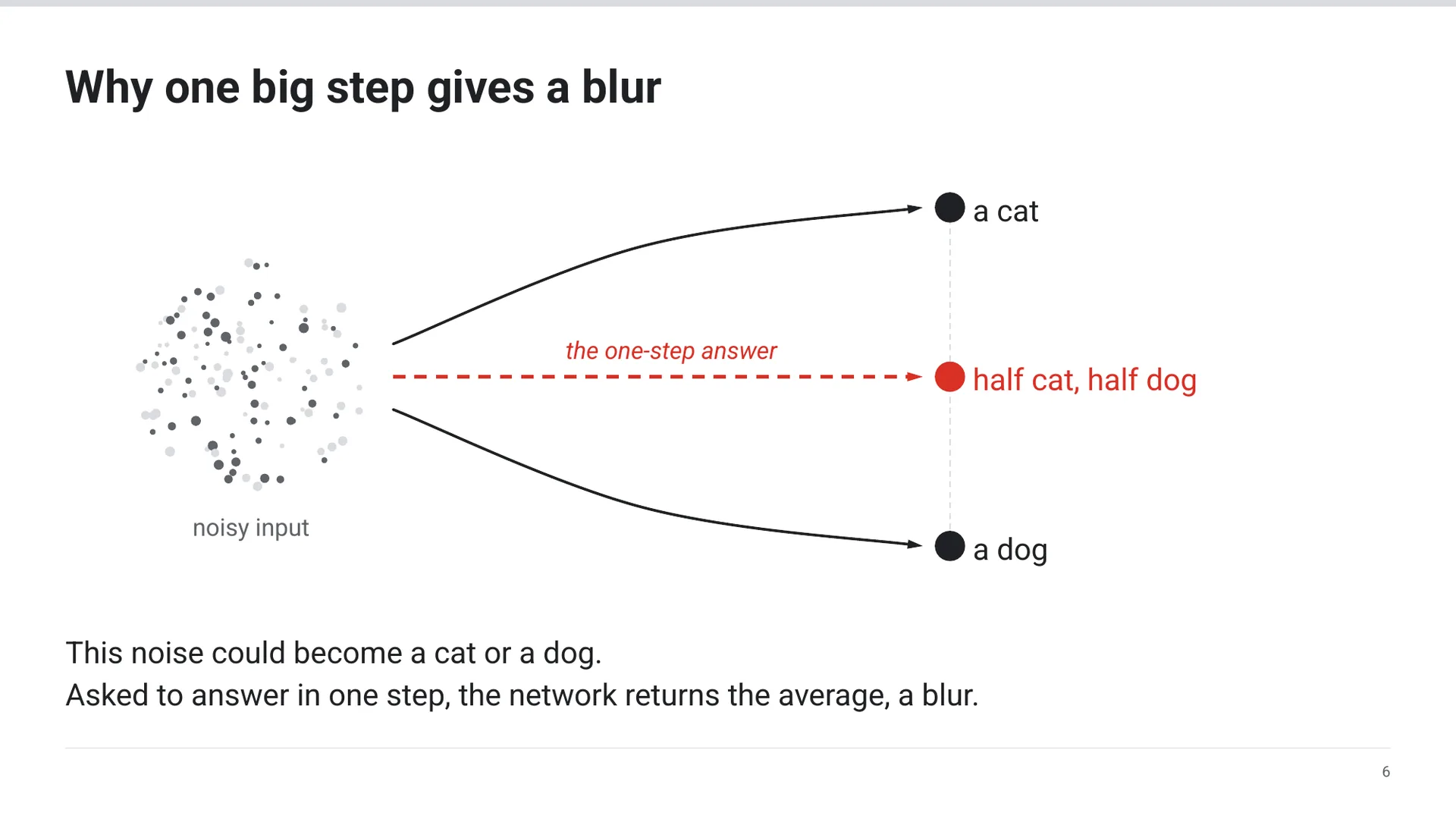
  6. Why one big step gives a blur
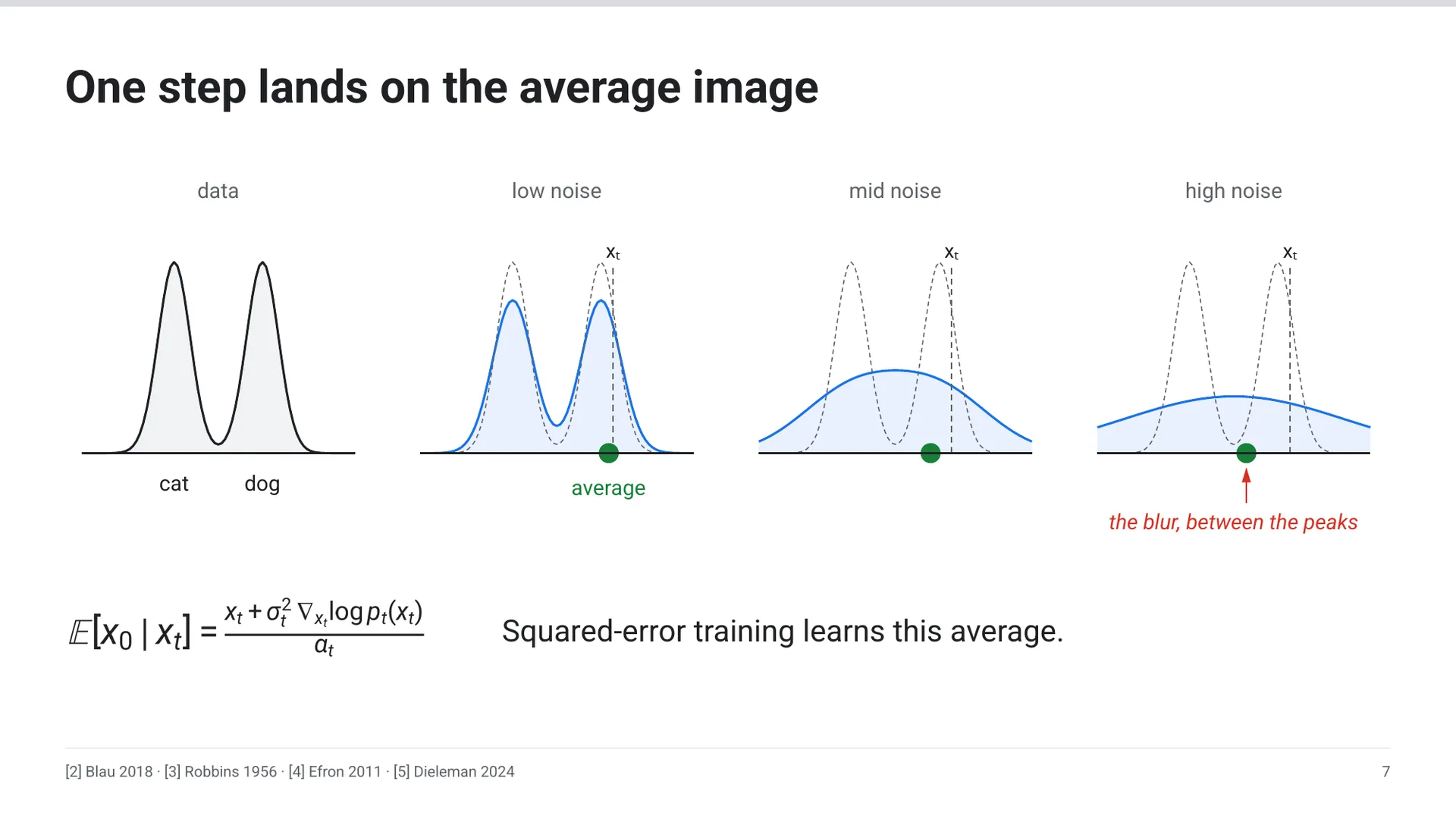
  7. One step lands on the average image
  8. Part 2: What distillation is
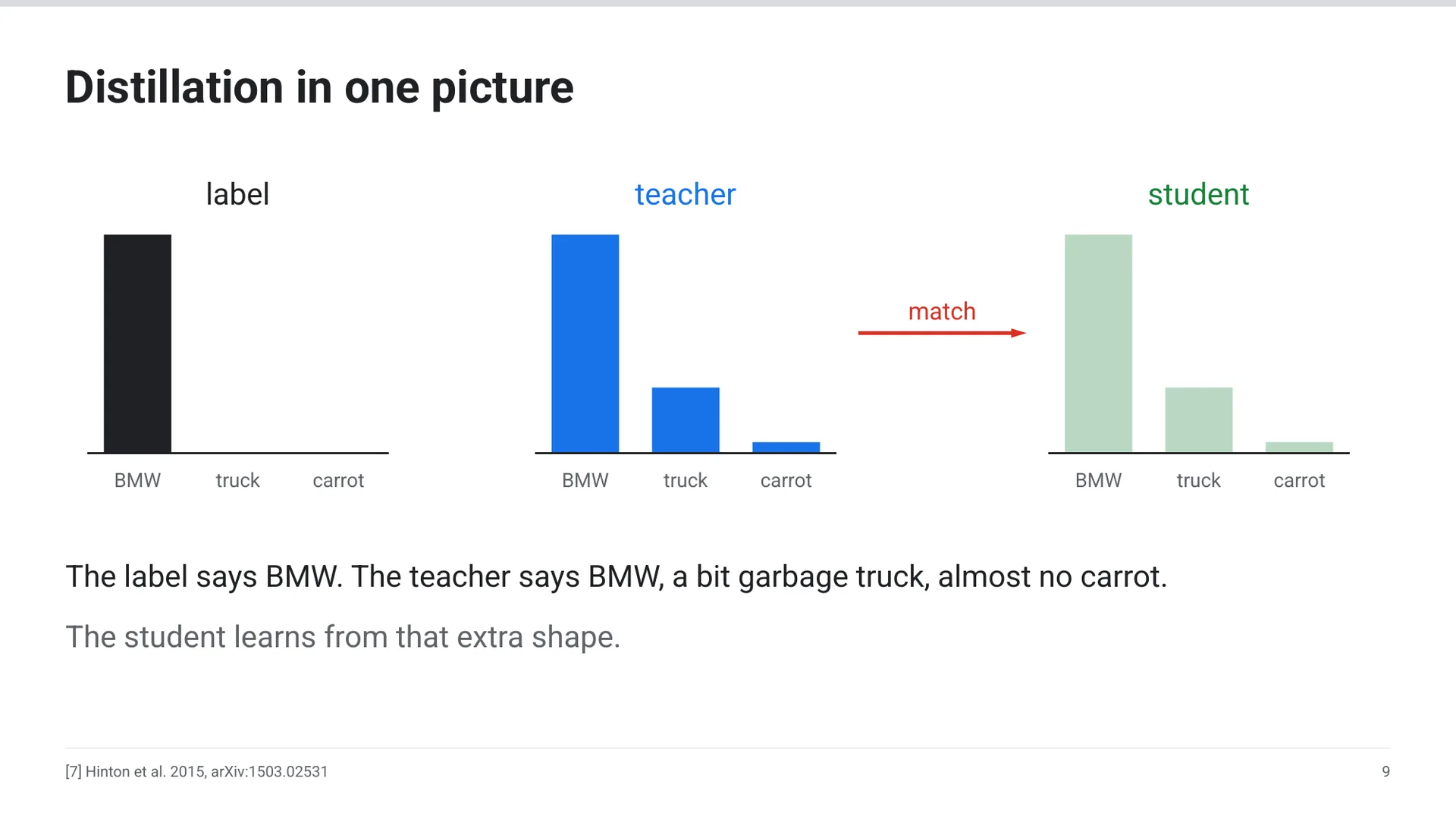
  9. Distillation in one picture
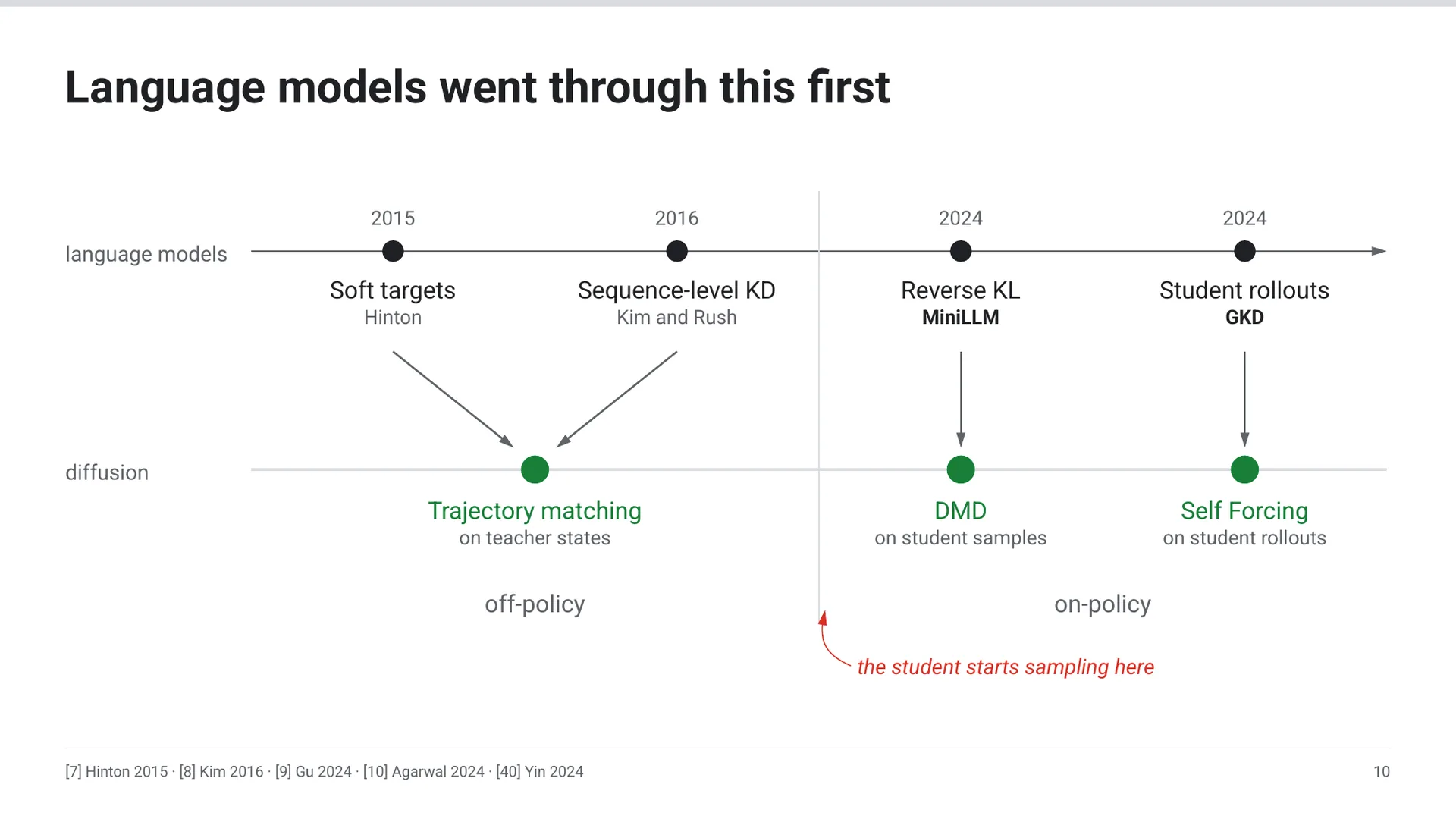
  10. Language models went through this first
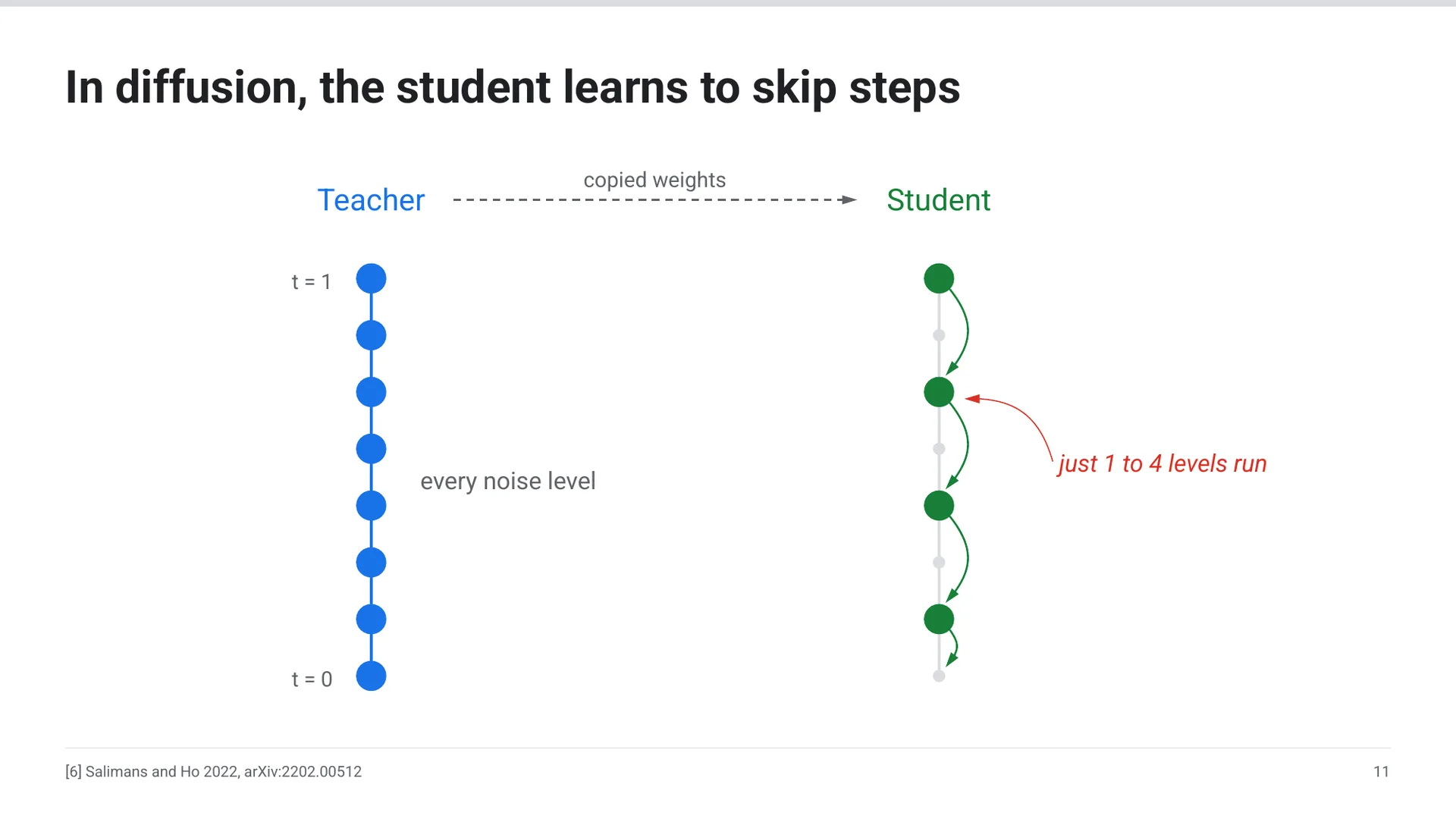
  11. In diffusion, the student learns to skip steps
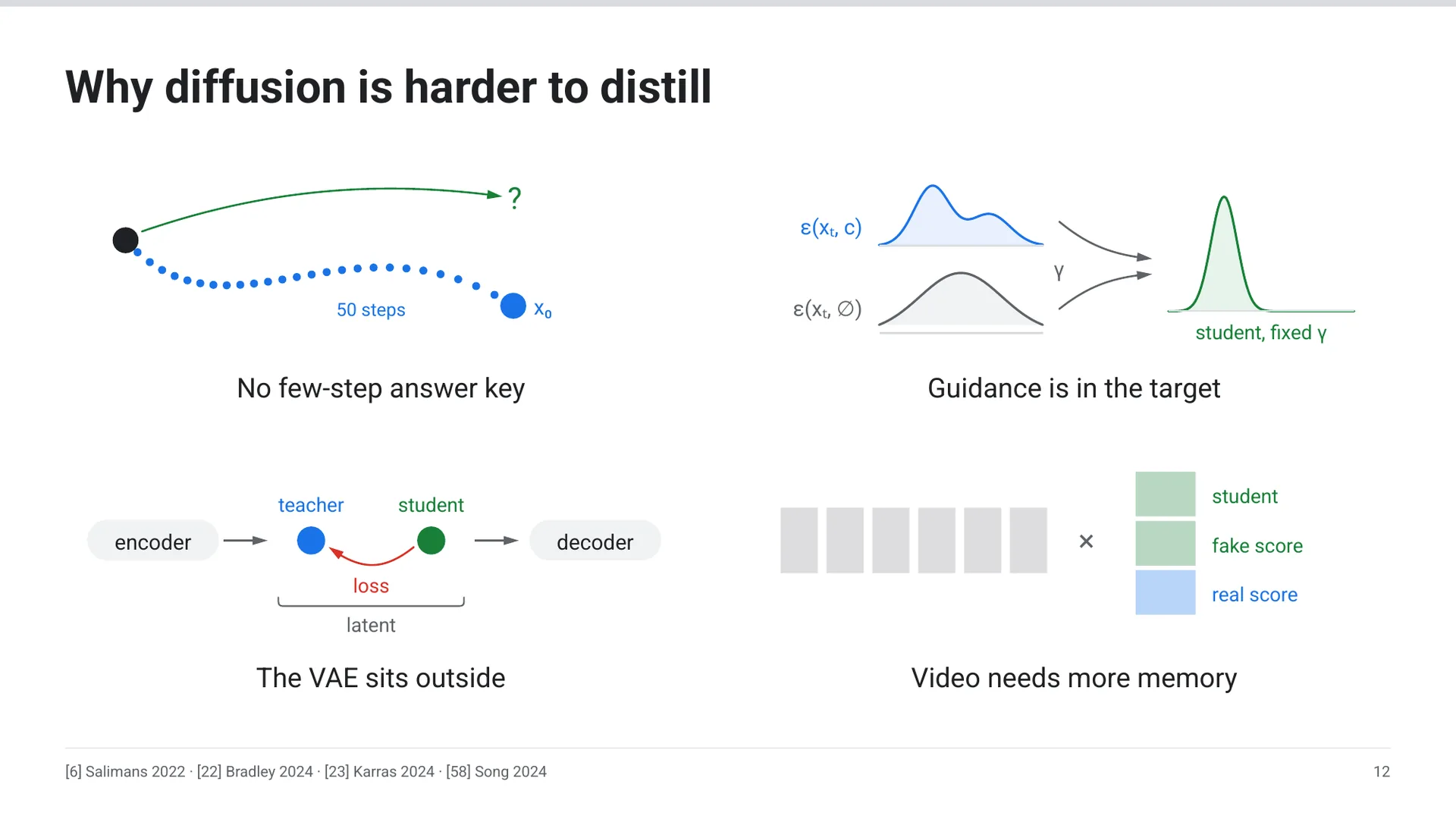
  12. Why diffusion is harder to distill
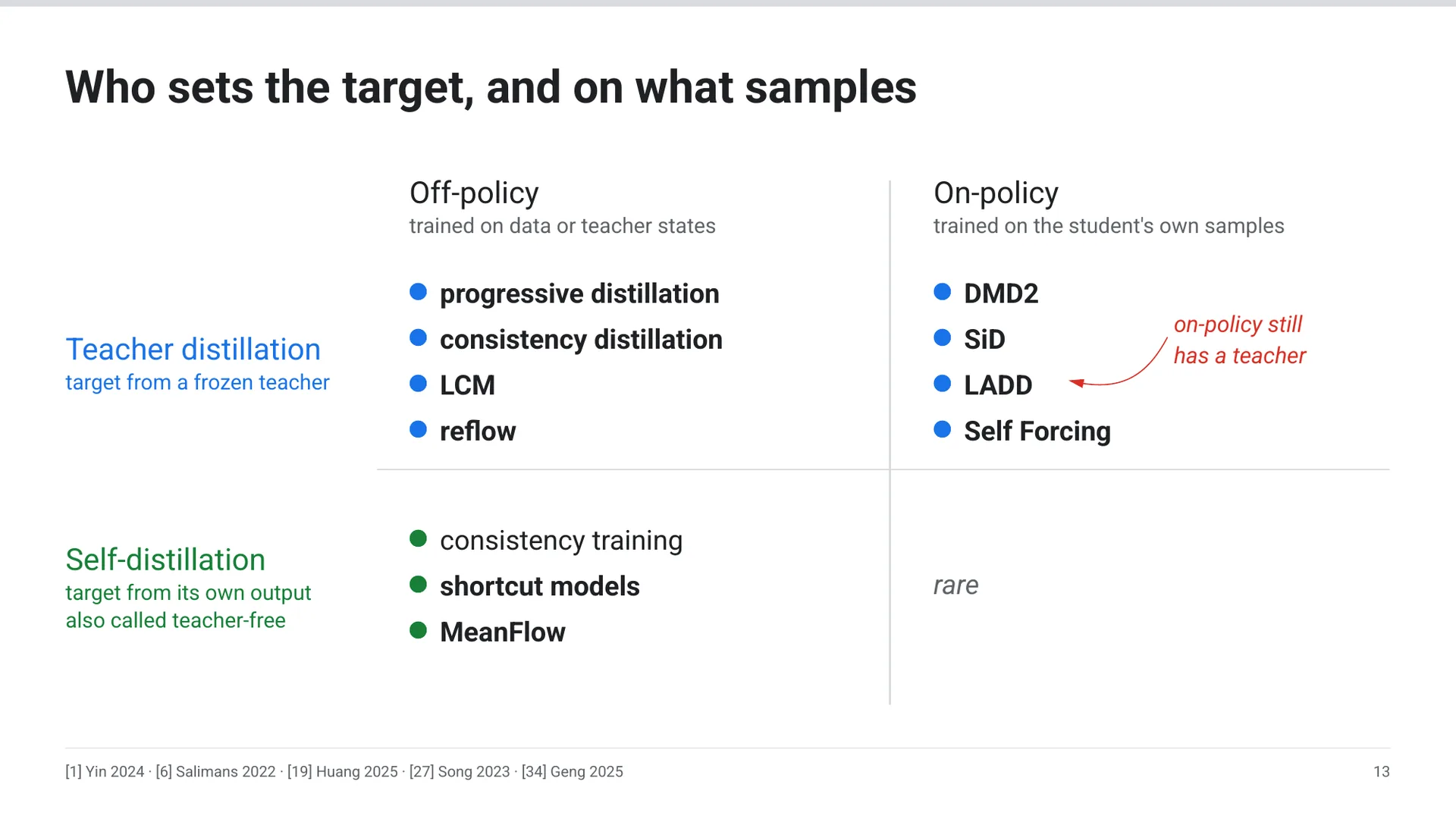
  13. Who sets the target, and on what samples
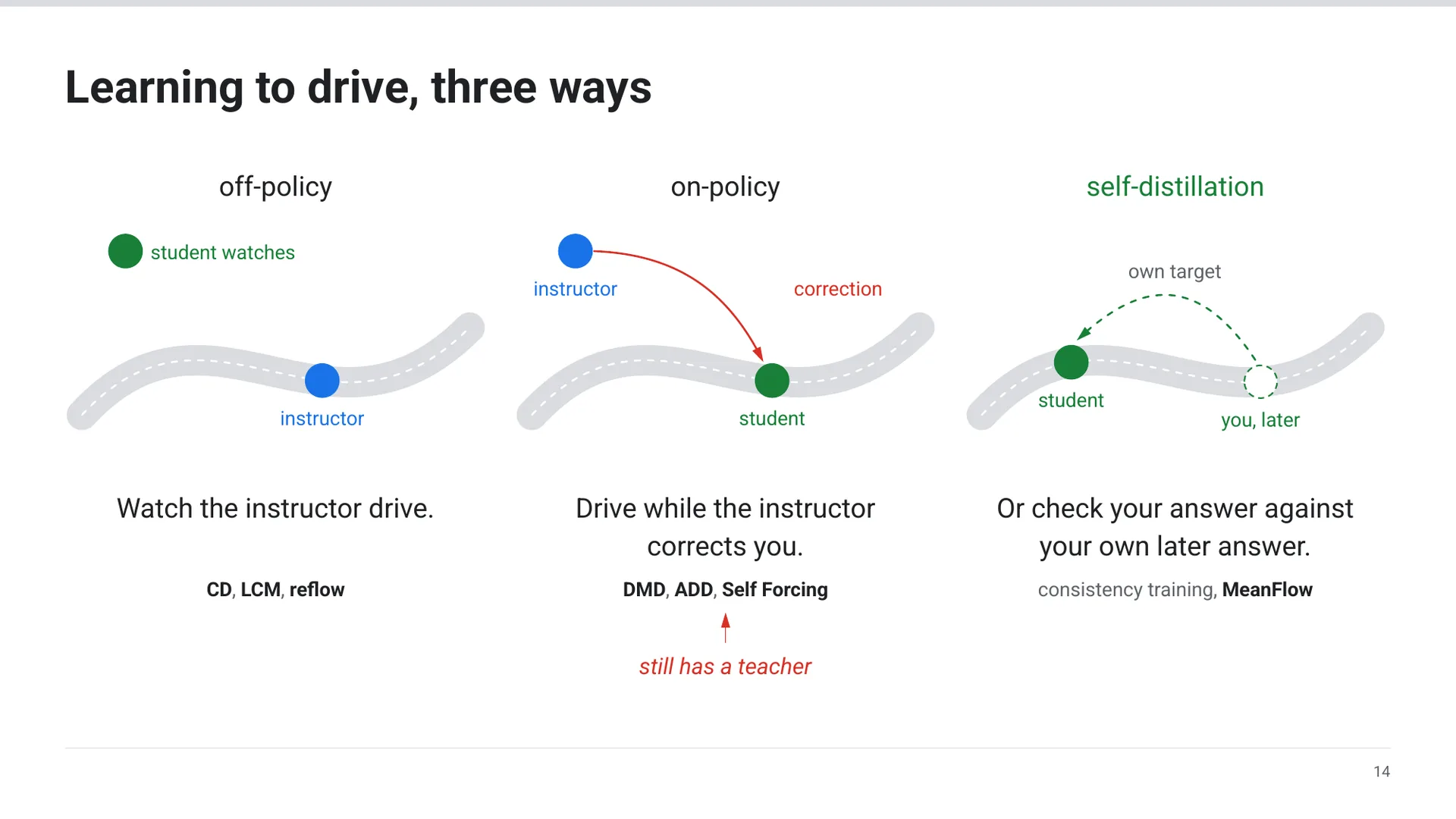
  14. Learning to drive, three ways
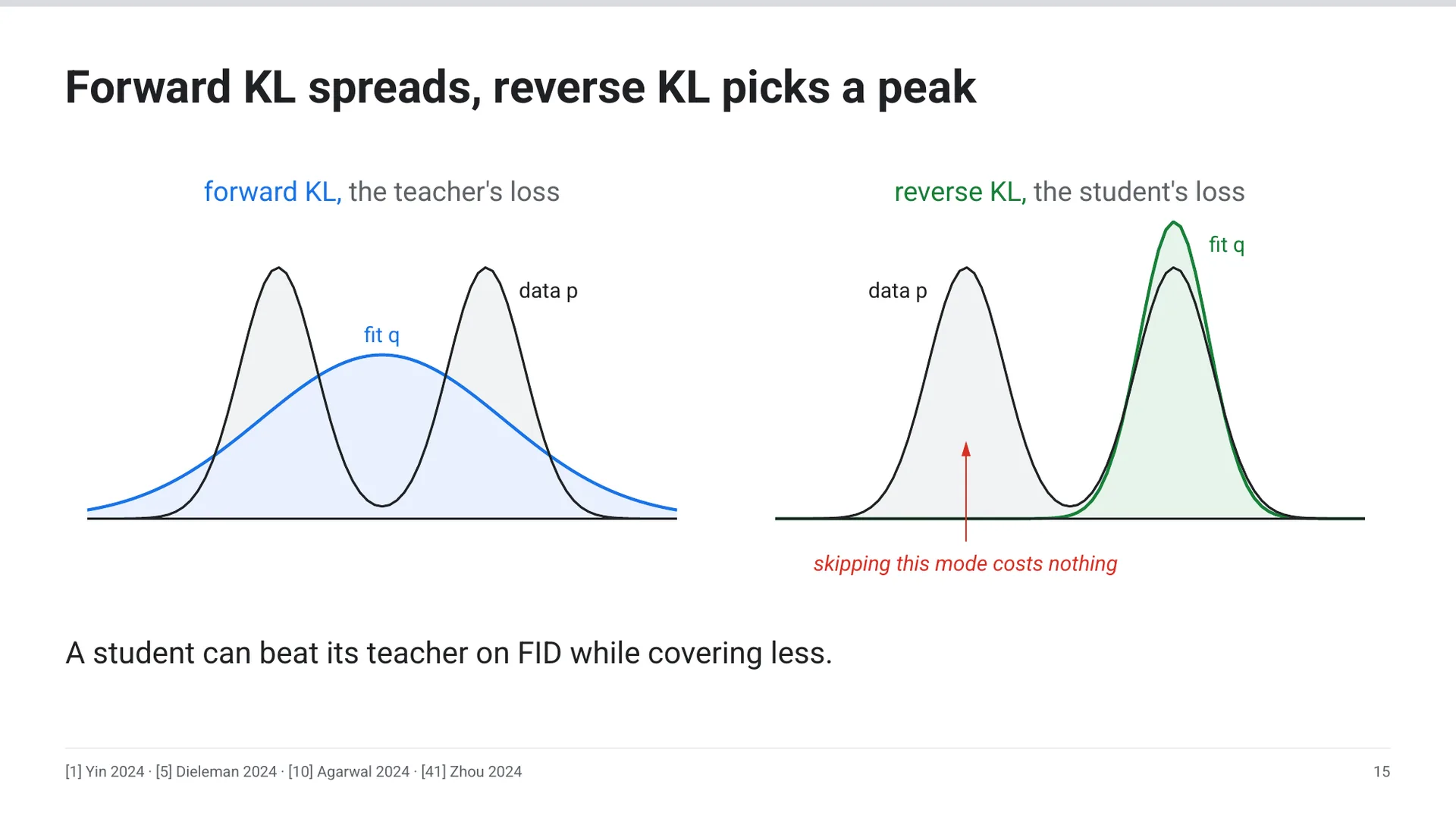
  15. Forward KL spreads, reverse KL picks a peak
  16. Part 3: Three things a student can copy
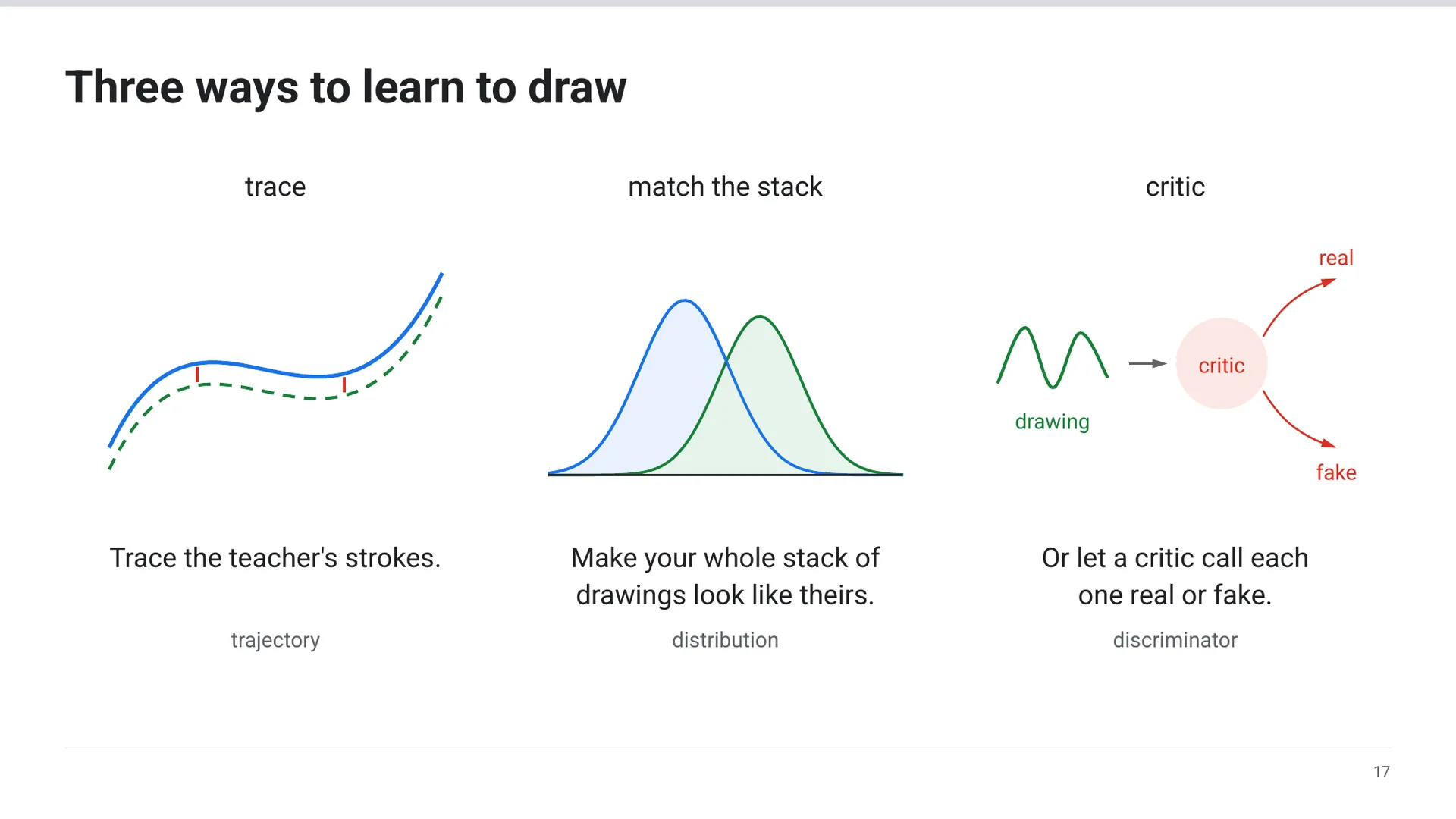
  17. Three ways to learn to draw
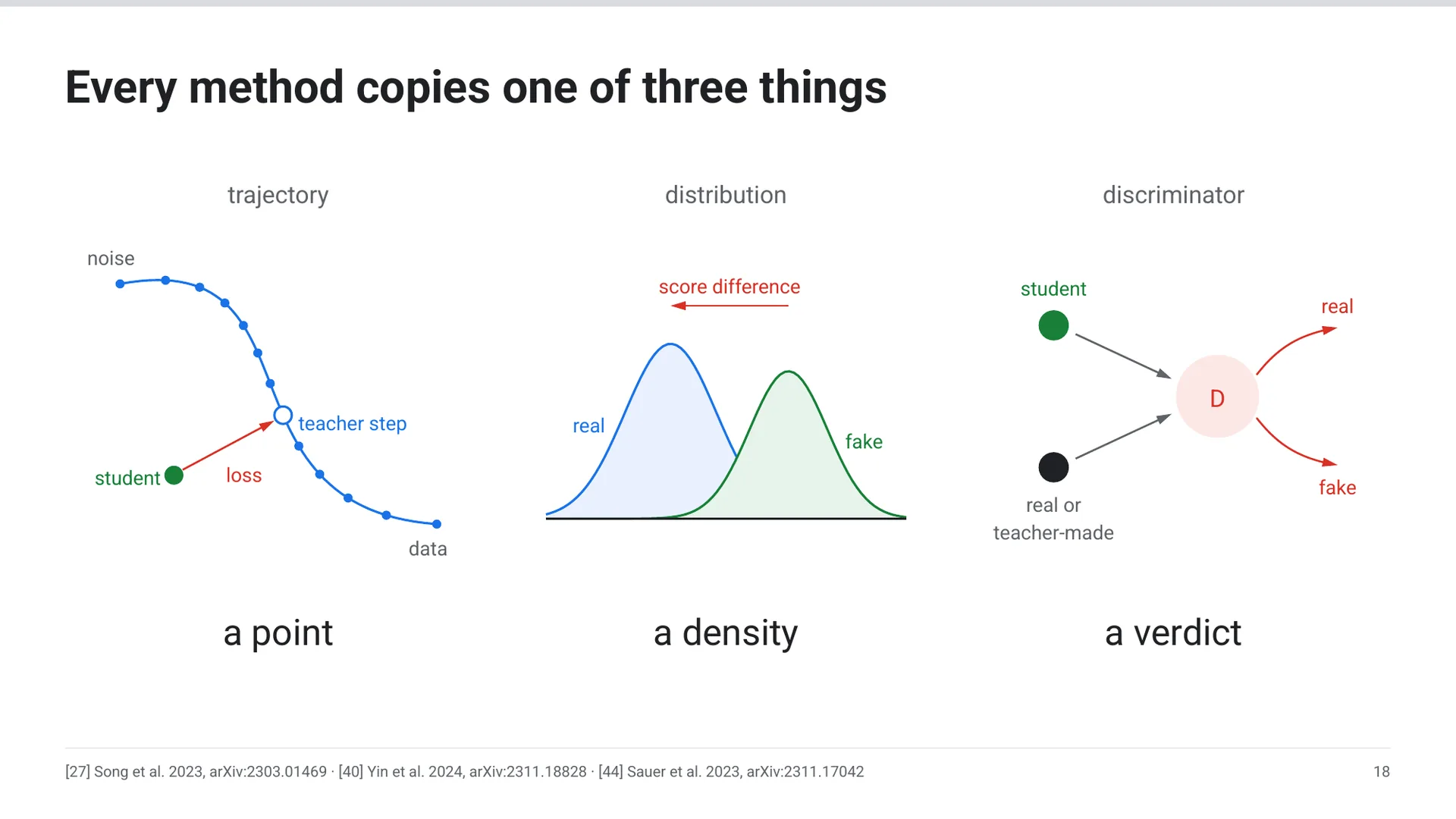
  18. Every method copies one of three things
  19. Part 4: Copy the teacher's path
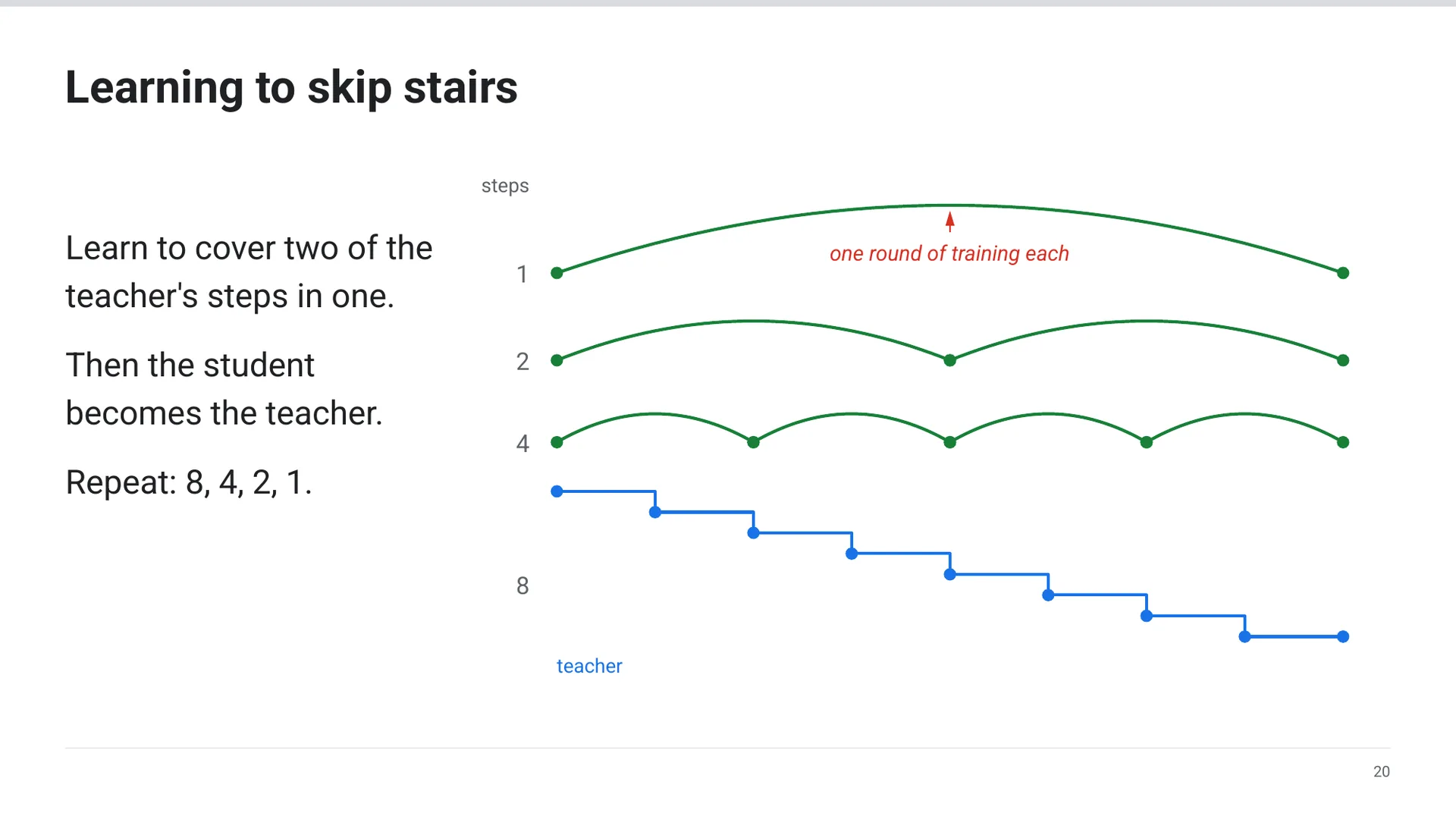
  20. Learning to skip stairs
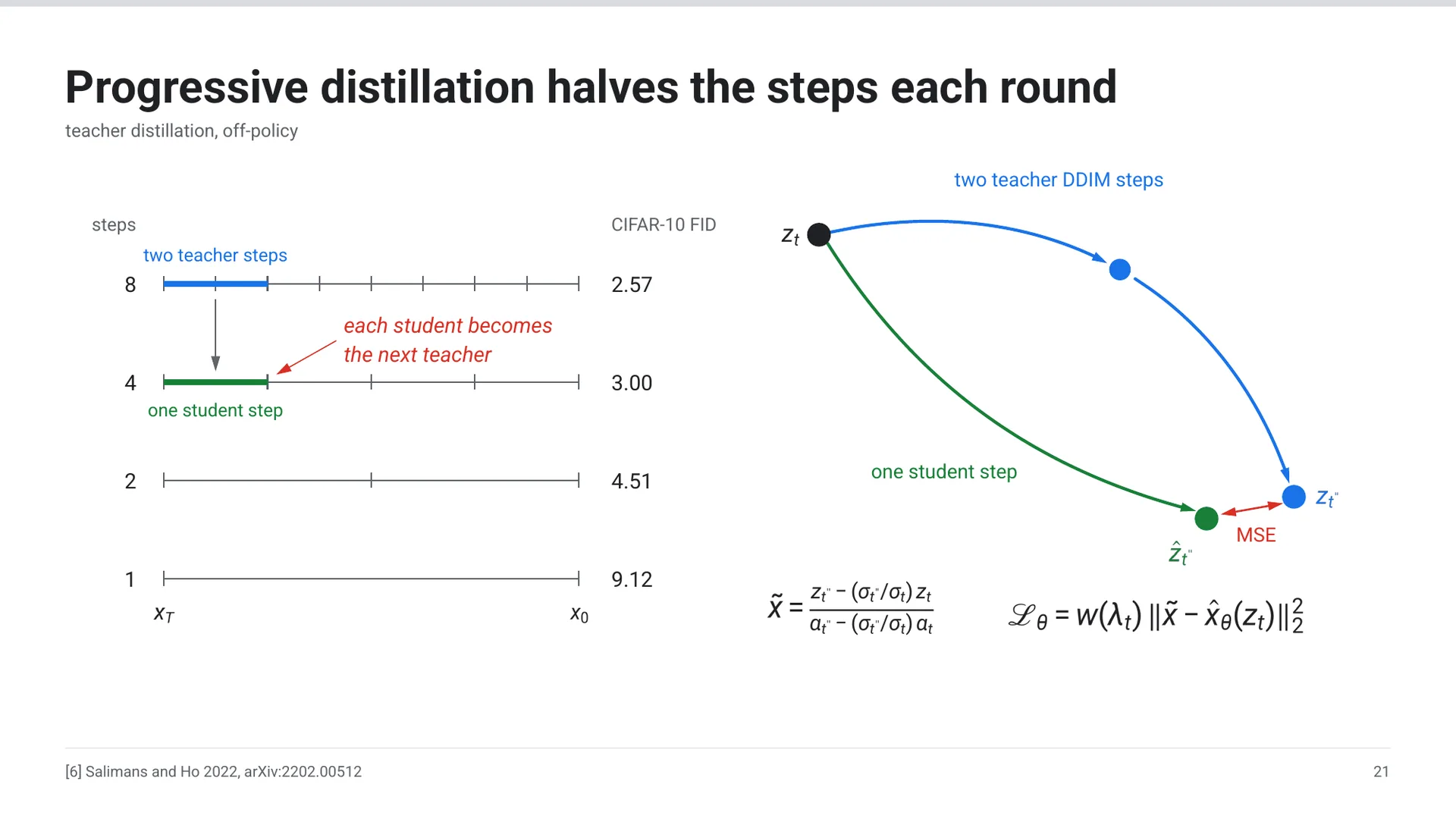
  21. Progressive distillation halves the steps each round
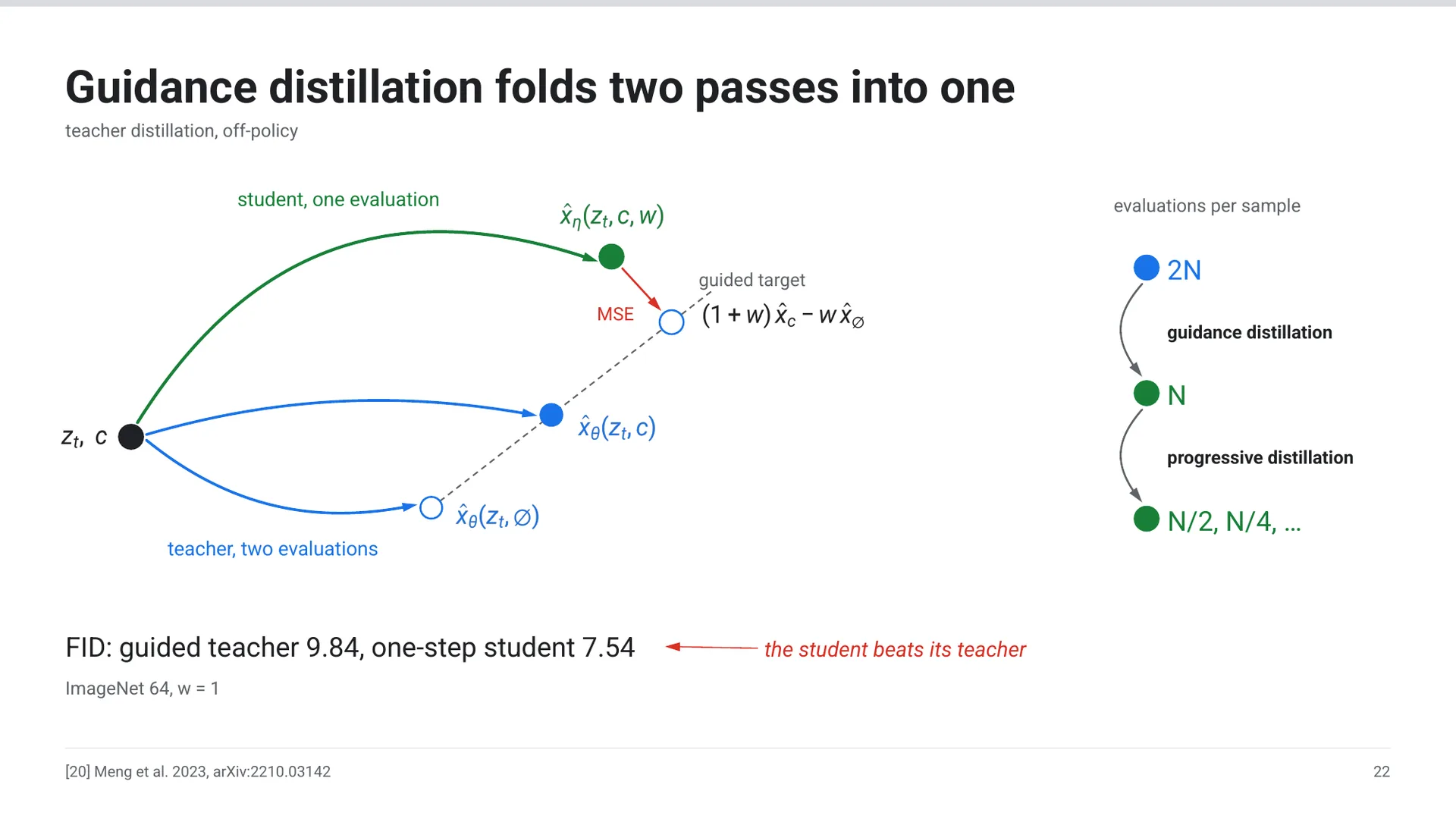
  22. Guidance distillation folds two passes into one
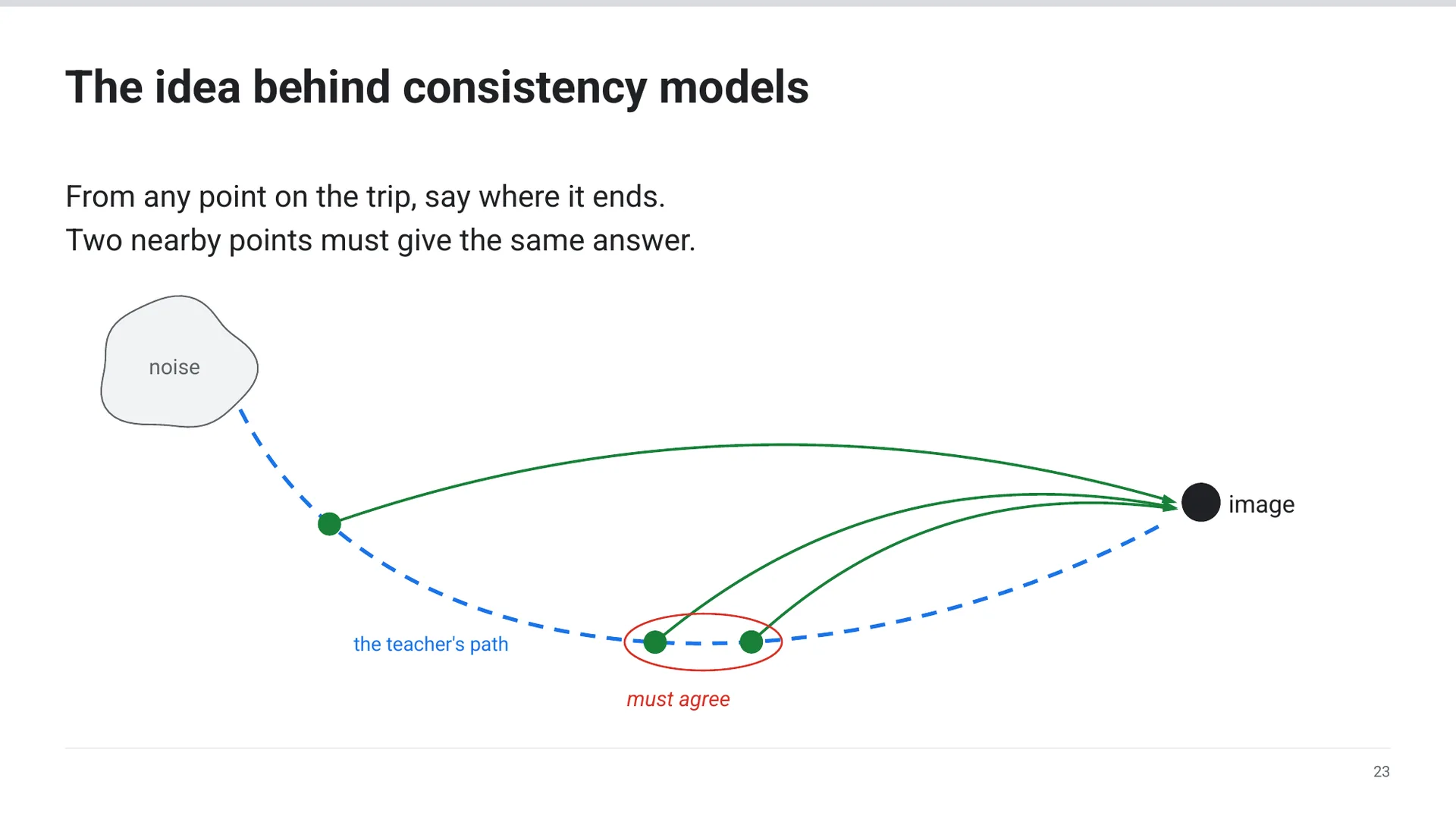
  23. The idea behind consistency models
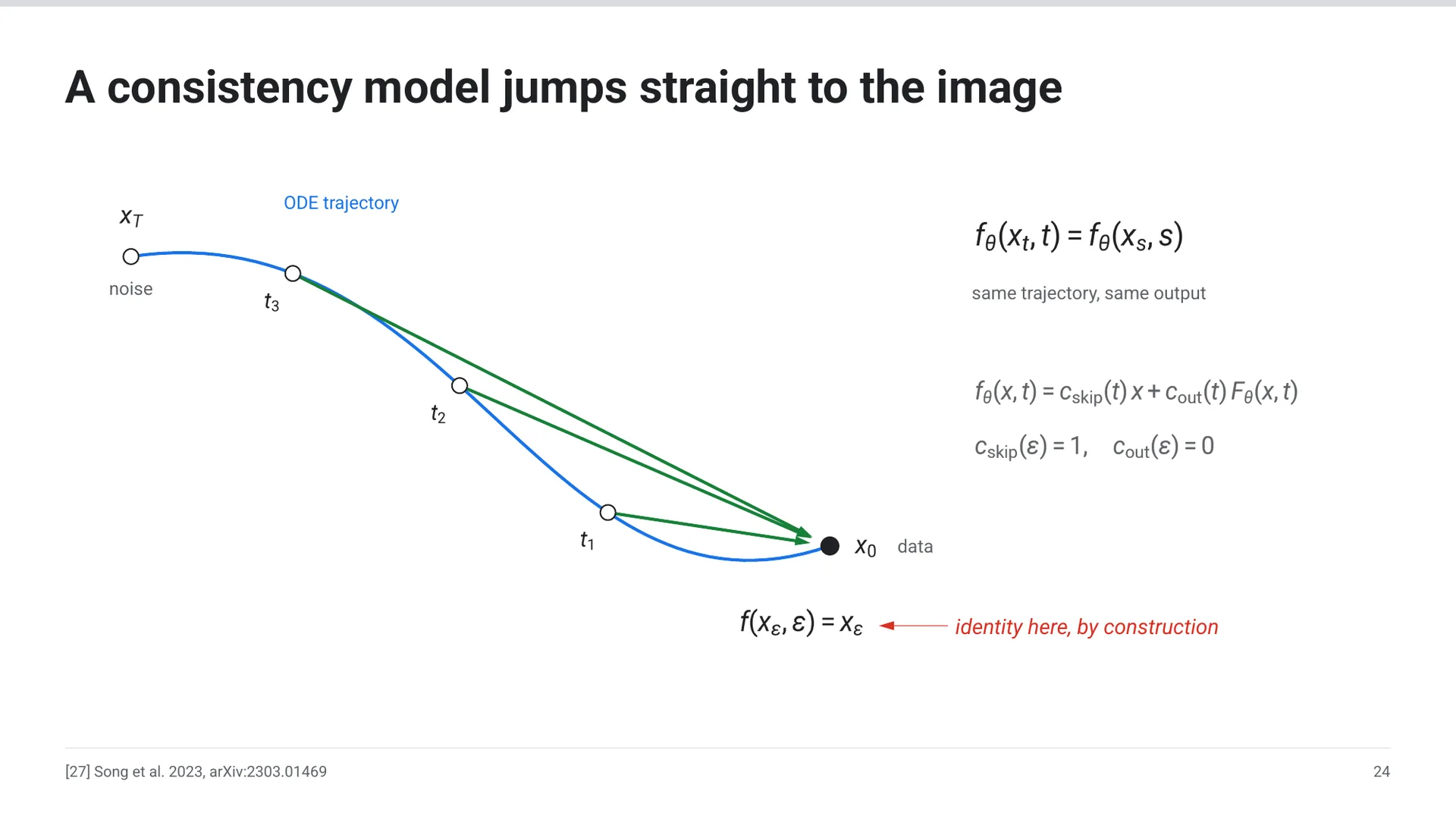
  24. A consistency model jumps straight to the image
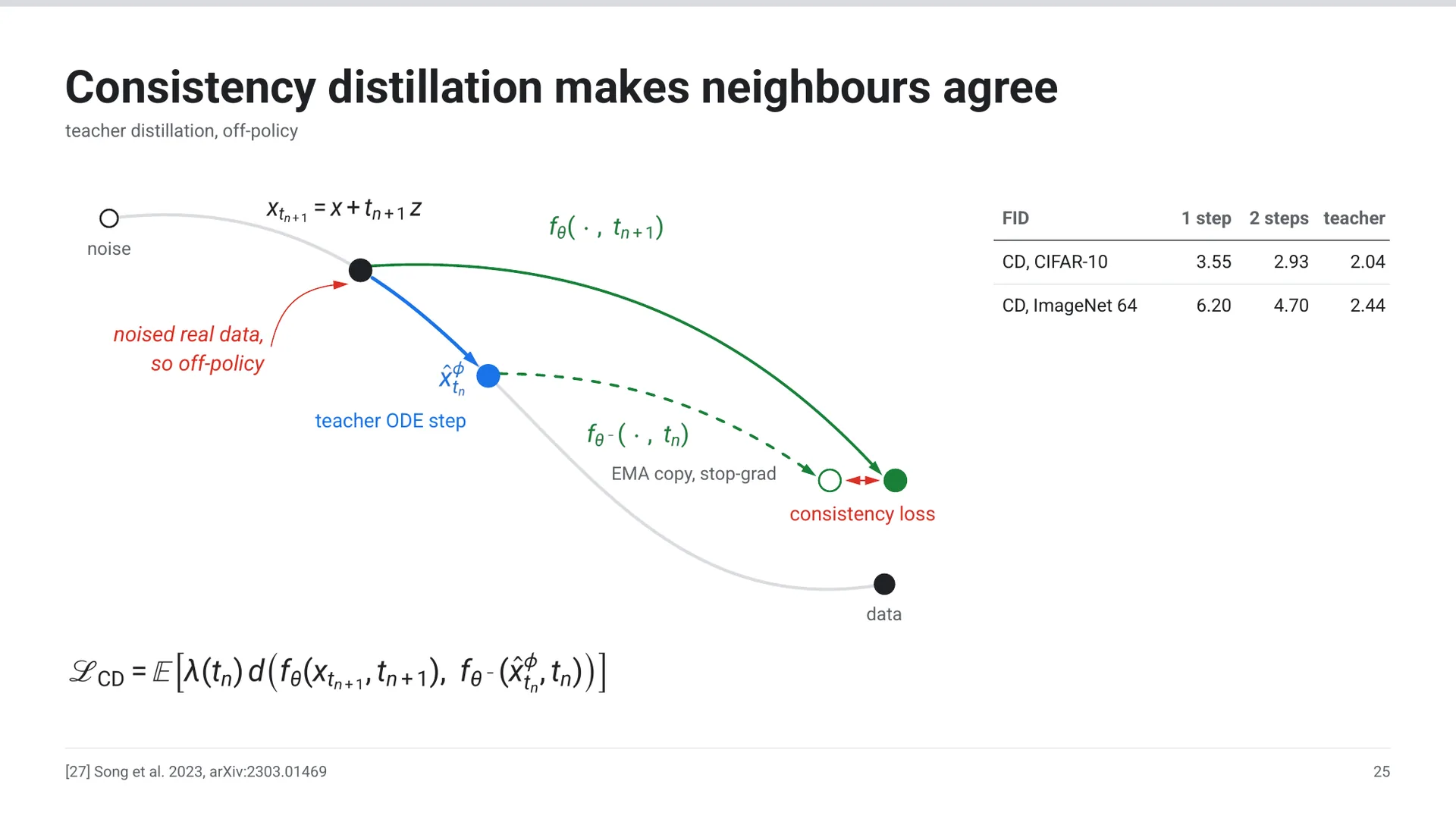
  25. Consistency distillation makes neighbours agree
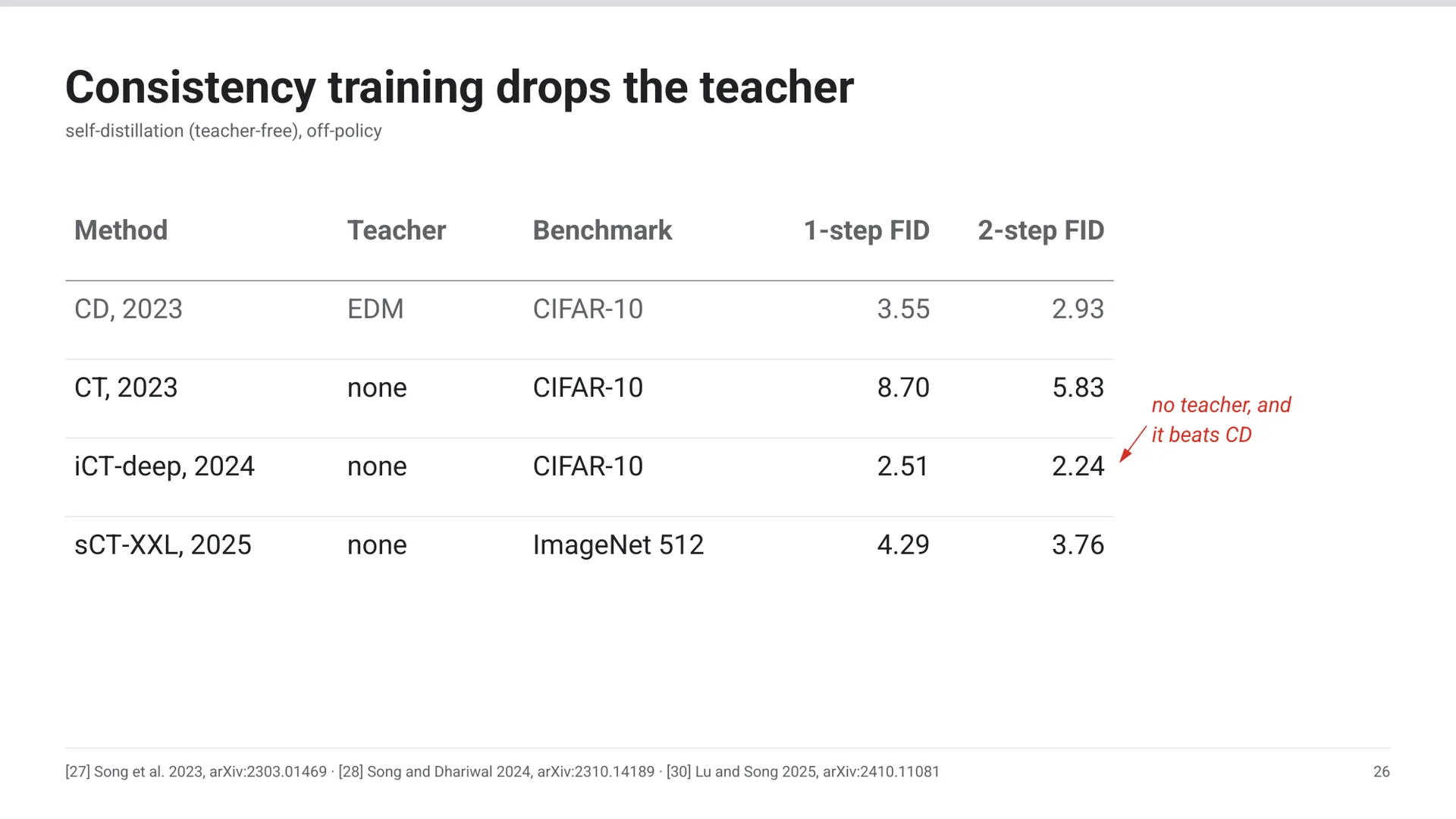
  26. Consistency training drops the teacher
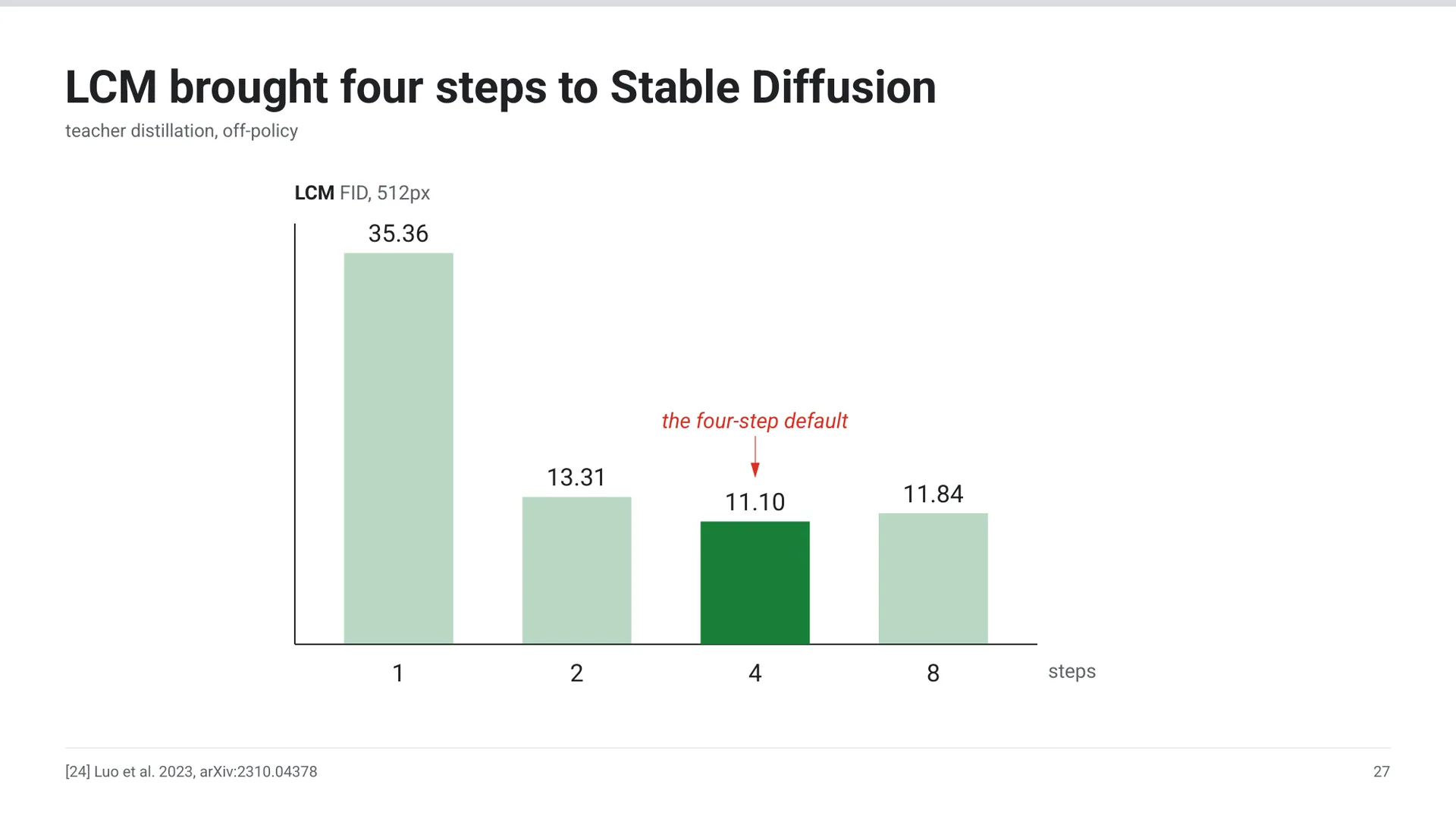
  27. LCM brought four steps to Stable Diffusion
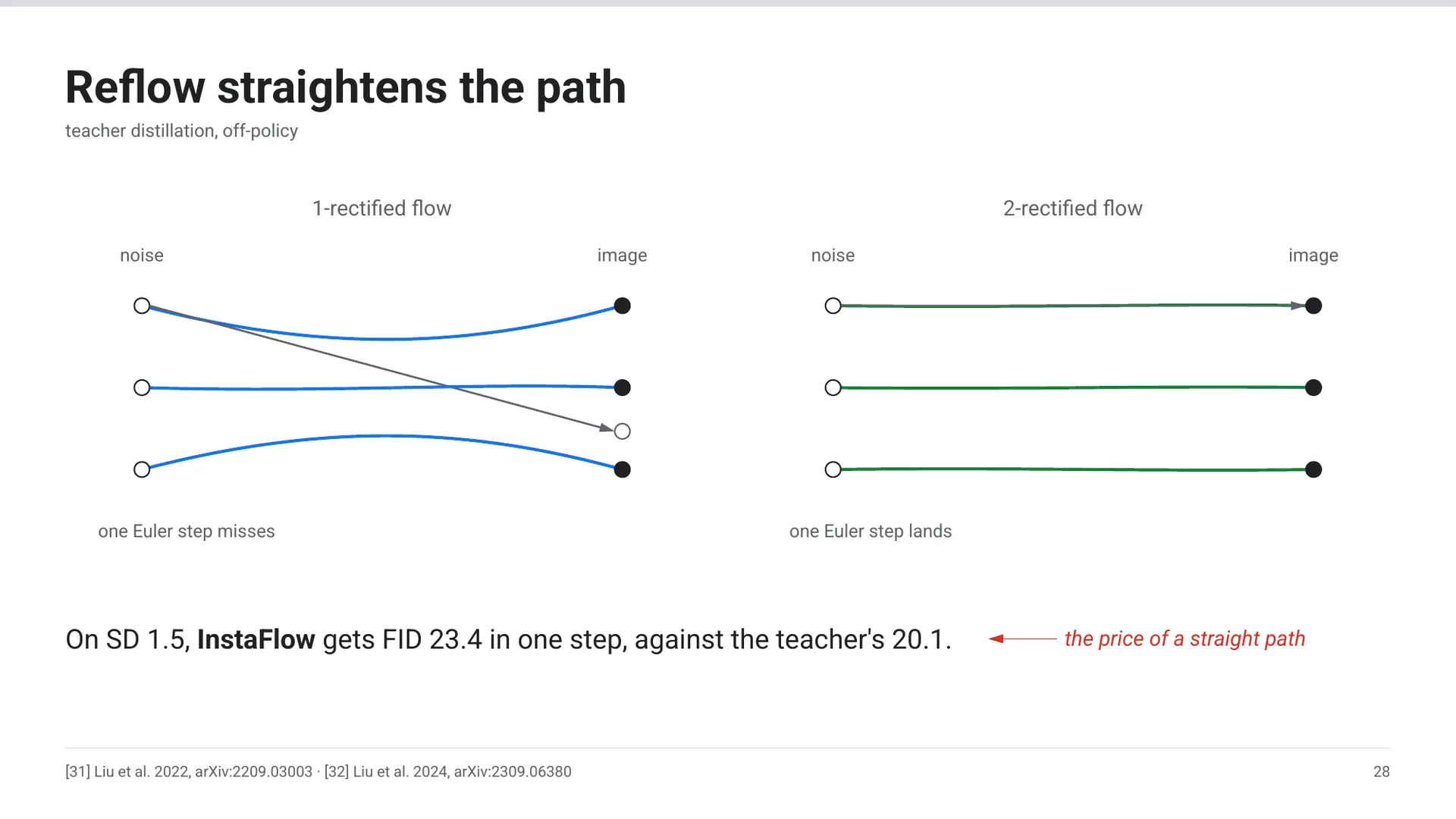
  28. Reflow straightens the path
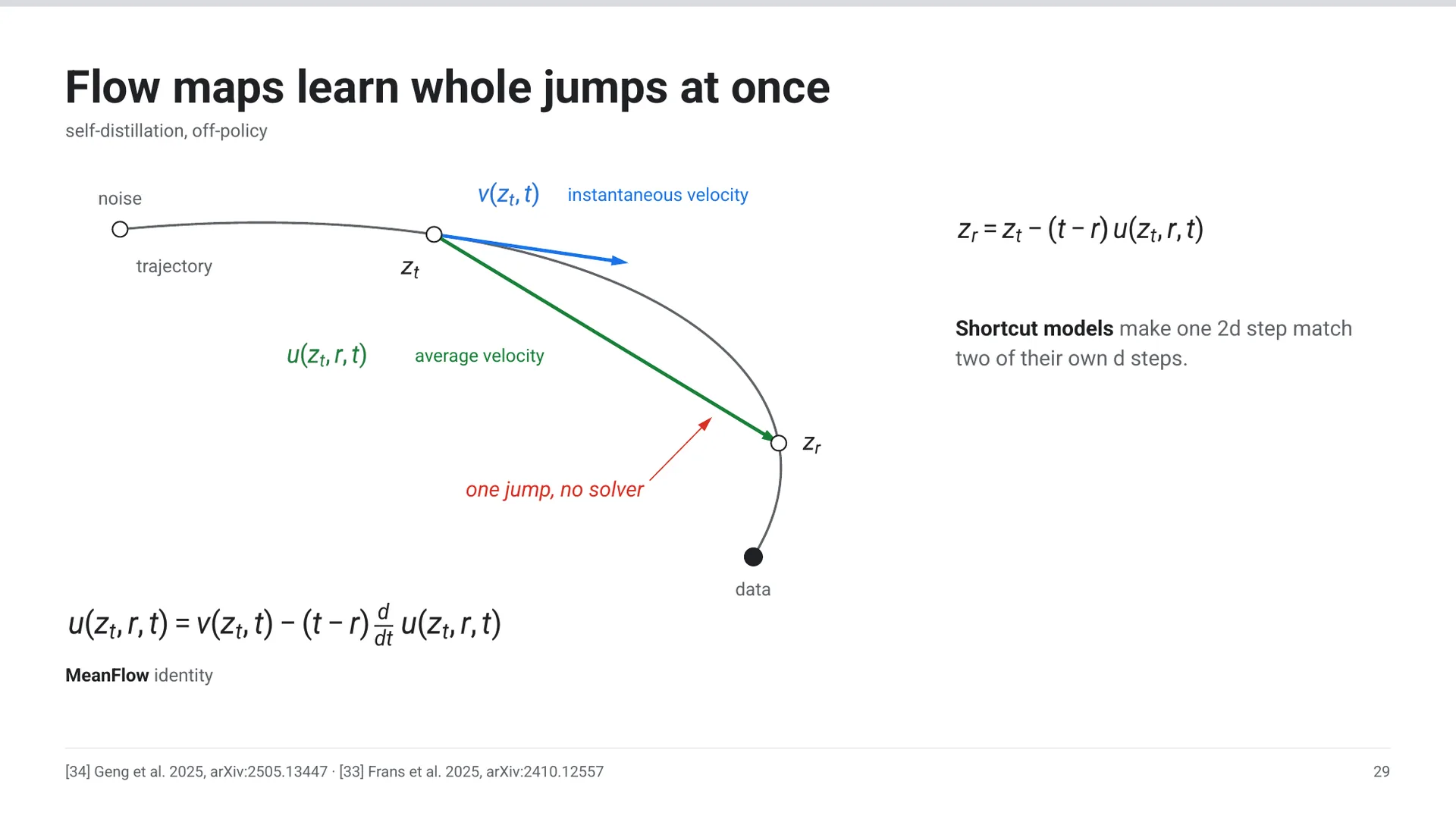
  29. Flow maps learn whole jumps at once
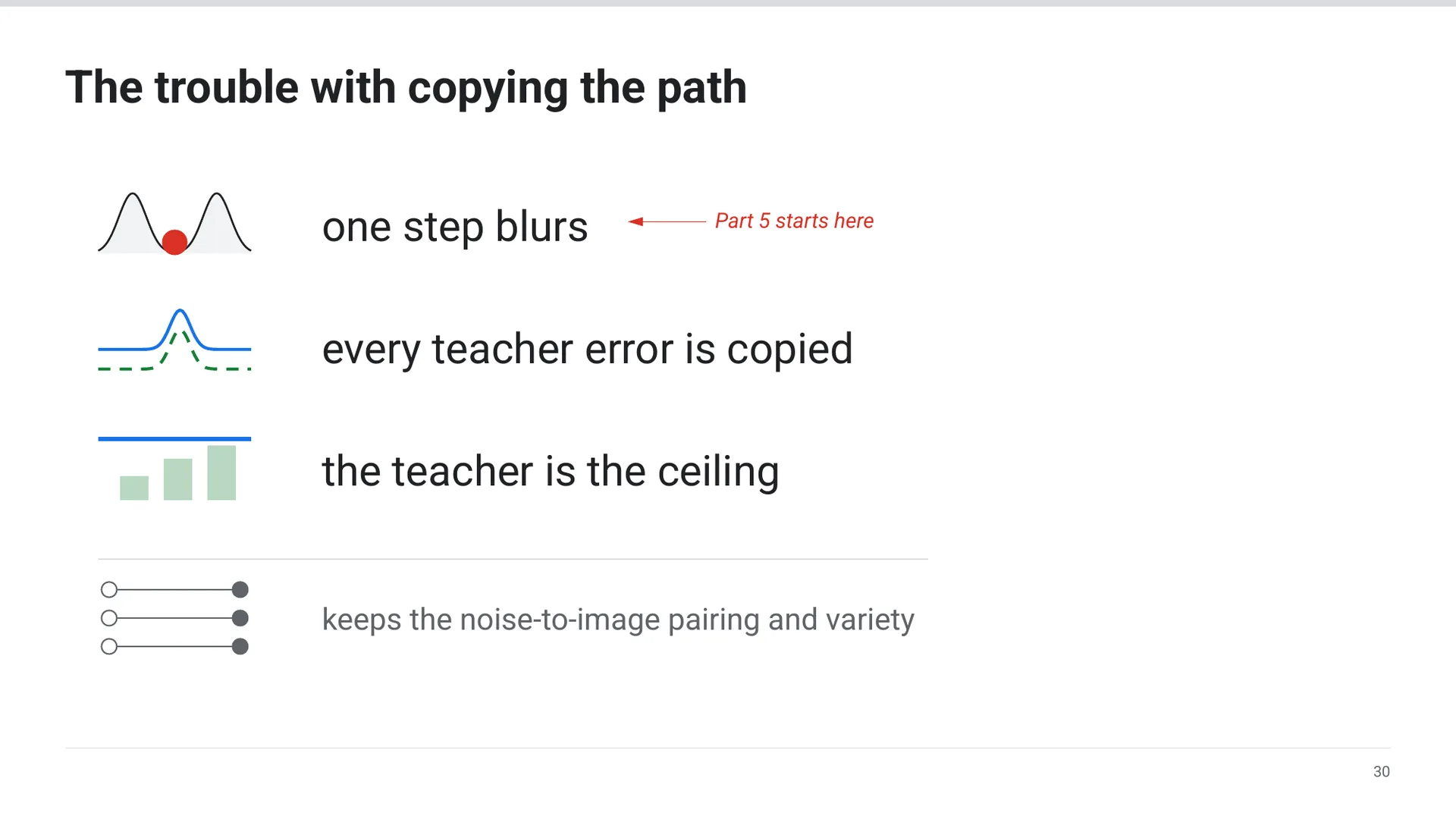
  30. The trouble with copying the path
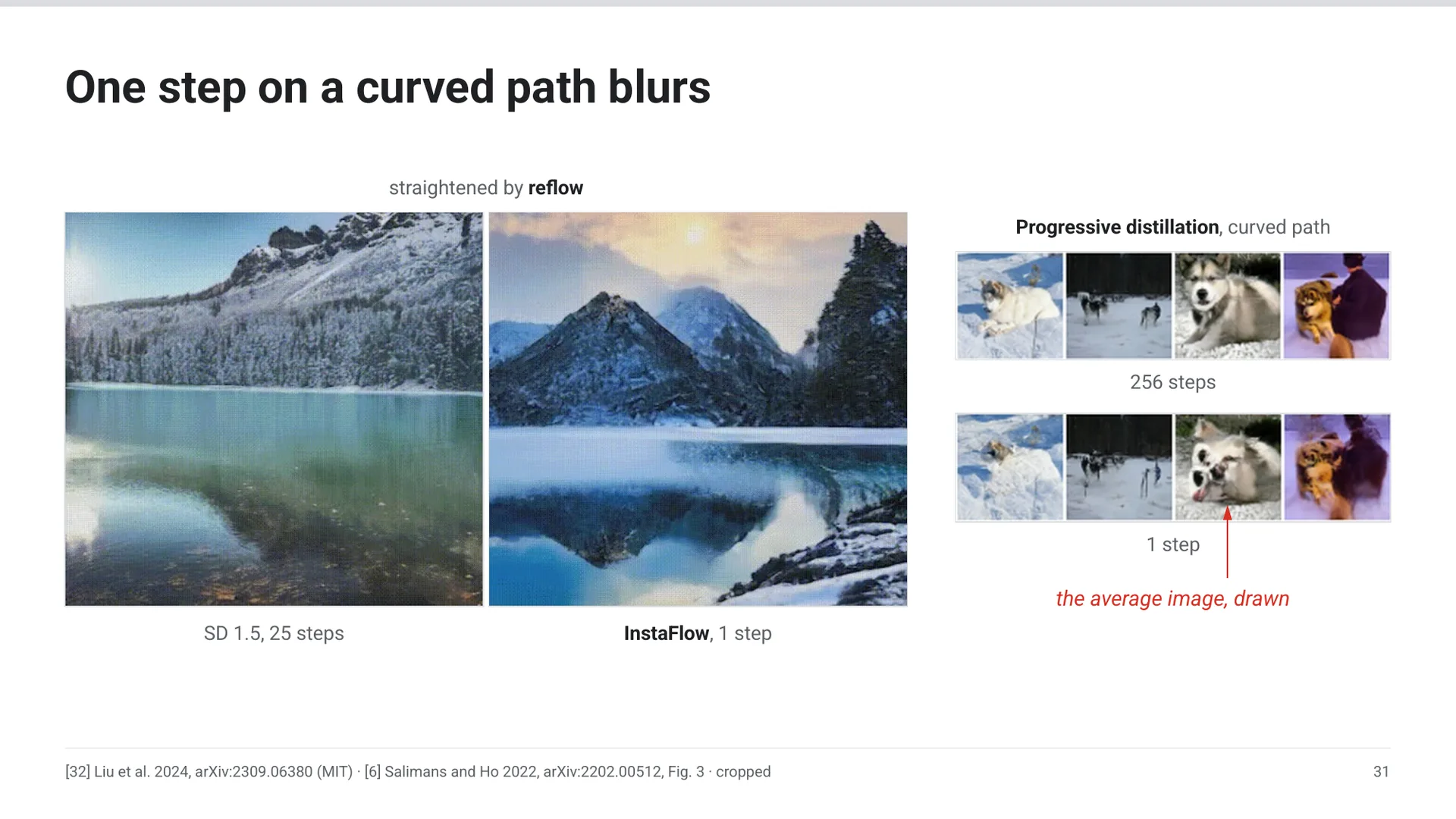
  31. One step on a curved path blurs
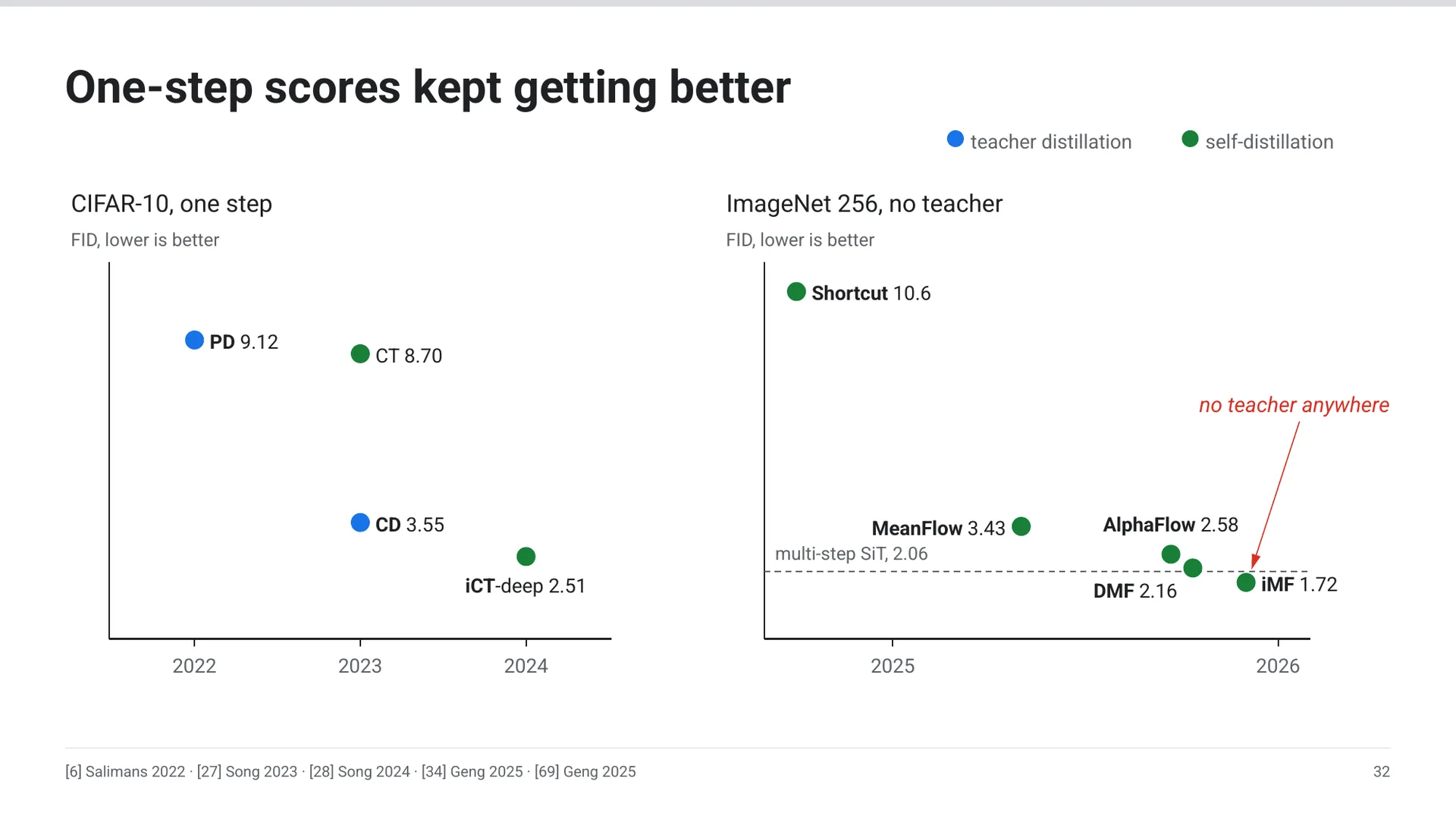
  32. One-step scores kept getting better
  33. Part 5: Match the teacher's distribution
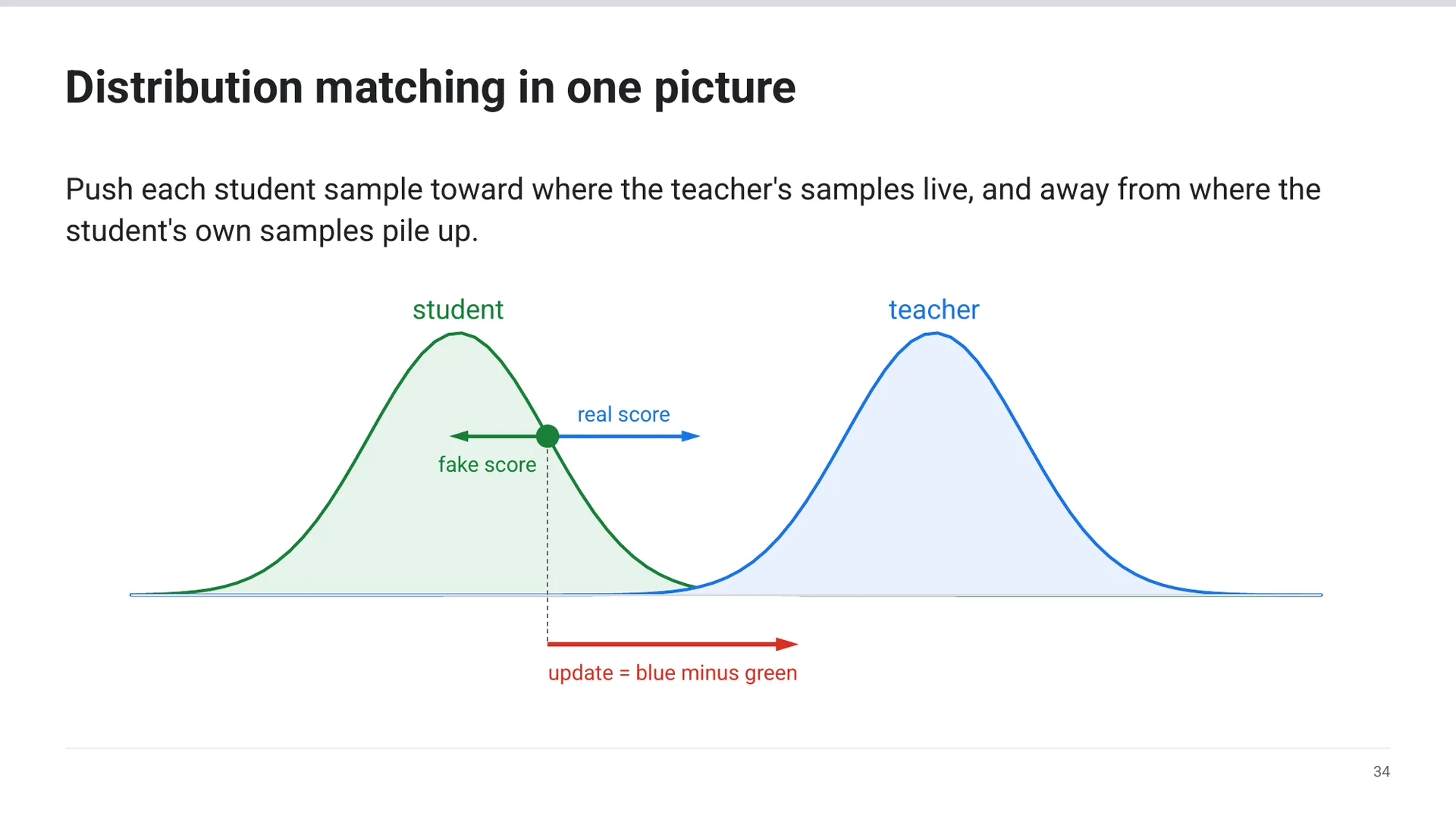
  34. Distribution matching in one picture
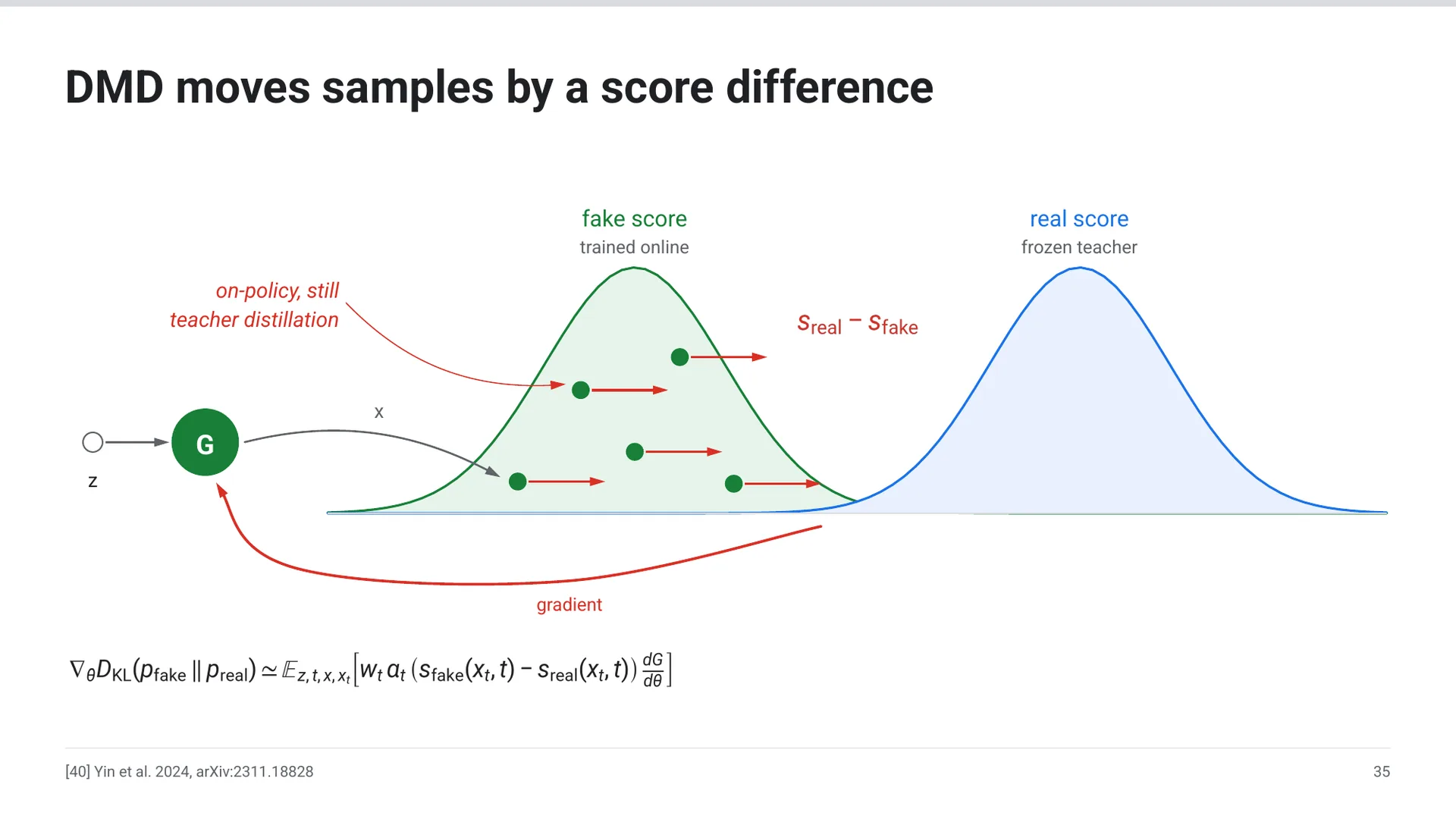
  35. DMD moves samples by a score difference
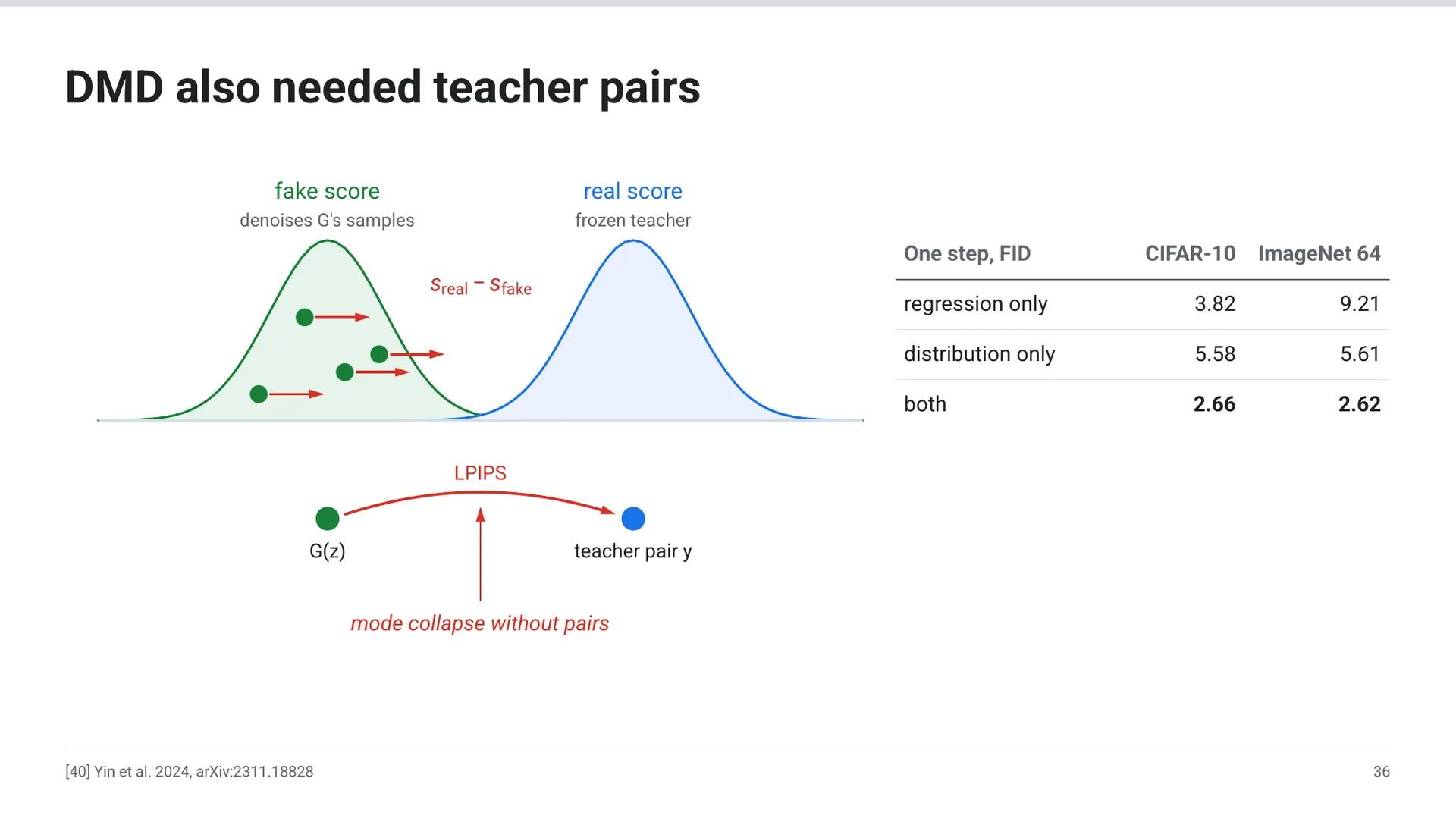
  36. DMD also needed teacher pairs
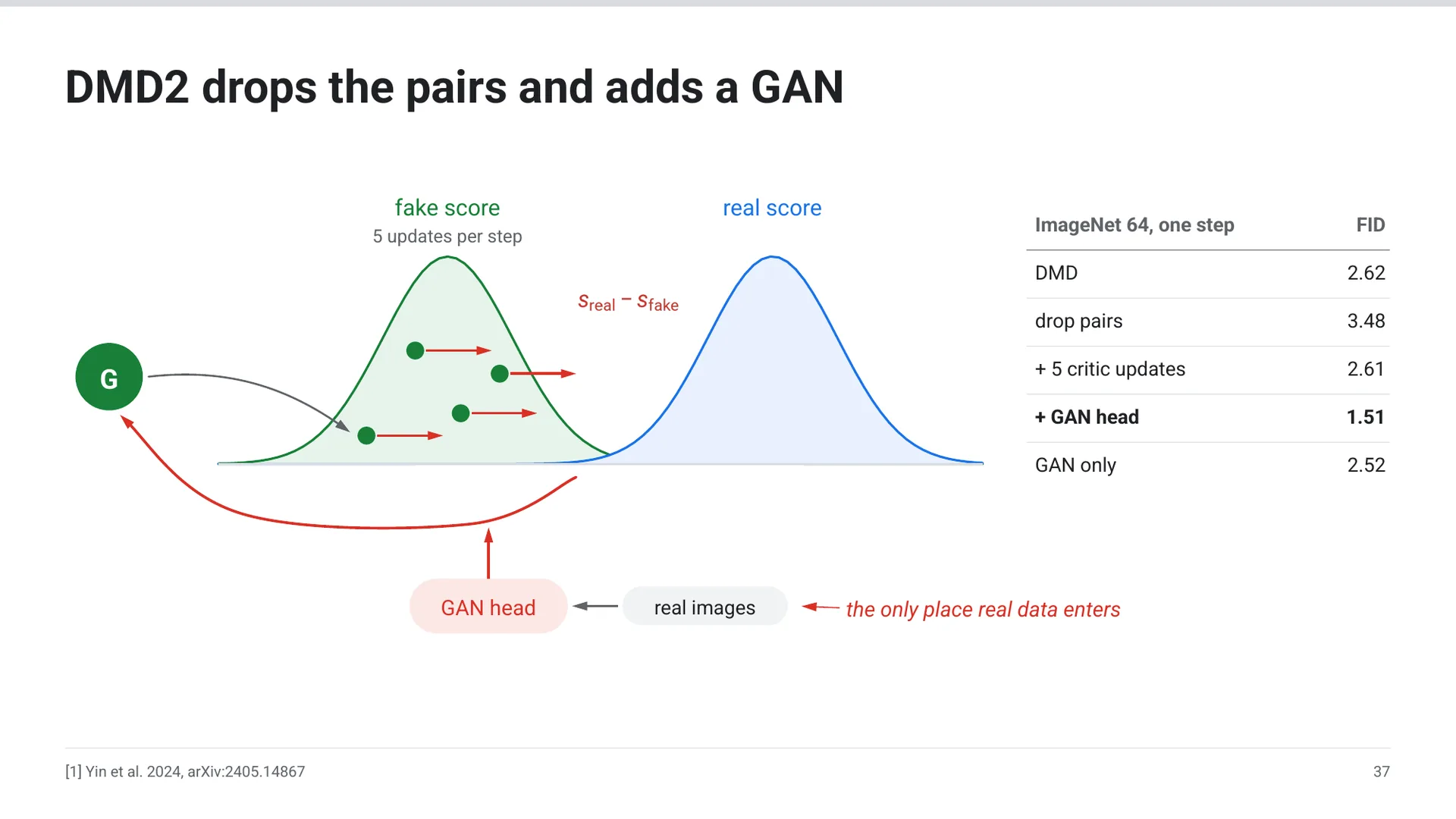
  37. DMD2 drops the pairs and adds a GAN
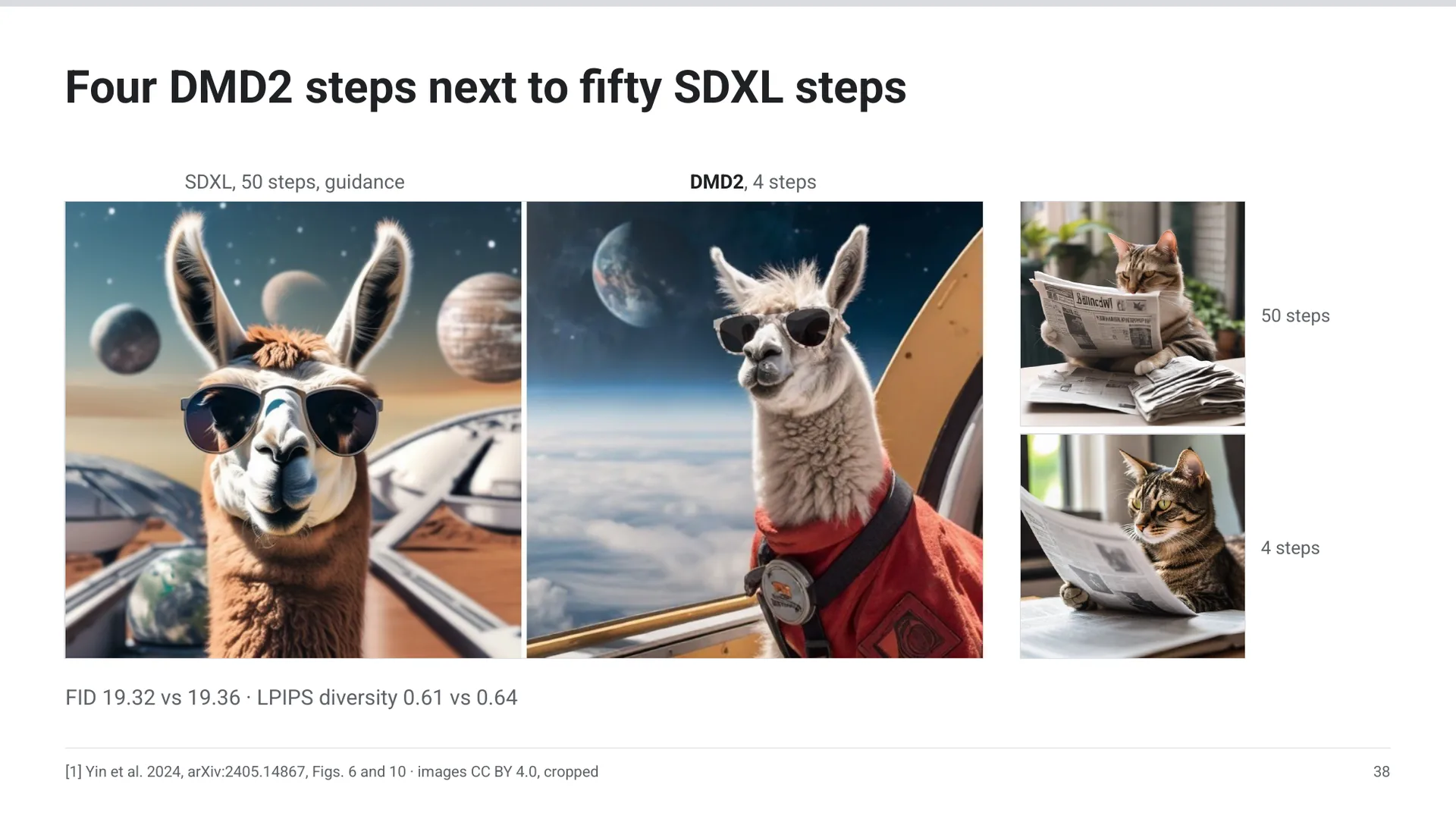
  38. Four DMD2 steps next to fifty SDXL steps
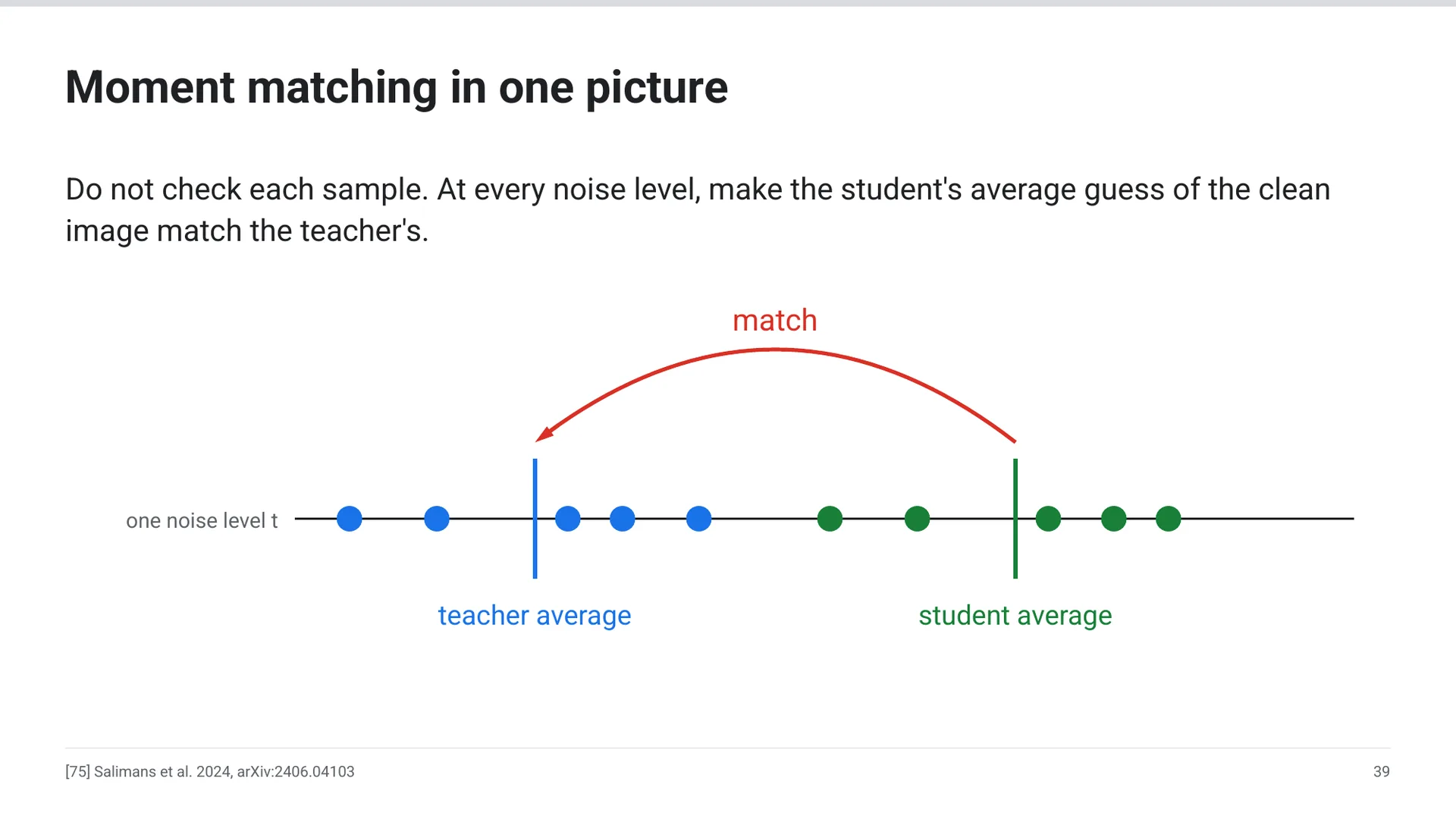
  39. Moment matching in one picture
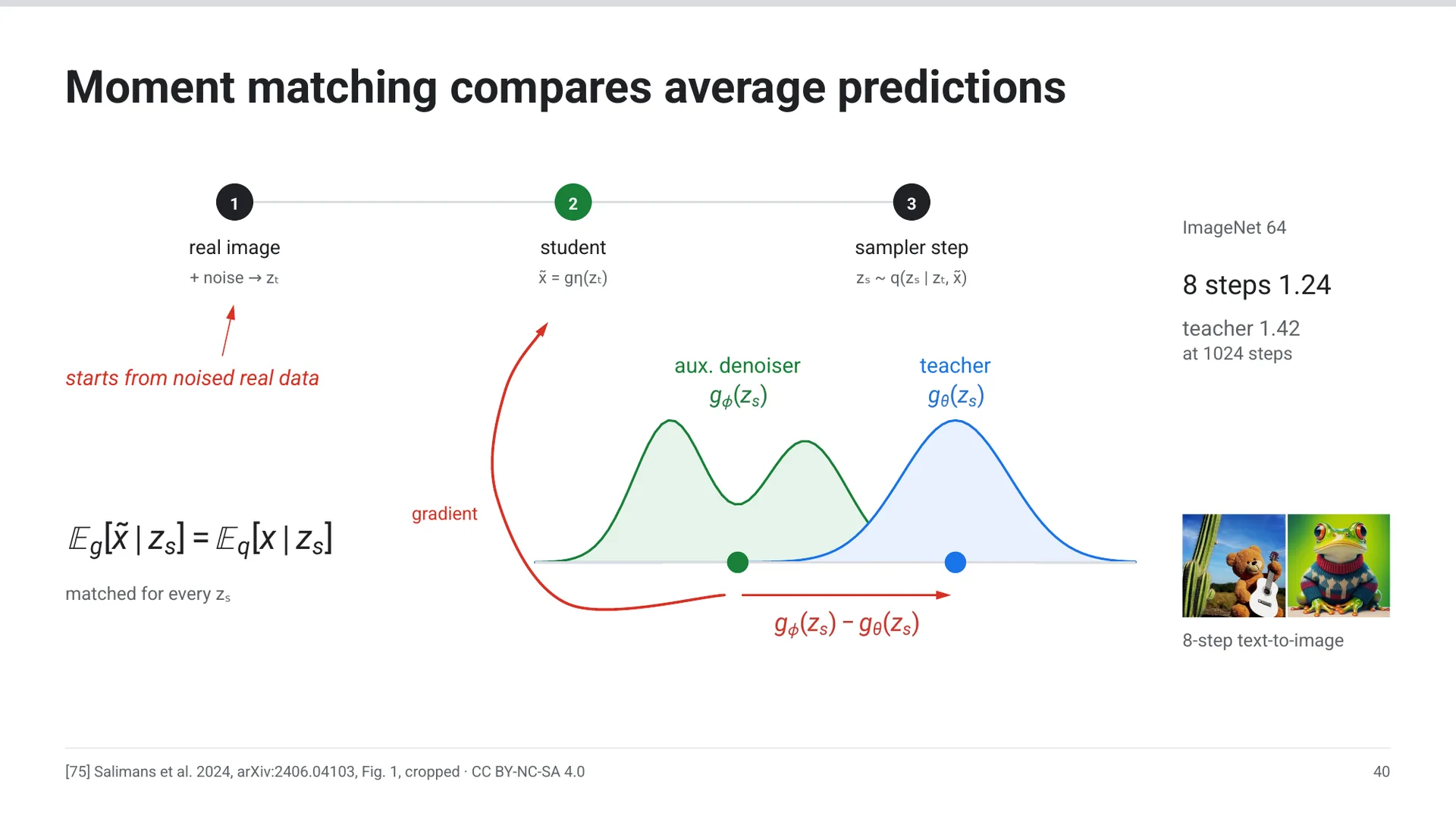
  40. Moment matching compares average predictions
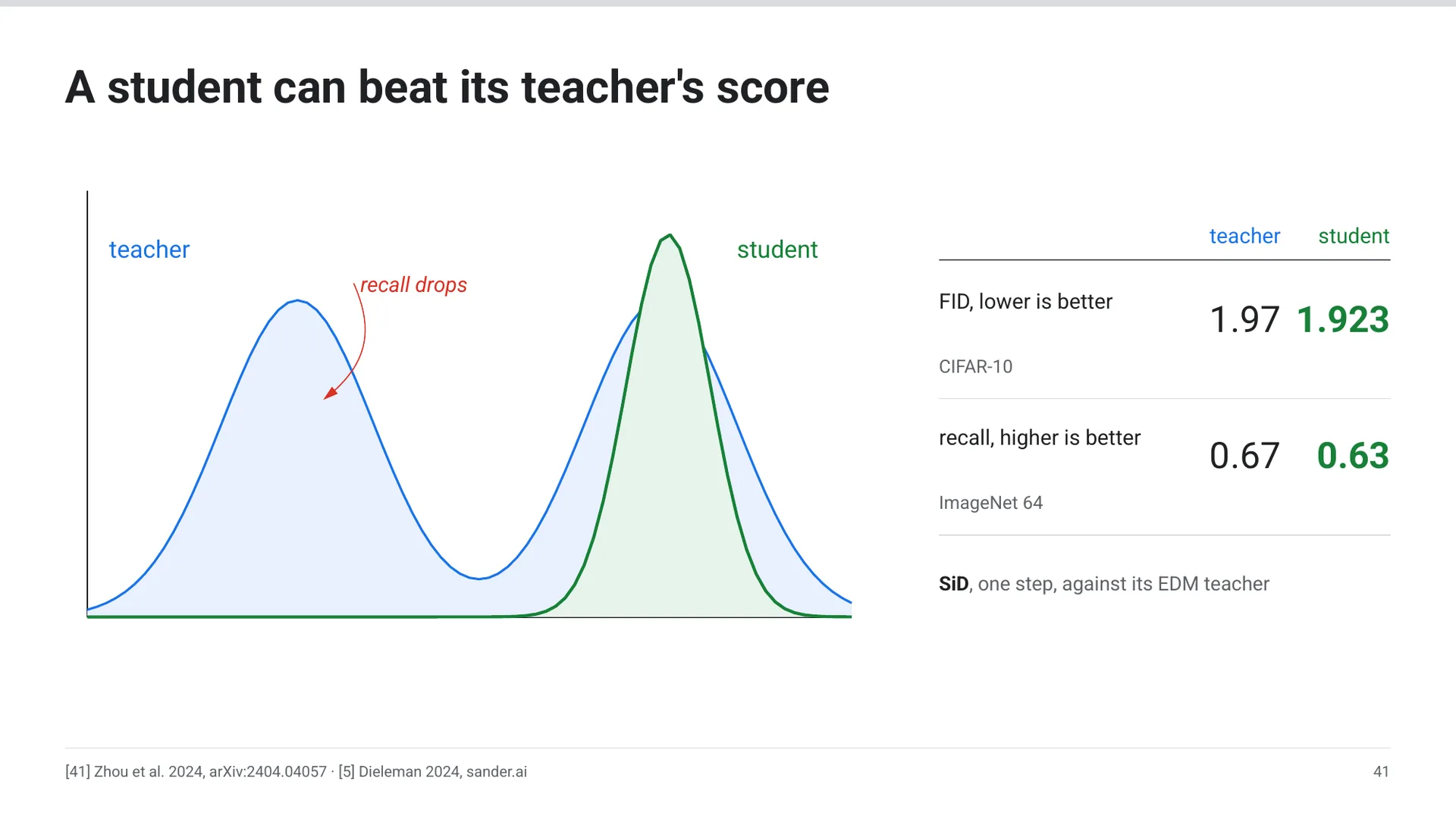
  41. A student can beat its teacher's score
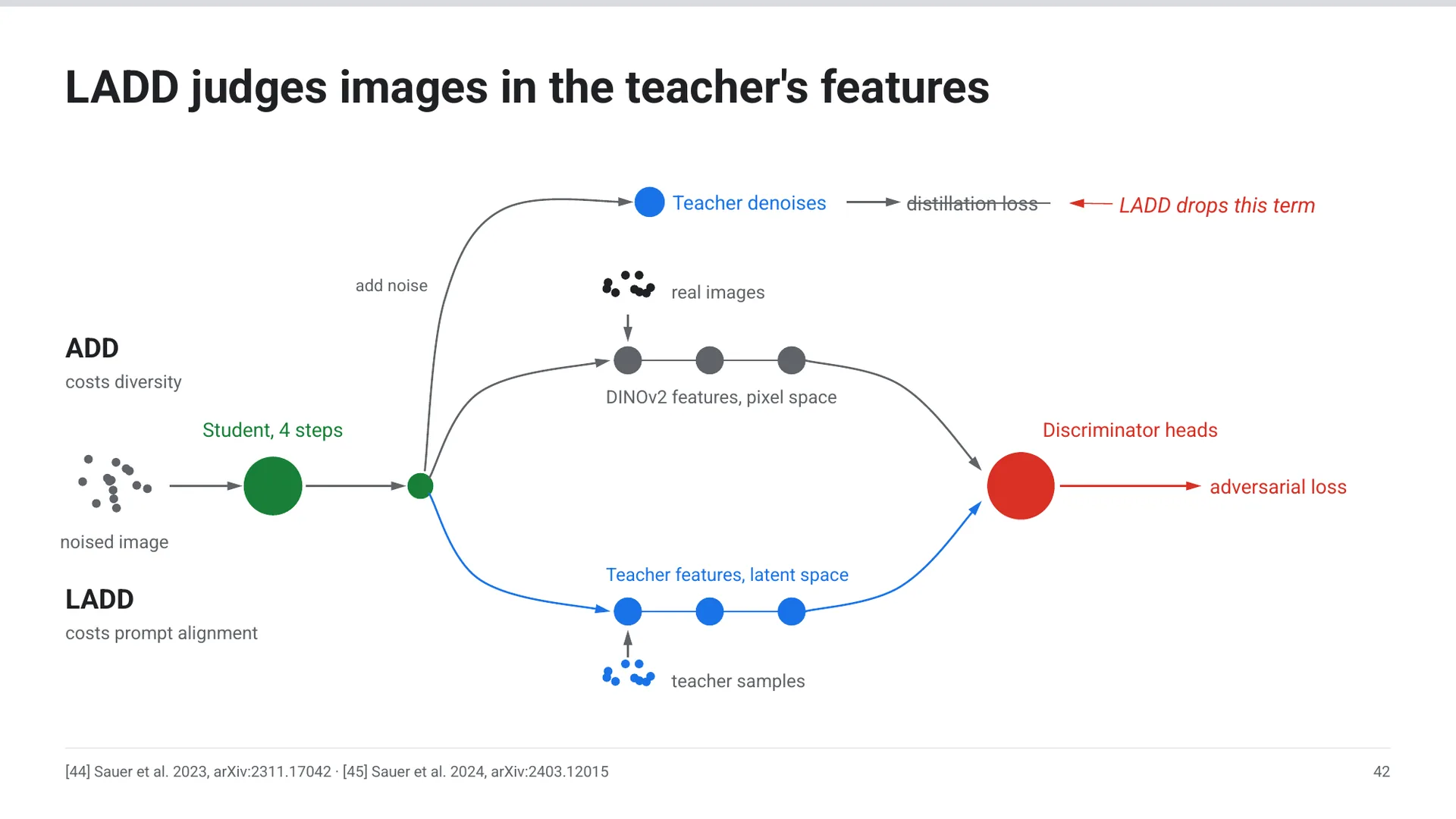
  42. LADD judges images in the teacher's features
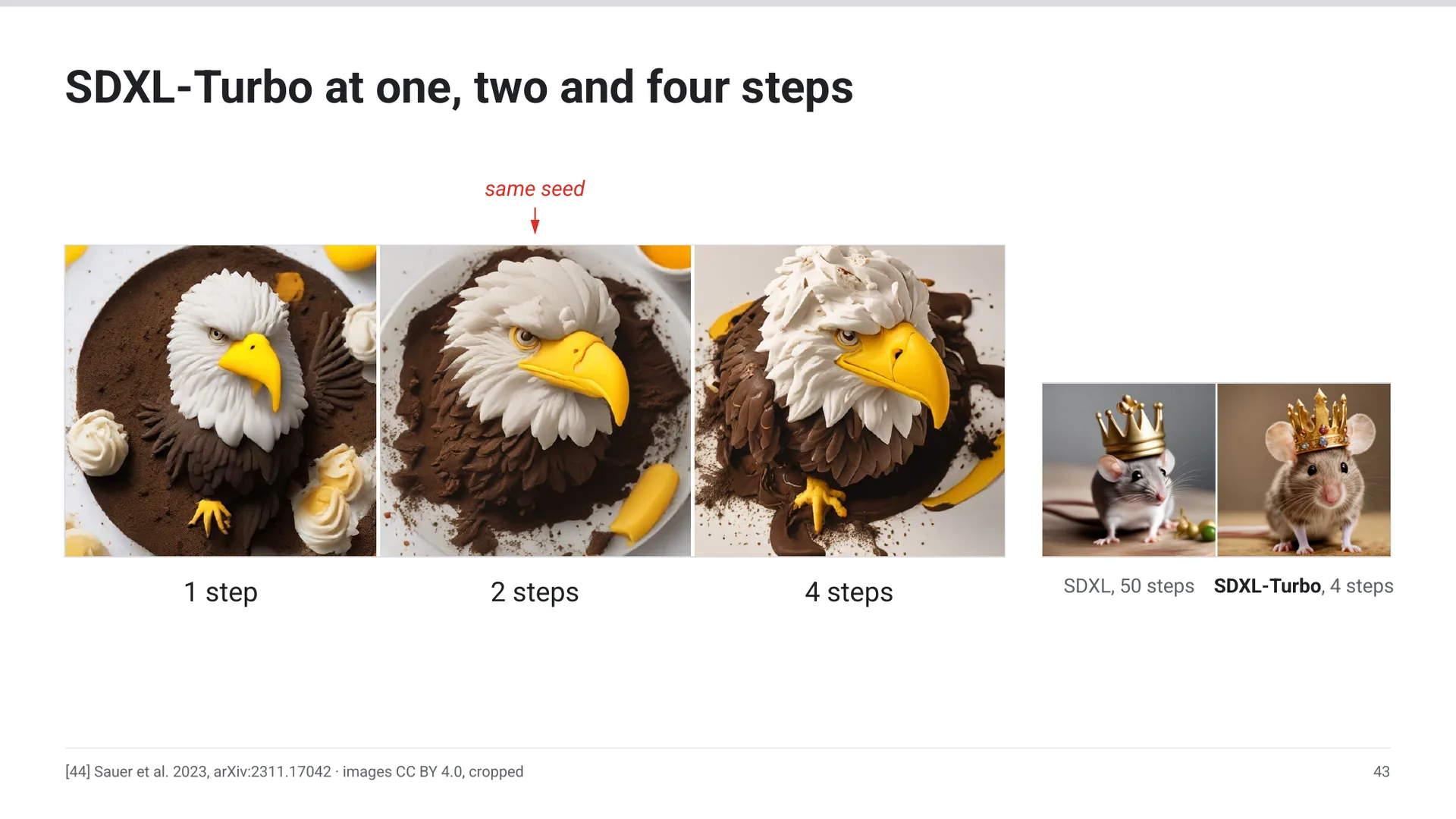
  43. SDXL-Turbo at one, two and four steps
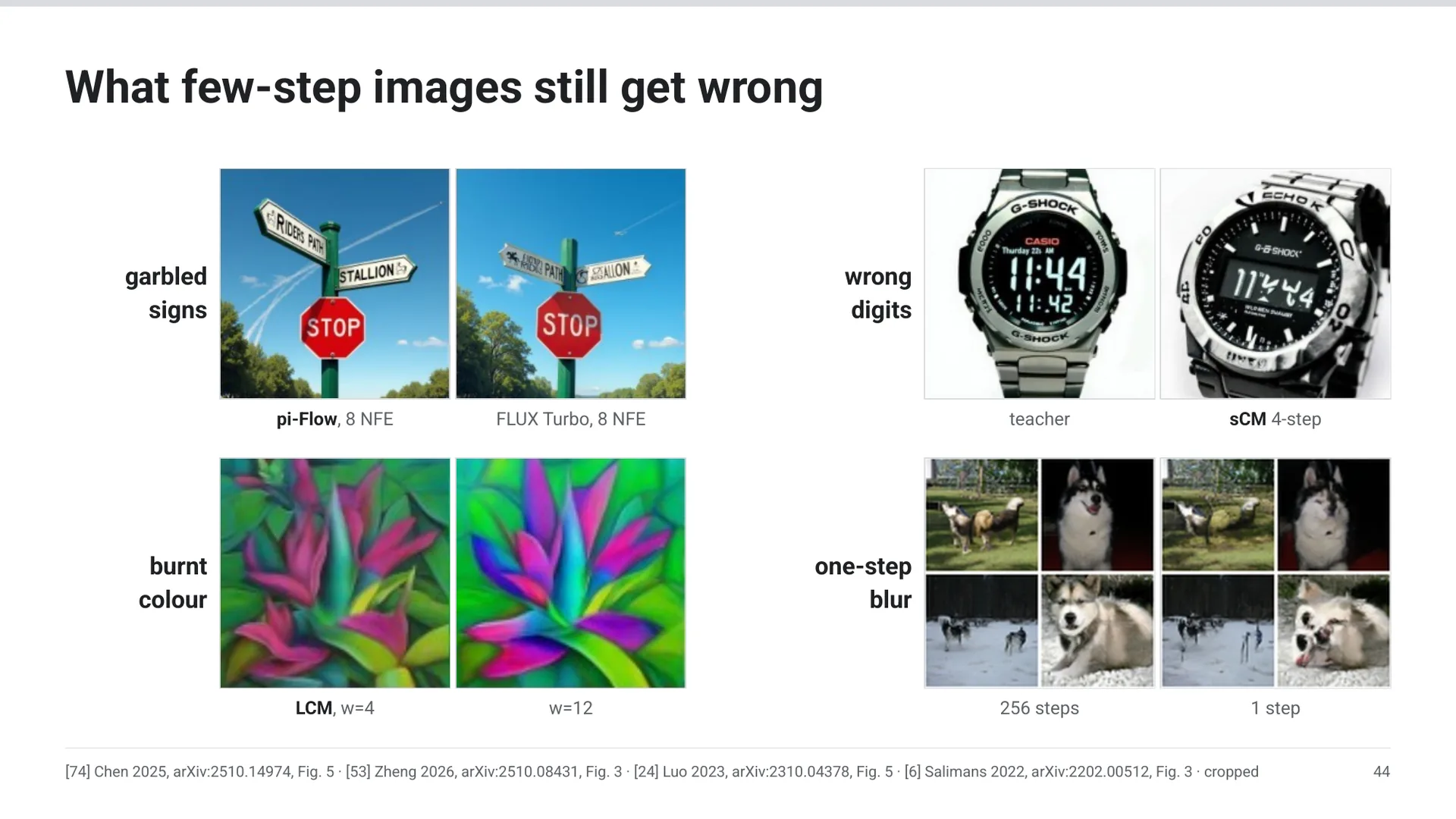
  44. What few-step images still get wrong
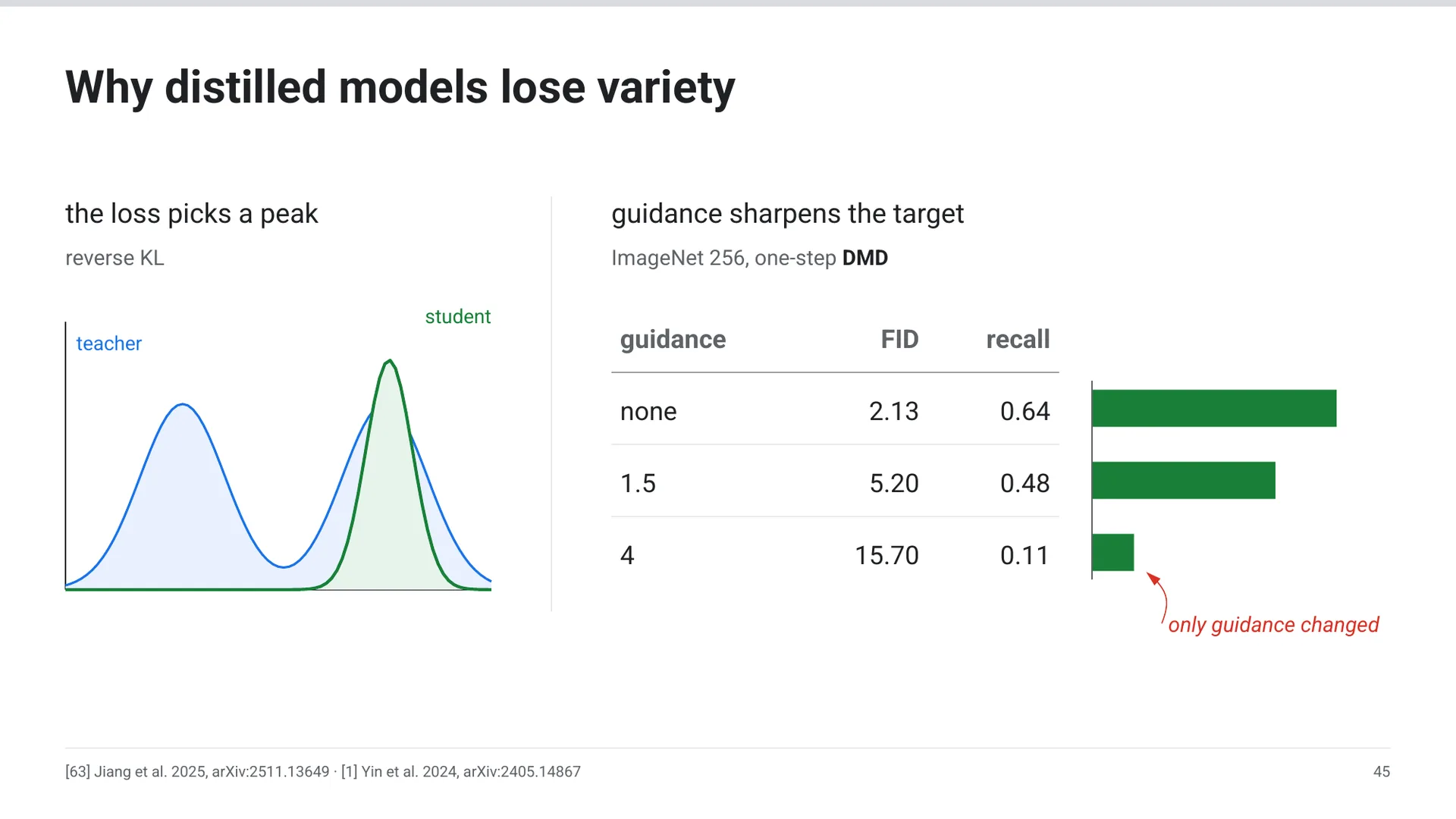
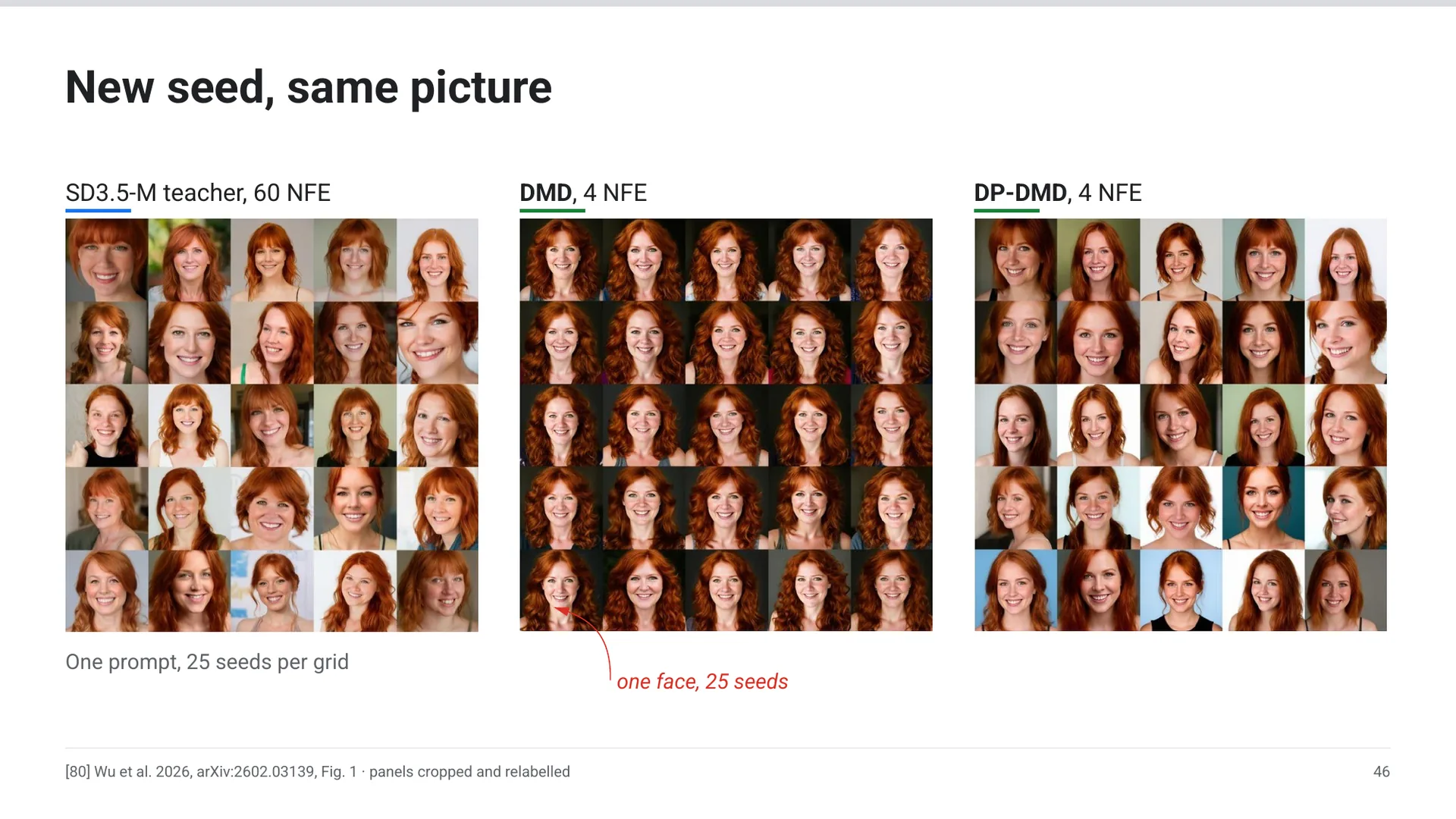
  45. Why distilled models lose variety
  46. New seed, same picture
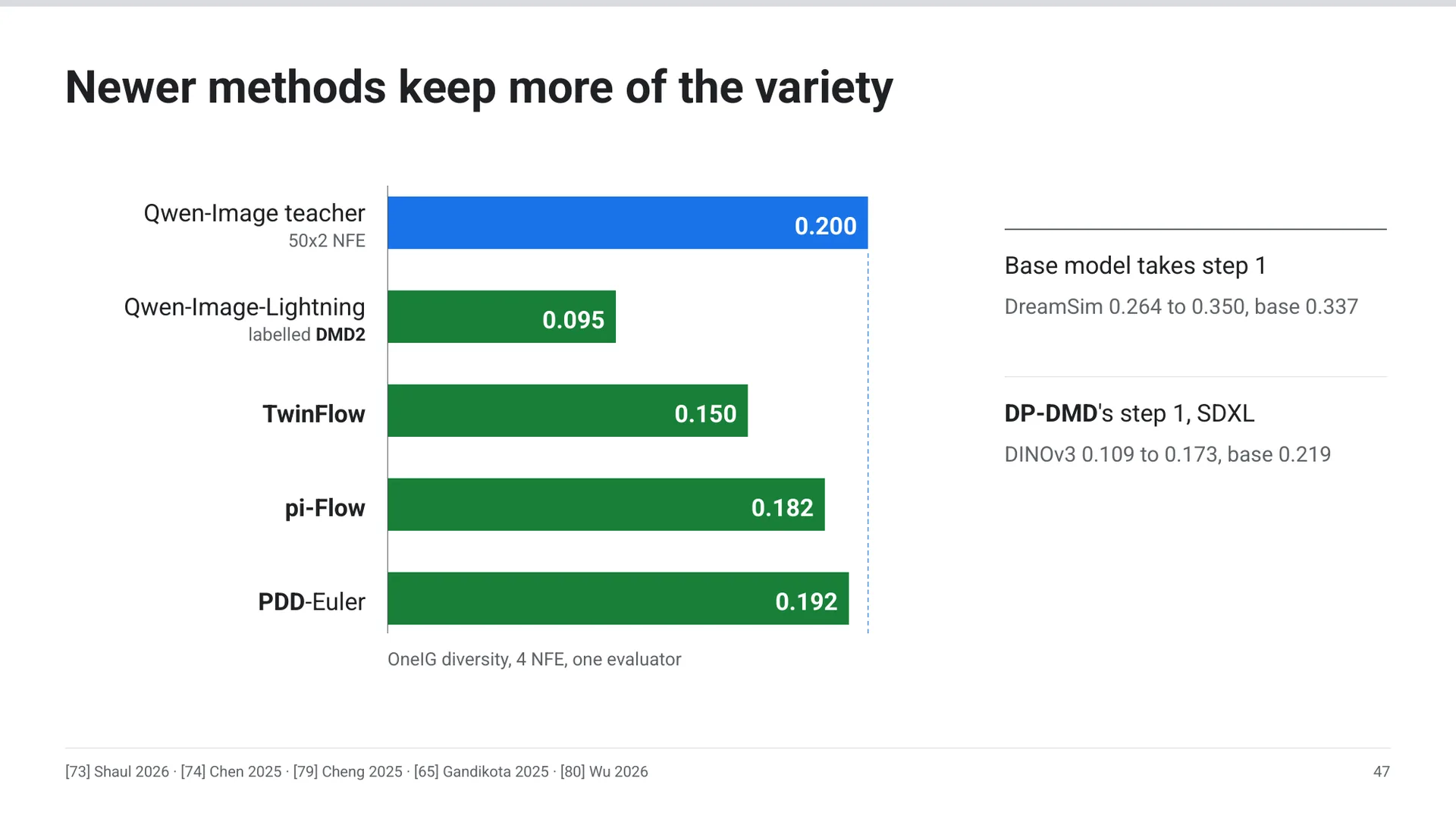
  47. Newer methods keep more of the variety
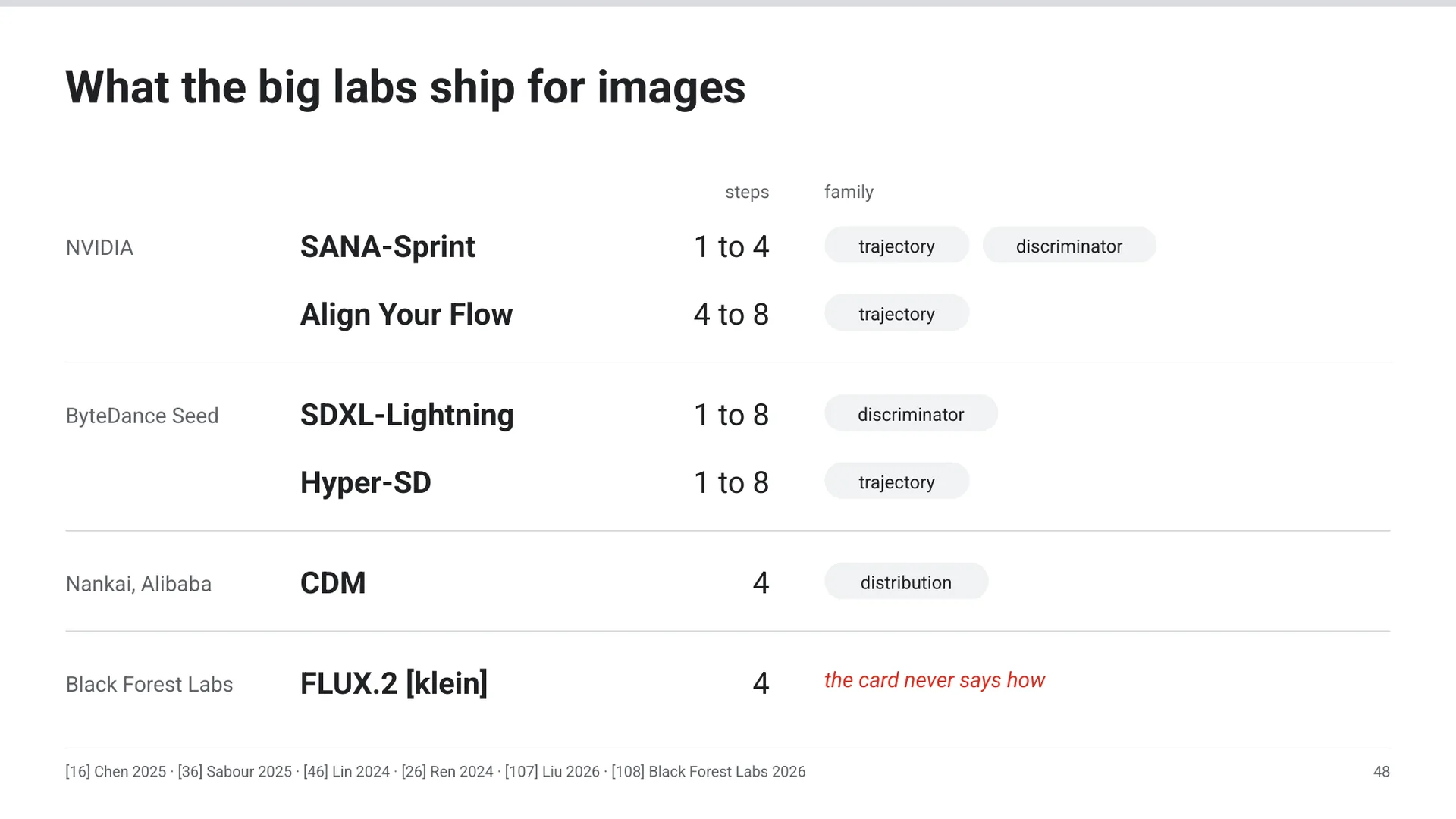
  48. What the big labs ship for images
  49. Part 6: Distilling video models
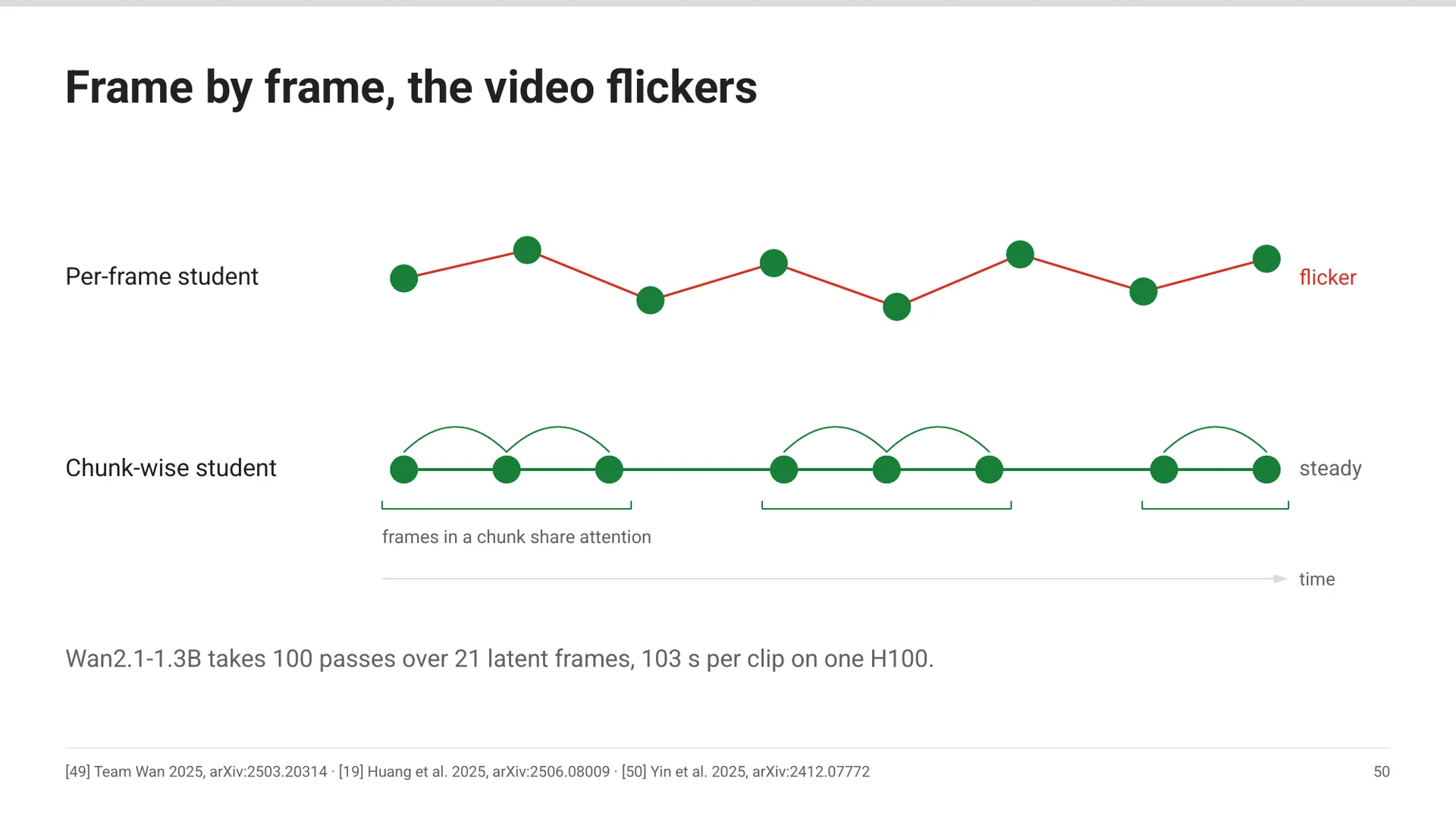
  50. Frame by frame, the video flickers
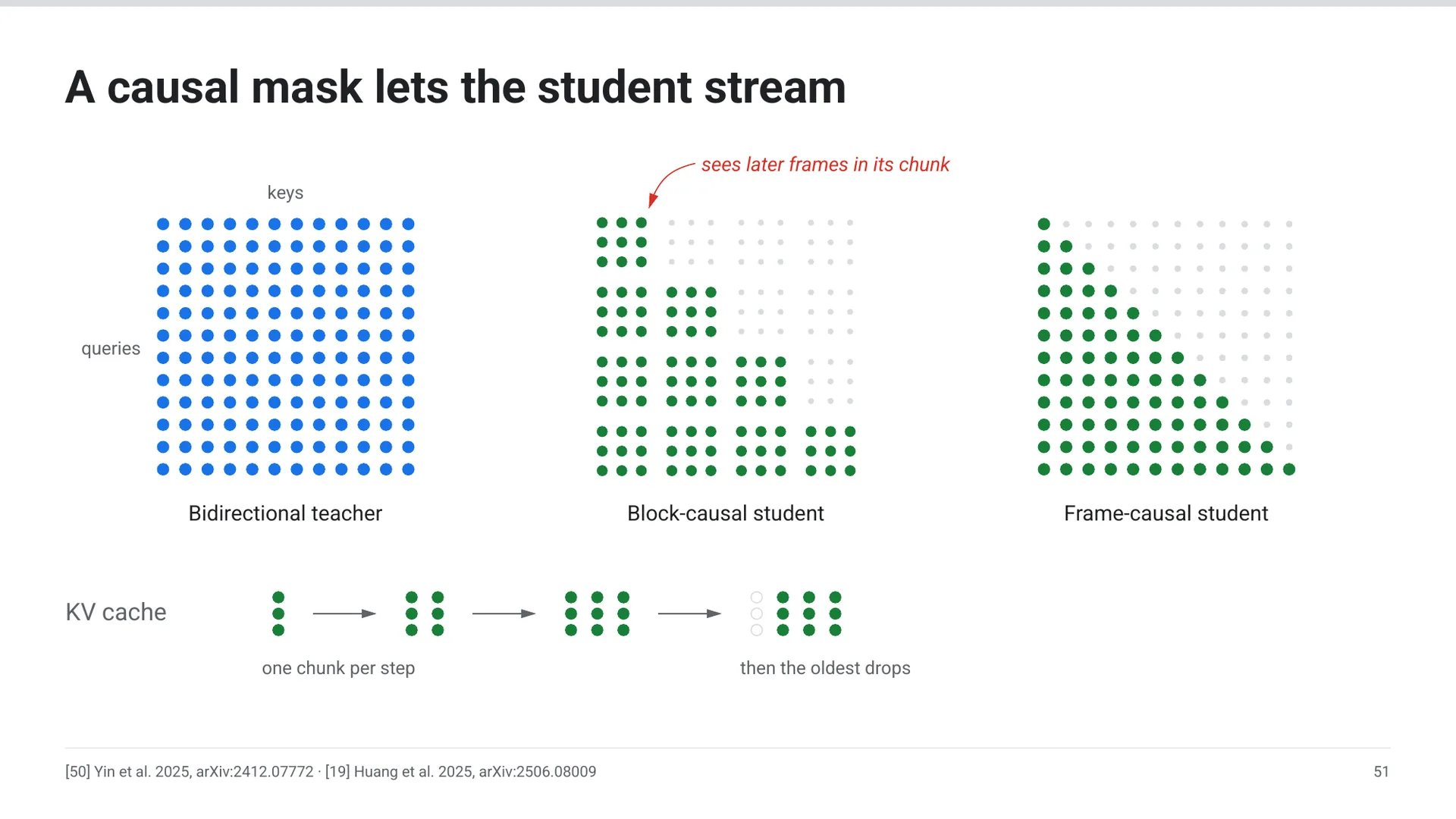
  51. A causal mask lets the student stream
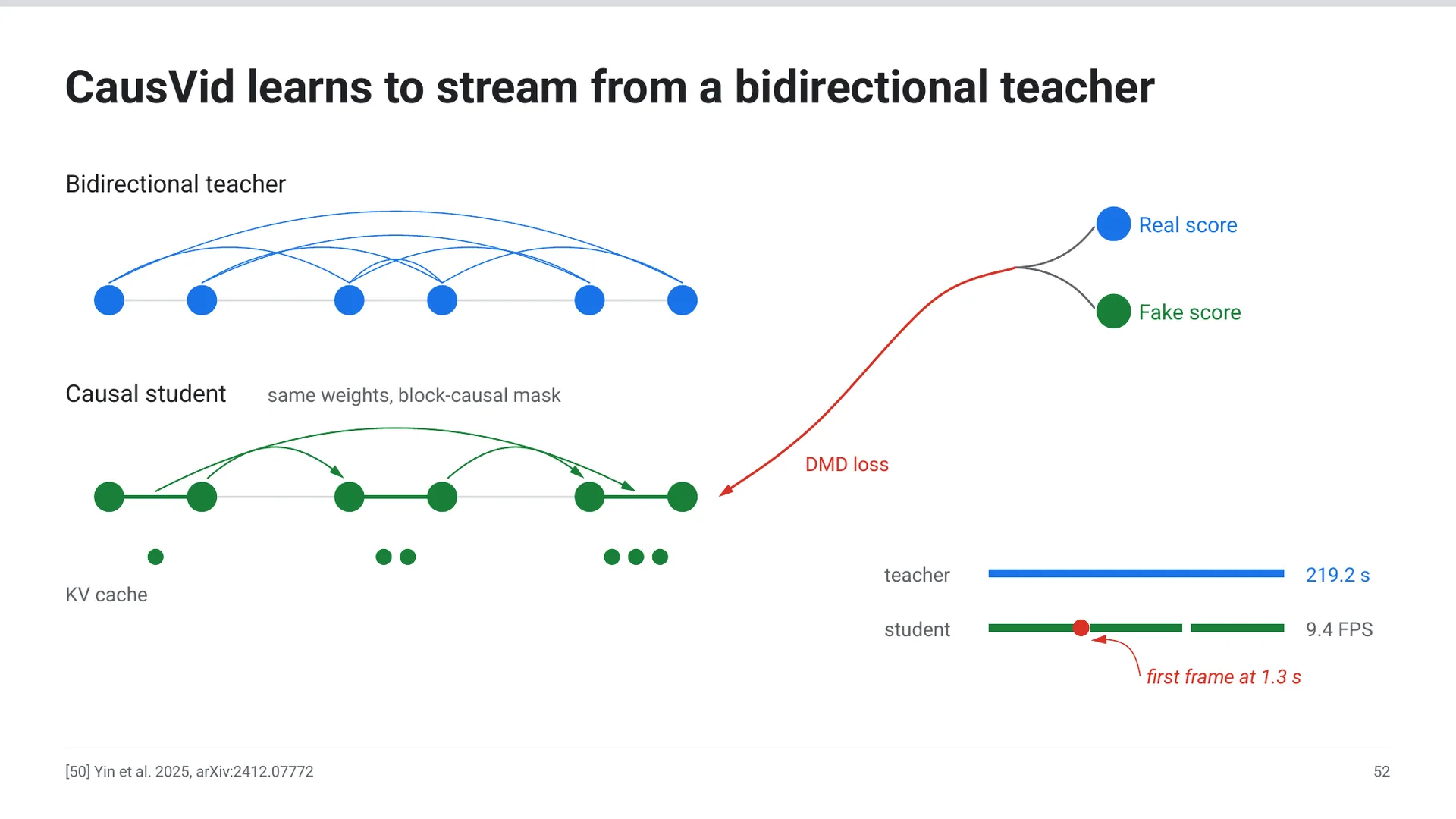
  52. CausVid learns to stream from a bidirectional teacher
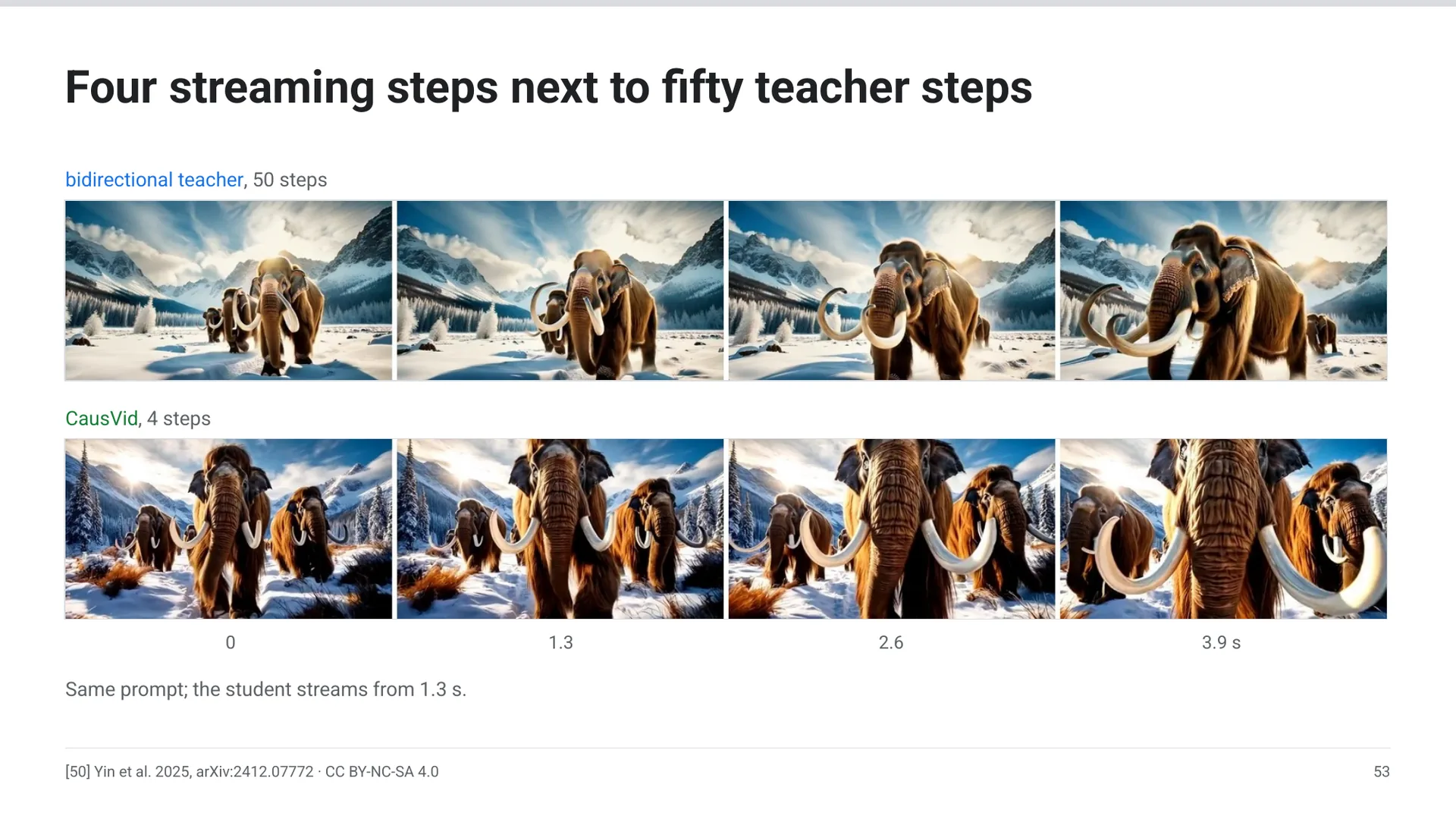
  53. Four streaming steps next to fifty teacher steps
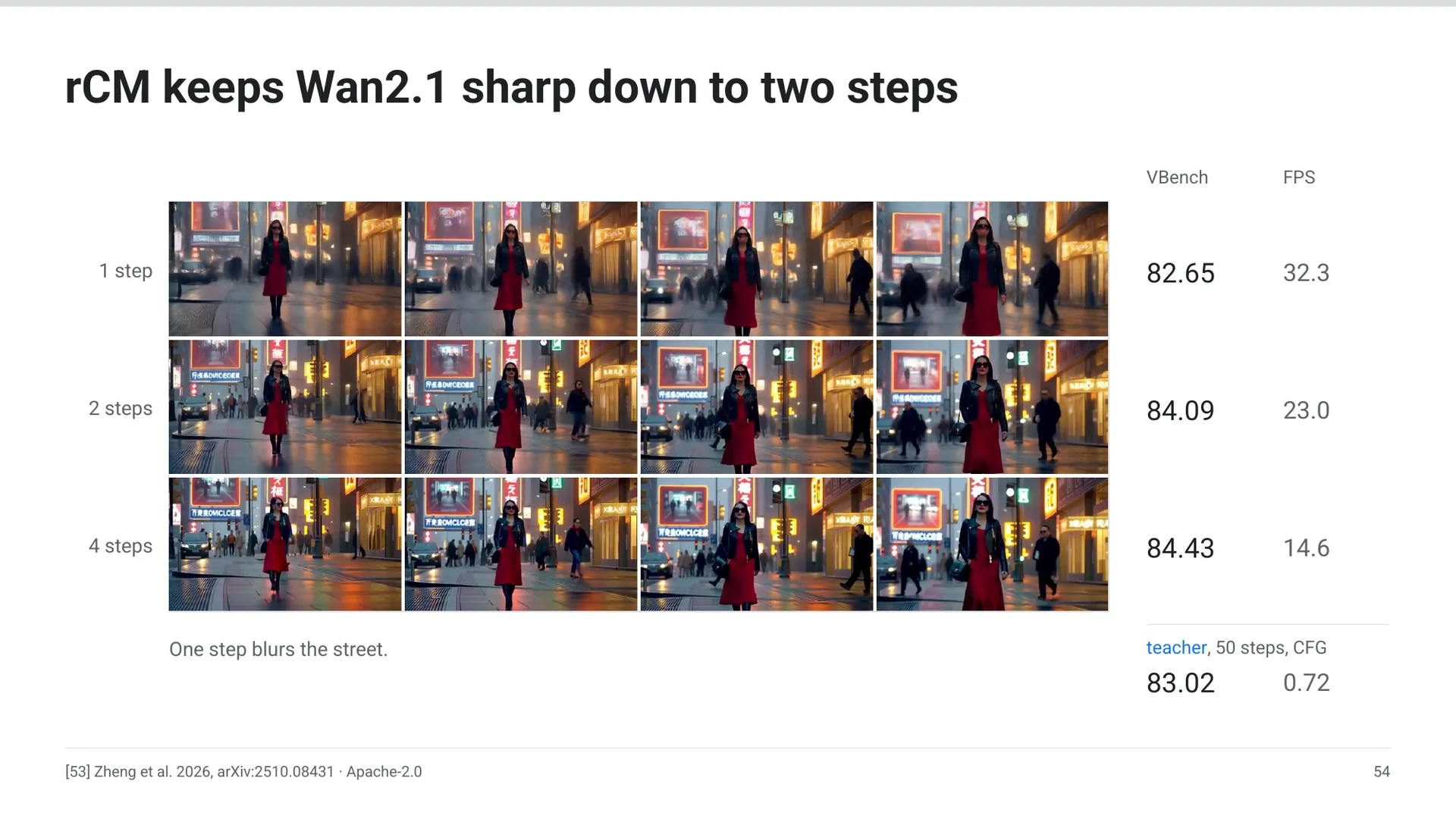
  54. rCM keeps Wan2.1 sharp down to two steps
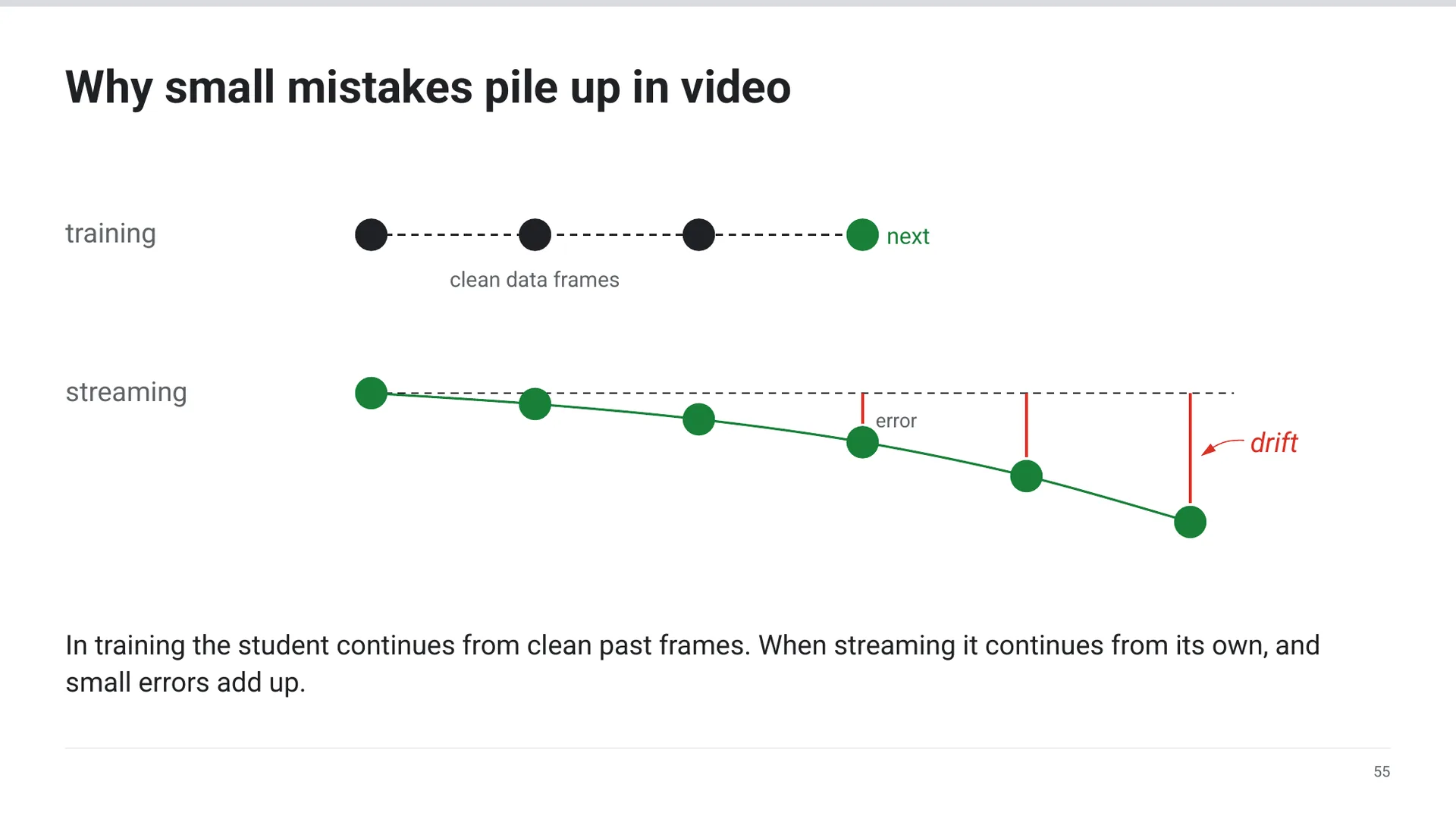
  55. Why small mistakes pile up in video
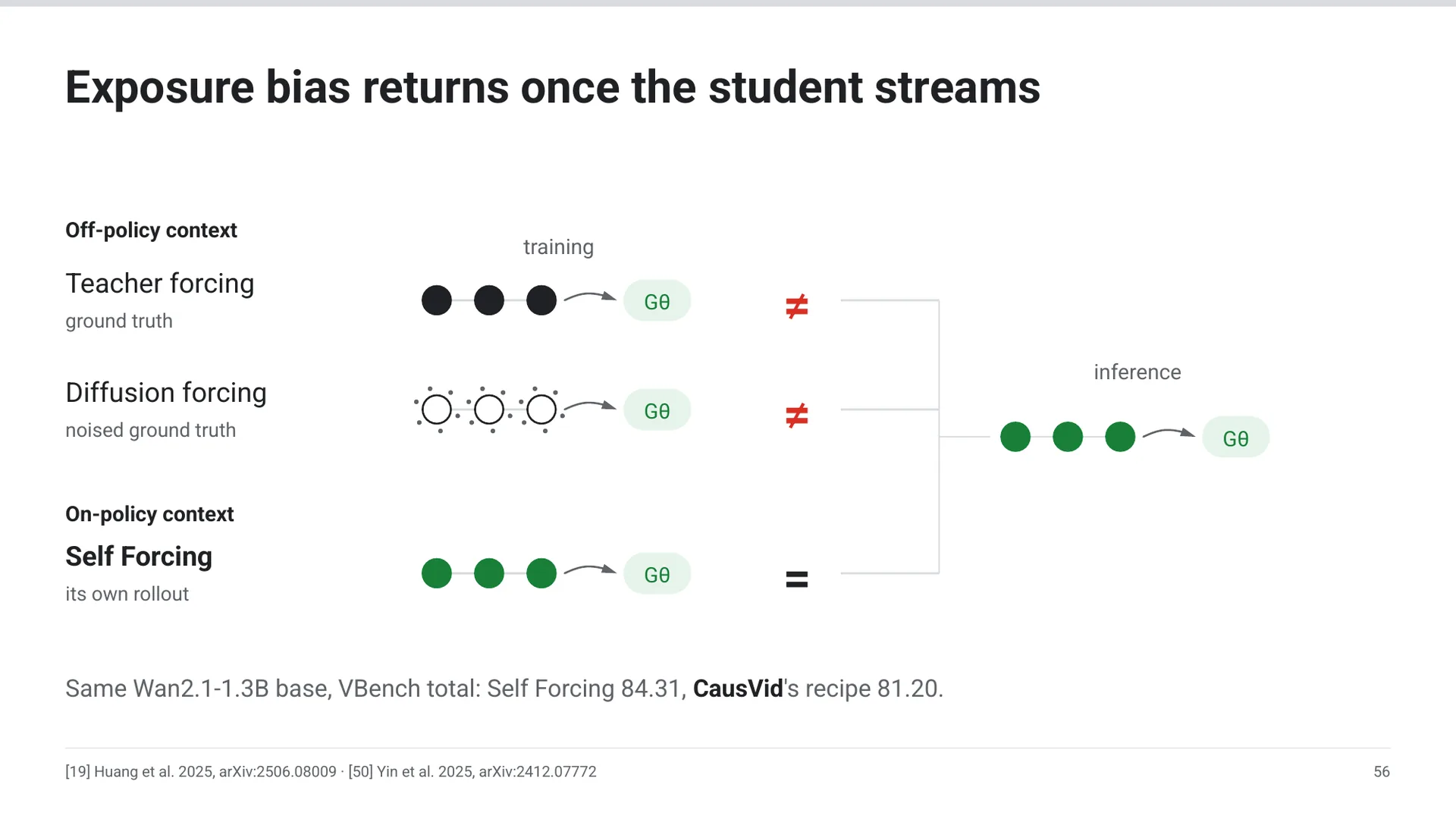
  56. Exposure bias returns once the student streams
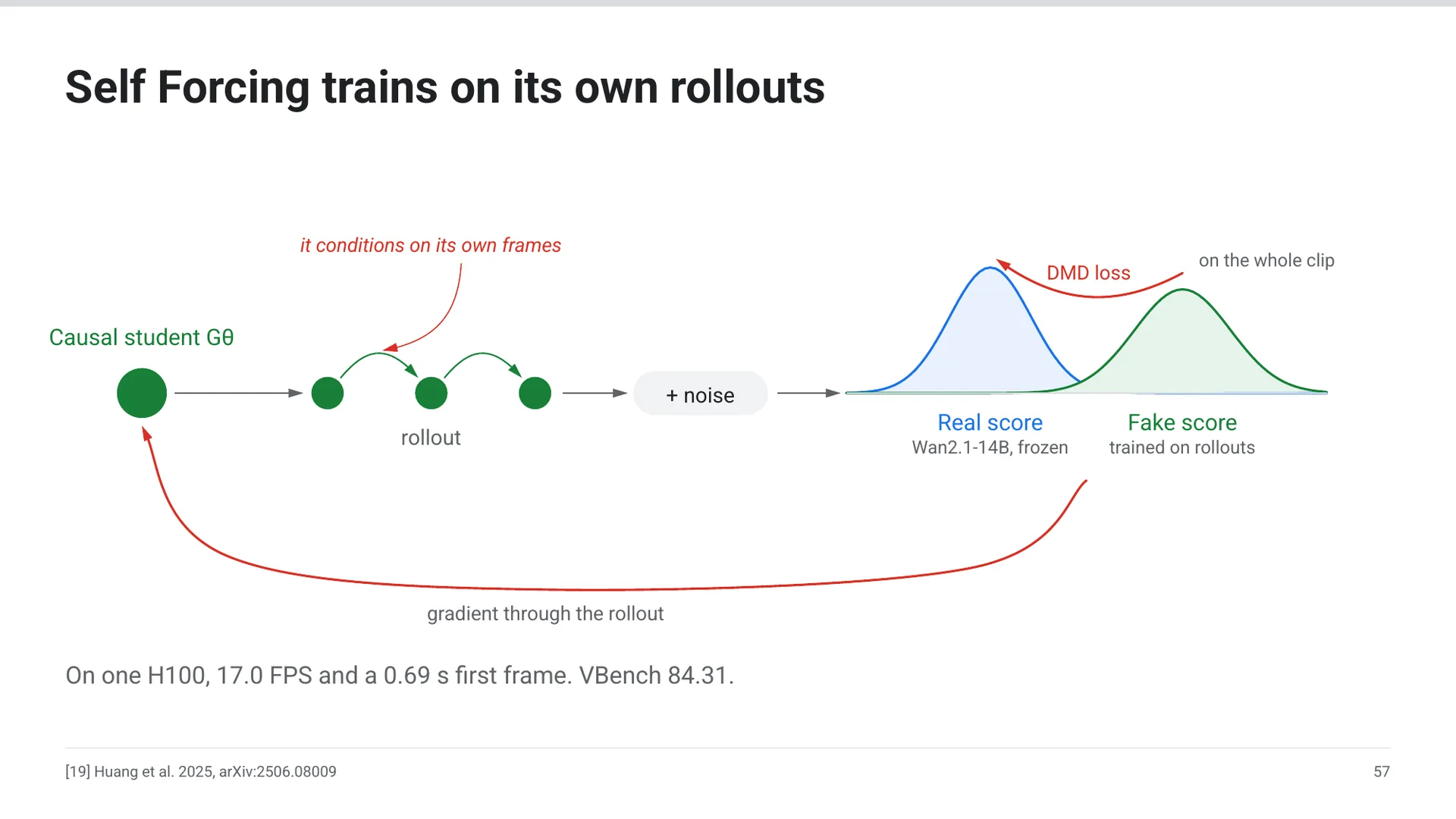
  57. Self Forcing trains on its own rollouts
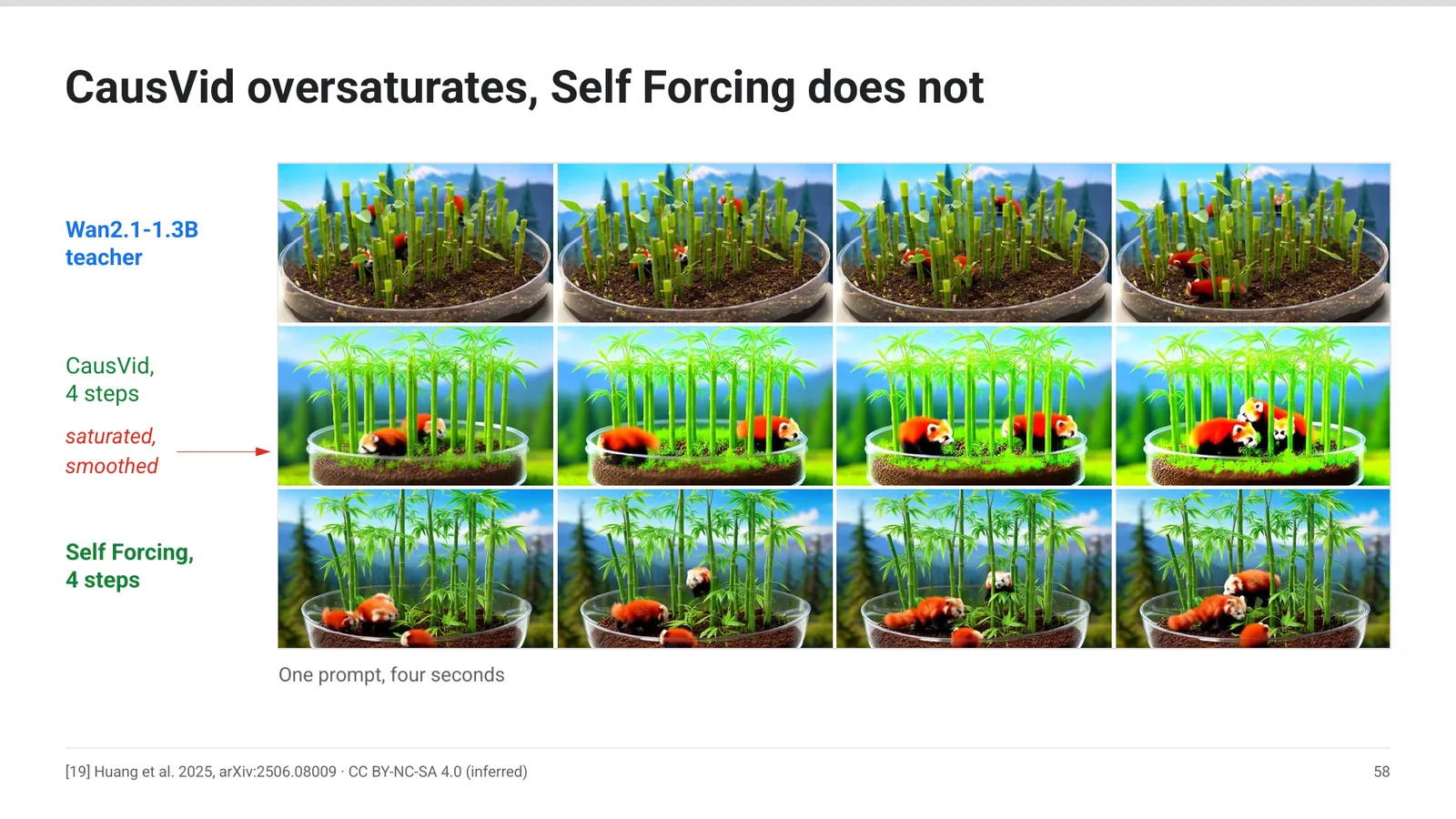
  58. CausVid oversaturates, Self Forcing does not
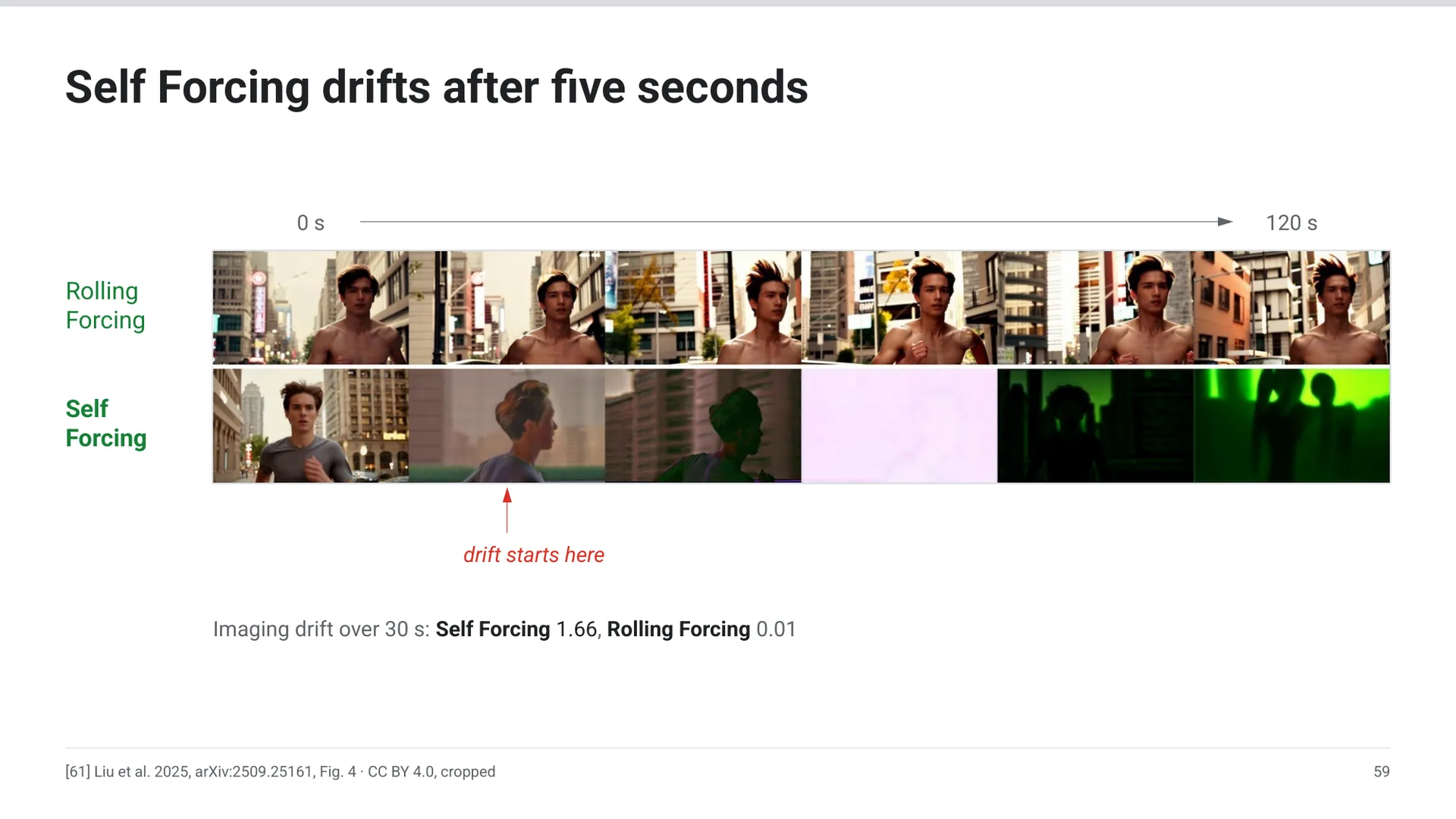
  59. Self Forcing drifts after five seconds
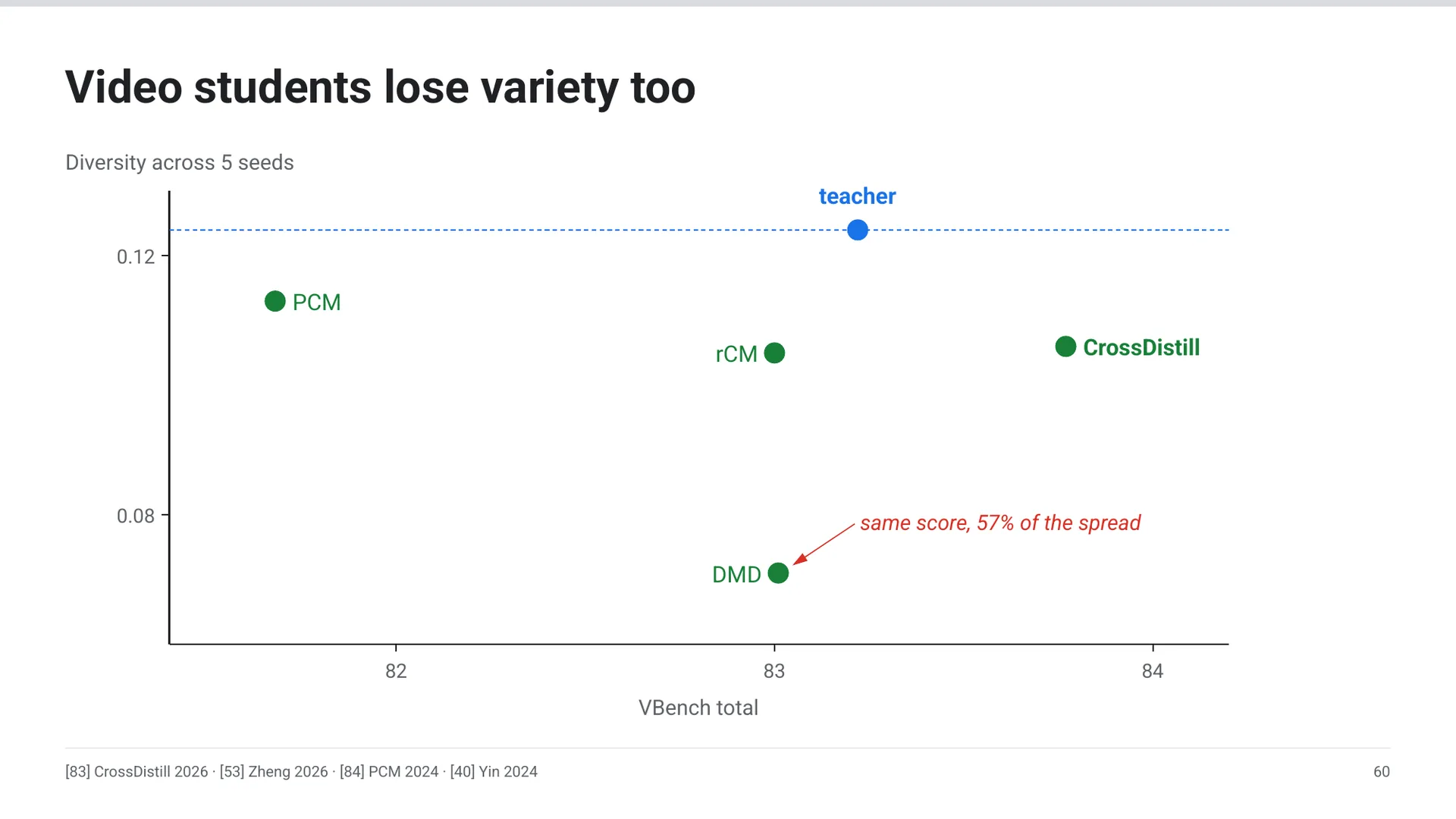
  60. Video students lose variety too
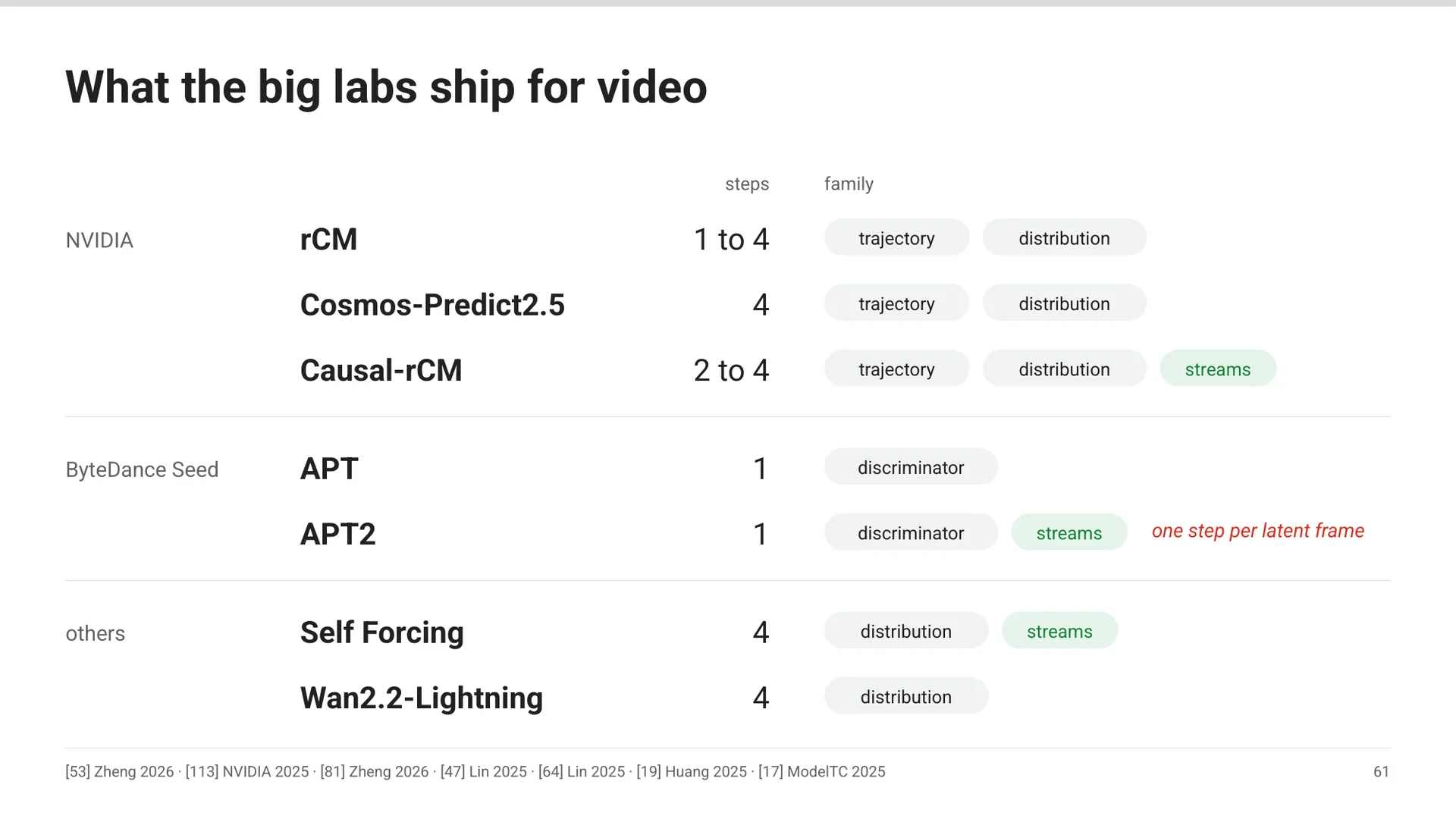
  61. What the big labs ship for video
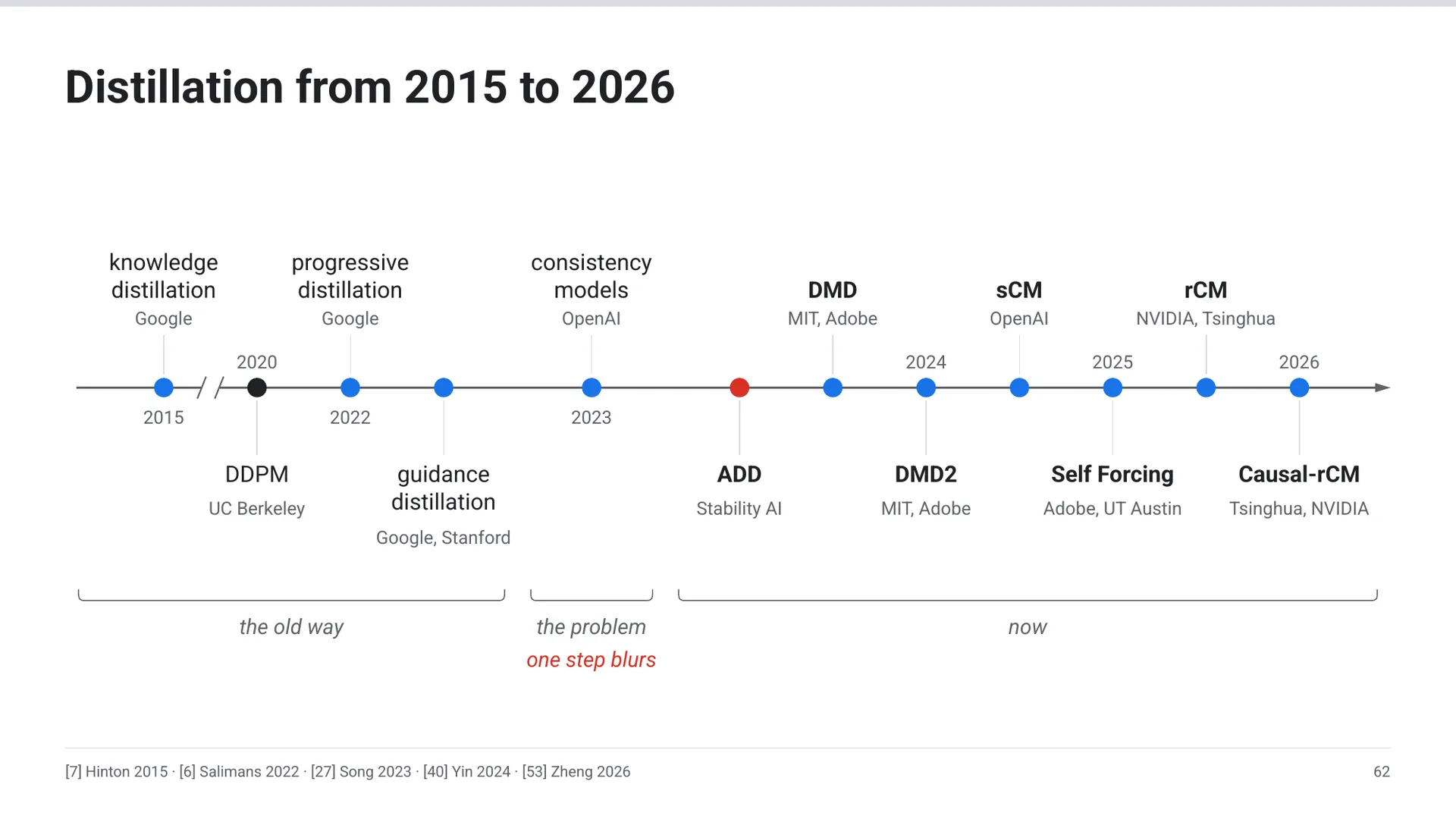
  62. Distillation from 2015 to 2026
  63. Part 7: What still breaks
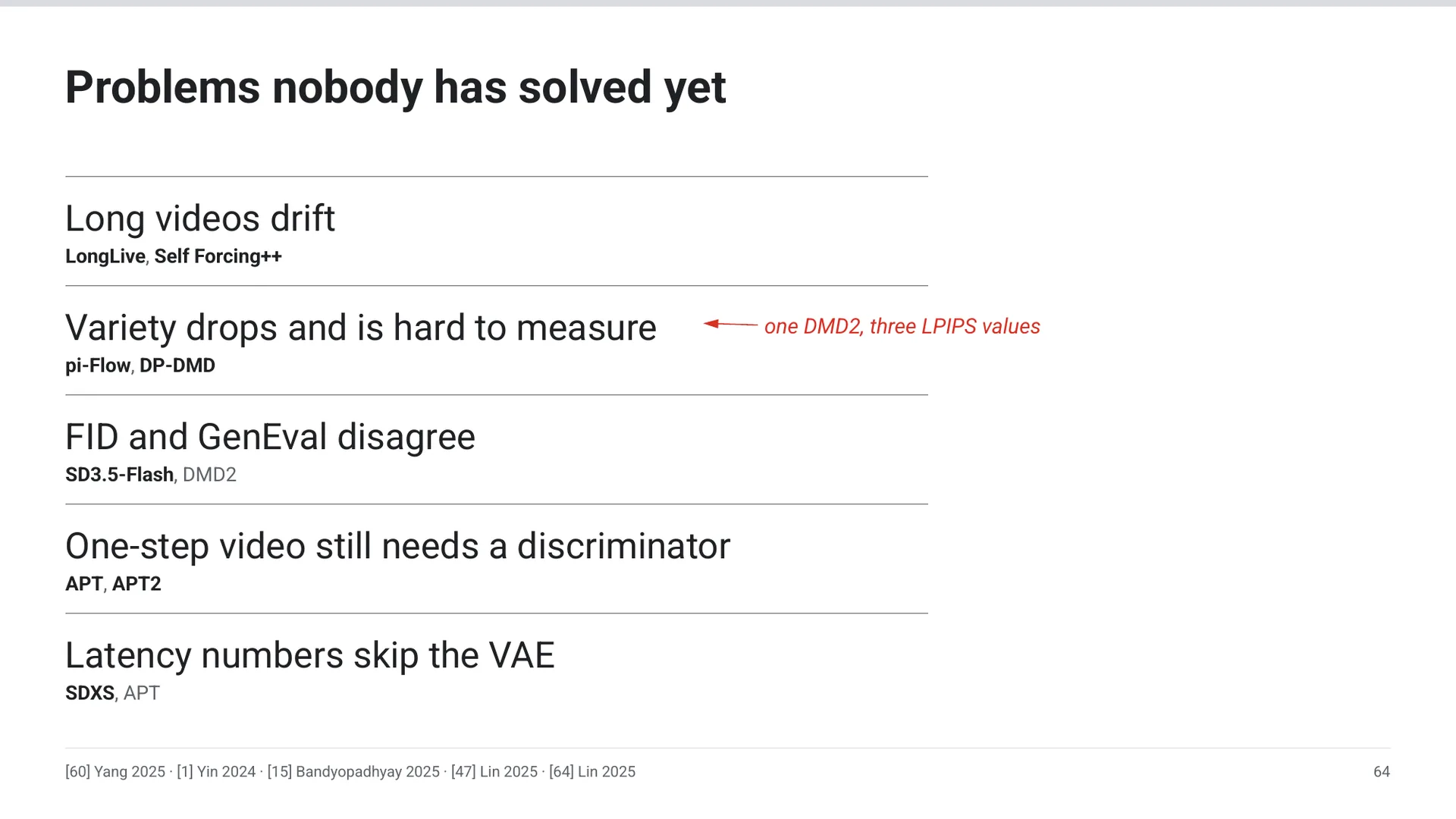
  64. Problems nobody has solved yet
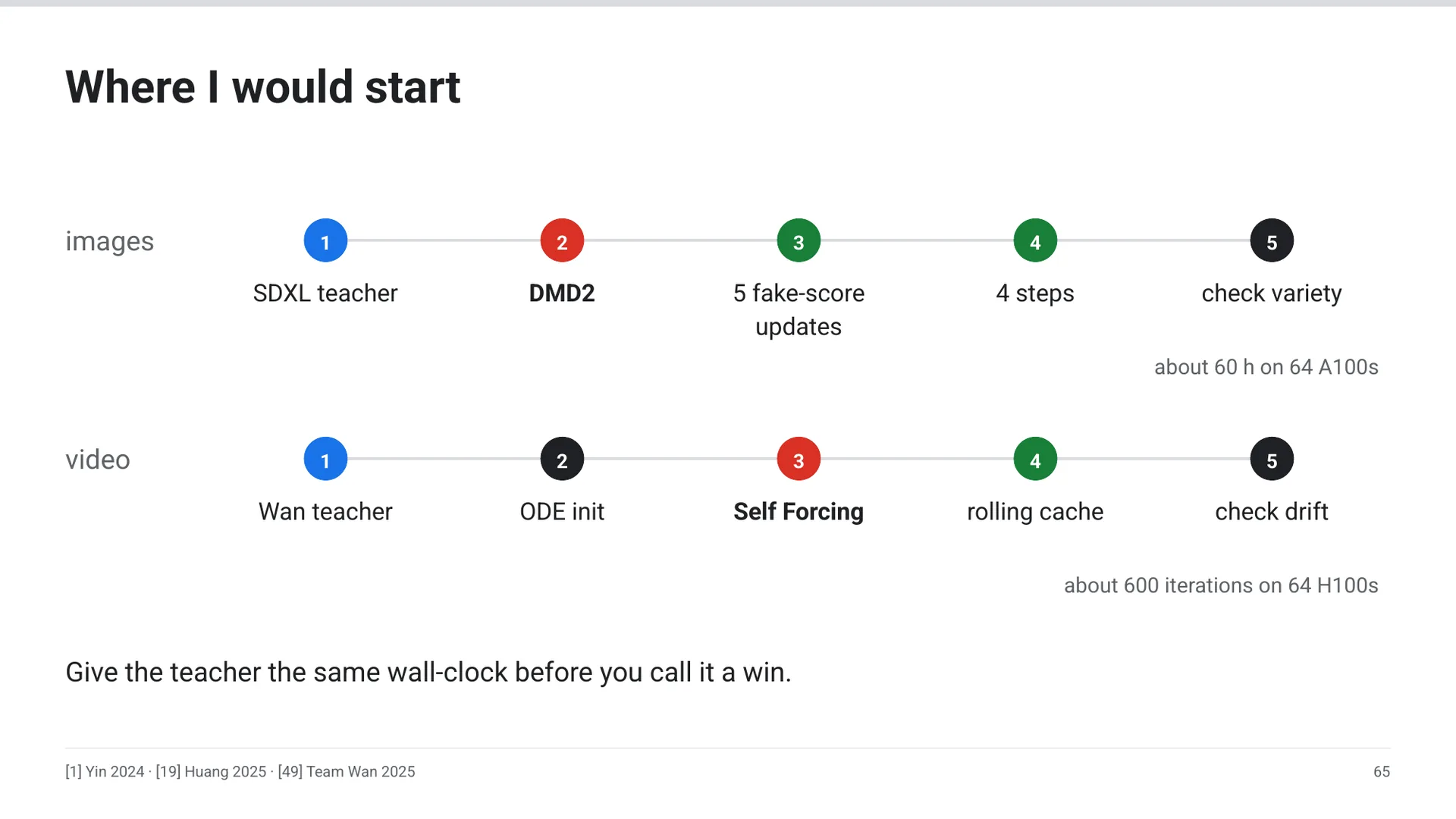
  65. Where I would start
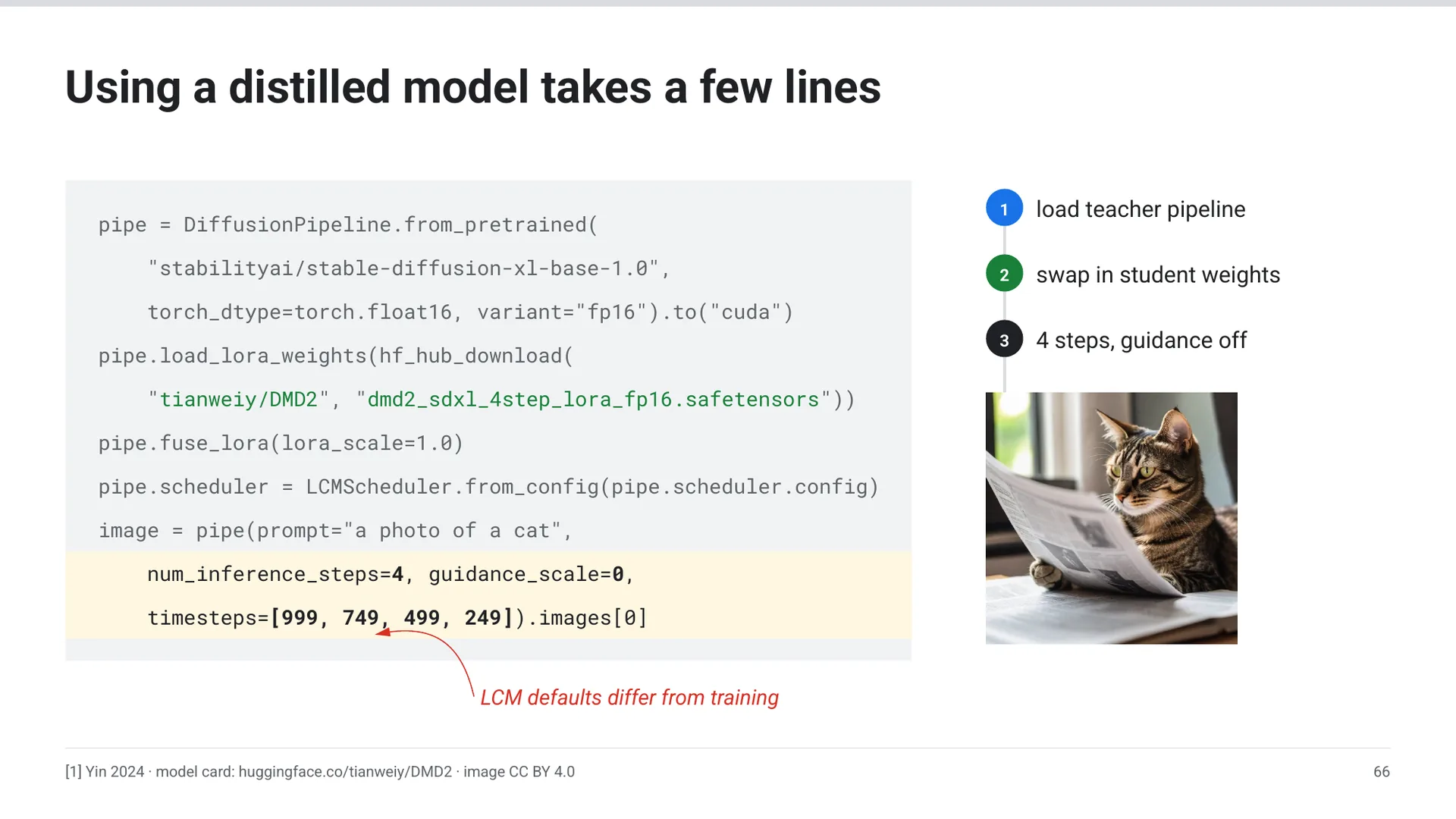
  66. Using a distilled model takes a few lines
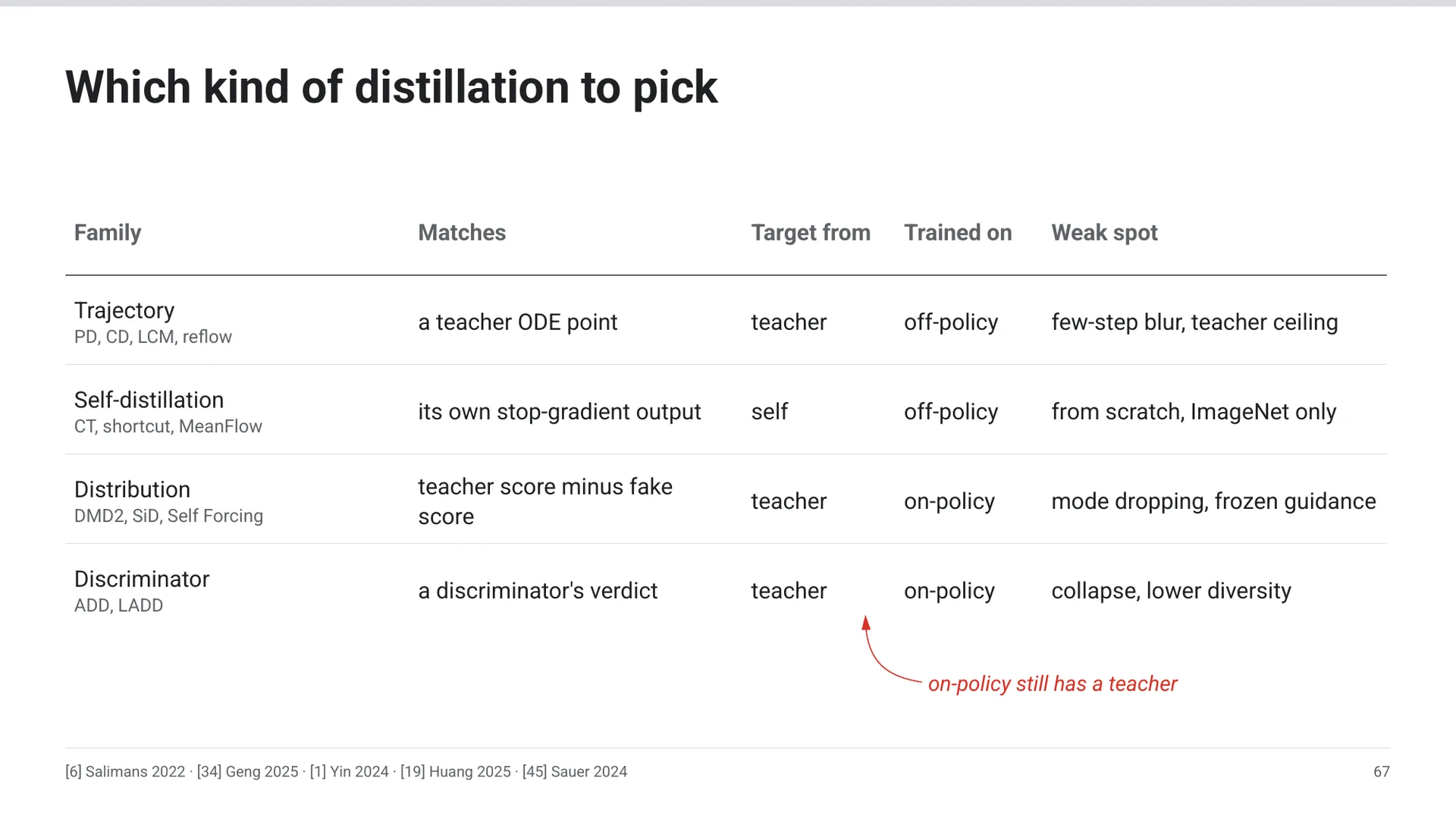
  67. Which kind of distillation to pick
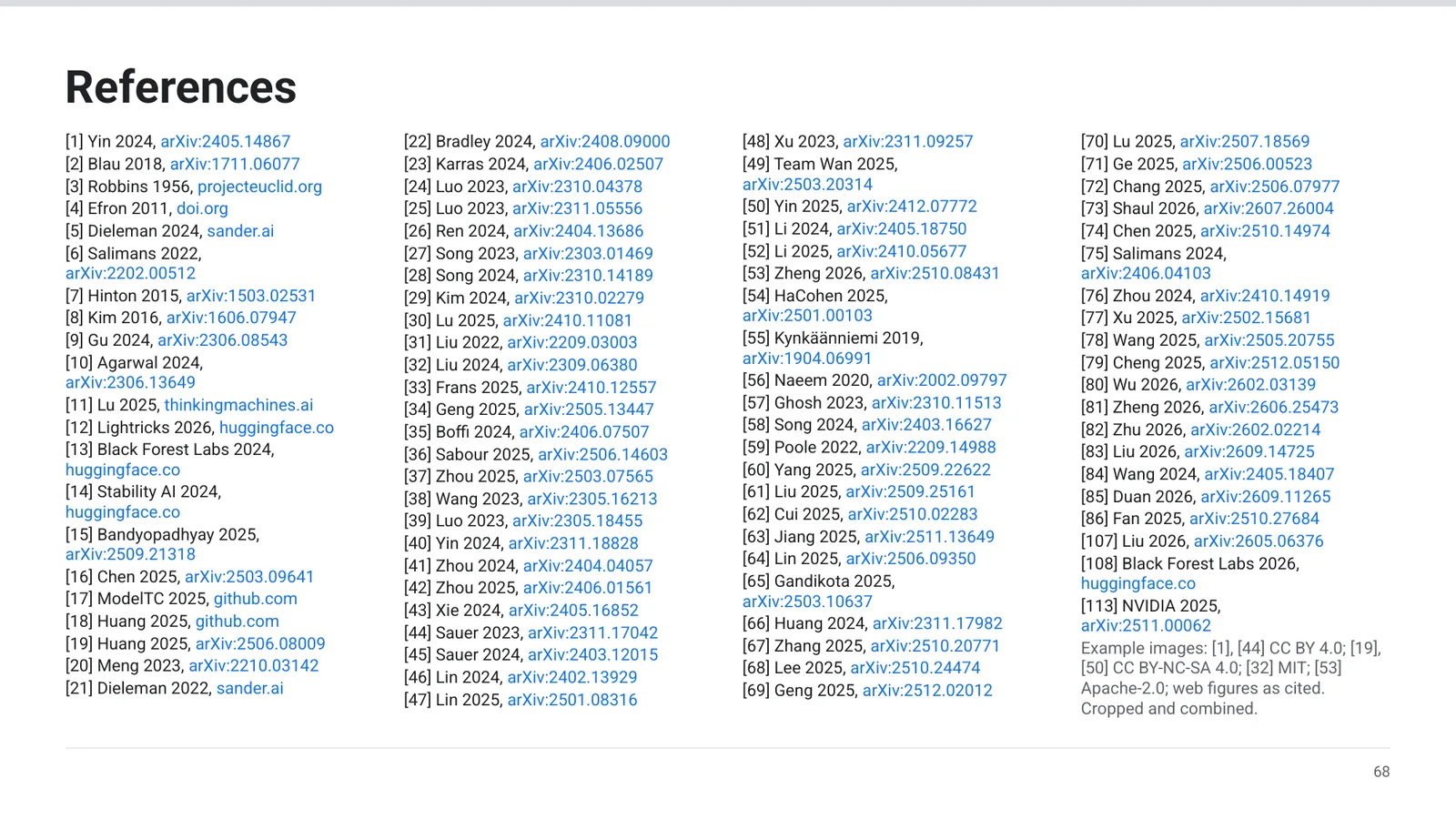
  68. References
  69. Thanks

← → or swipe to move, click the slide to advance, F for full screen. Add #12 to the address to link to slide 12.